en.Wedoany.com Reported - China State Railway Group Co., Ltd. announced on July 1, 2026, the 20th anniversary of the full operation of the Qinghai-Tibet Railway, that the railway has cumulatively transported 104 million passengers and 824 million tons of cargo.
The Qinghai-Tibet Railway, stretching 1,956 kilometers from Xining City in Qinghai Province in the east to Lhasa City in the Tibet Autonomous Region in the west, began full operation on July 1, 2006, ending Tibet's history of being without a railway. This railway is the highest-altitude and longest plateau railway in the world.
The number of daily scheduled passenger trains on the Qinghai-Tibet Railway has increased from 5 pairs in 2006 to 13 pairs in 2026. Passengers can travel directly from Lhasa to 14 municipalities directly under the central government and provincial capitals across China, strengthening personnel exchanges between Tibet, Qinghai, and other regions of the country.
To establish a modern logistics system for plateau railways, the railway department has built logistics hubs such as Golmud South Station, Shuangzhai Logistics Base, and Lhasa West Freight Yard, organized direct freight trains to Tibet from Xi'an, Xining, Wuhu, Guangzhou to Lhasa and Shigatse, and regularly operates Central Asia freight trains covering 6 cities in 4 countries. Currently, the daily number of freight trains on the Qinghai-Tibet Railway has increased from 24 in 2006 to 136, with an average annual growth rate of 5.6% in cargo transport volume.
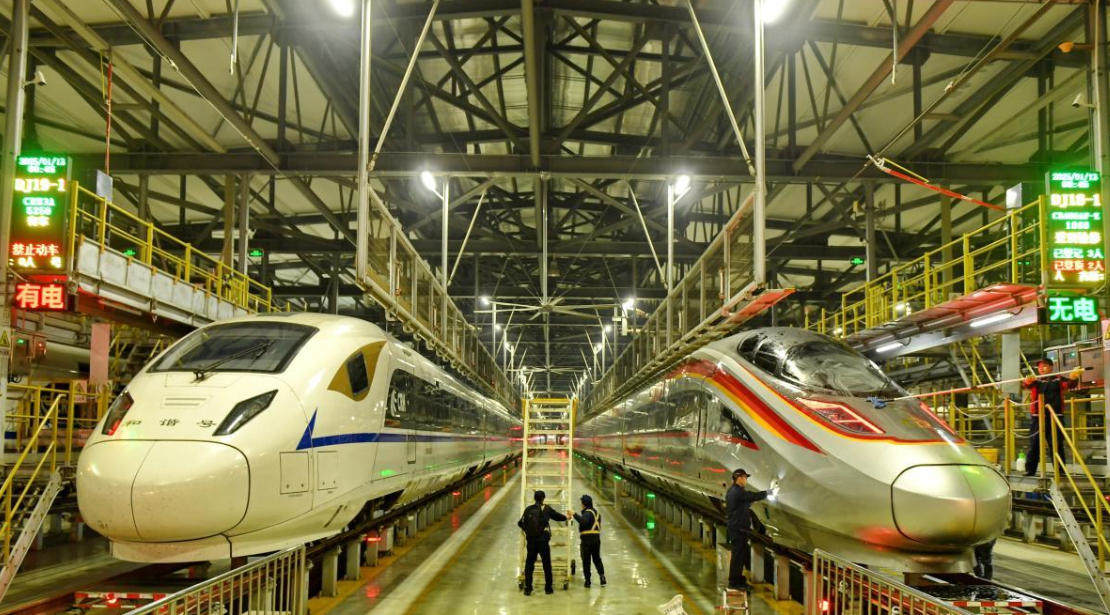
It is understood that the section of the Qinghai-Tibet Railway above 4,000 meters in altitude extends 960 kilometers, with an oxygen content approximately 60% of that in plain areas. Over 20 years of operation, the railway department has completed multiple rounds of equipment upgrades and capacity expansion renovations, and Fuxing bullet trains have been introduced to the Qinghai-Tibet Plateau. The railway department has also overcome challenges in maintaining permafrost sections, ensuring overall stability, allowing trains to pass through at a speed of 100 kilometers per hour year-round, setting the highest operating speed for permafrost railways in the world.