CNNC Holds Seminar on AI Scientific Computing Development in Nuclear Industry in Chengdu
en.Wedoany.com Reported - CNNC recently held a seminar on artificial intelligence scientific computing development in the nuclear industry in Chengdu, focusing on cutting-edge fields of intelligent scientific computing in the nuclear industry and discussing current technical bottlenecks and development pathways. The seminar was hosted by the CNNC Science and Technology Committee and organized by the National Key Laboratory of Advanced Nuclear Energy Technology, aiming to analyze practical challenges and promote the deep application of AI in nuclear industry scenarios.
The seminar officially commenced on July 3. Xin Feng, Member of the CNNC Party Leadership Group, Vice President, and Director of the Science and Technology Committee; Yu Junchong and Su Xuebin, Academicians of the Chinese Academy of Engineering, attended and delivered speeches. Meng Yanbin, Assistant to the General Manager, Chief Cybersecurity Officer, and Deputy Director of the Science and Technology Committee, presided over the meeting.
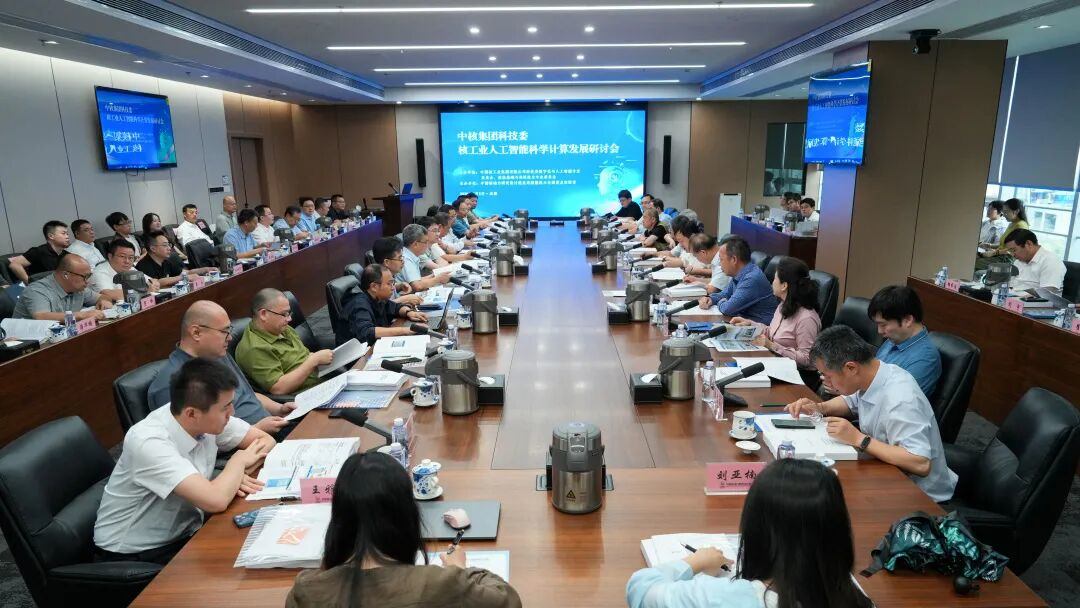
Xin Feng stated that artificial intelligence is an inevitable path for future development, and CNNC will promote the transition of intelligent scientific computing technologies from laboratories to engineering applications. He proposed three work directions: strengthening systematic planning, encouraging technology research driven by high-value scenarios, and exploring mechanisms for co-building and sharing core resources such as computing power, algorithms, data, and models; enhancing project leadership and open cooperation, forming integrated teams to accelerate the cultivation of compound talents; and continuously promoting changes in research paradigms, forming a "common unity, individual coordination" R&D paradigm to achieve efficient AI empowerment of the nuclear industry.
Yu Junchong pointed out that developing AI requires concentrating the efforts of research institutions, universities, and enterprises, fully leveraging the platform of the CNNC Science and Technology Committee to form synergies and seize opportunities. Su Xuebin stated that AI will play a key role in the transformation of research paradigms, and current related R&D is still in its infancy. All units should strengthen confidence, persist with long-term efforts, accelerate the establishment of a data alliance system, and collaboratively enhance the level of AI4S.
The seminar focused on cutting-edge applied basic research of AI4S in the nuclear field, inviting 16 experts and scholars to deliver keynote reports covering topics such as partial differential equation foundation models, reactor physics numerical calculations, thermal-hydraulic simulation, material design, uranium exploration, fusion control, and intelligent operation and maintenance. Participants engaged in in-depth discussions.
Nearly 100 experts and scholars from over 20 units, including the China Academy of Engineering Physics, Peking University, Xi'an Jiaotong University, Harbin Engineering University, Shanghai Artificial Intelligence Laboratory, Shanghai Institute of Applied Physics of the Chinese Academy of Sciences, as well as the CNNC Science and Technology Committee, Department of Science, Technology and Innovation, Department of Digital and Intelligent Transformation, and various research institutes, attended the seminar.
Related Products
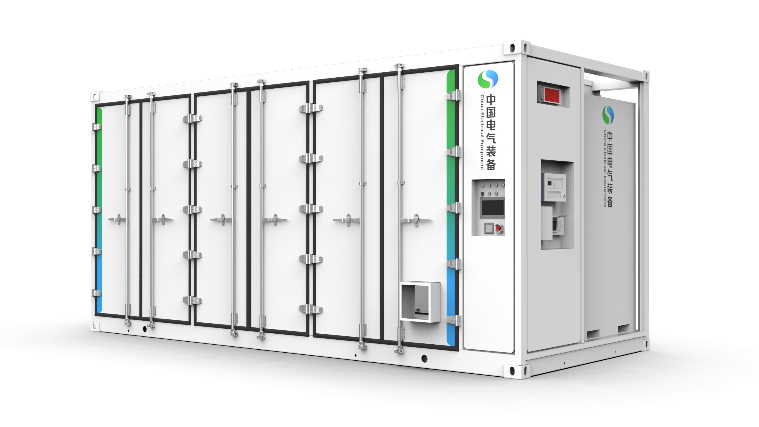

MESS8201-2507/5015-BN Prefabricated Liquid-cooled Energy Storage Battery Container
Xuchang Xuji Electric Science Energy Storage Technology Co., Ltd.

Industrial and Commercial Point-Type Gas Detector
Jinan Benan Technology Development Co., Ltd.


"Shunyi 1600" Deep-submerging Bottom-sitting Multi-functional Wind Power Engineering Vessel
Zhengli Offshore Engineering Co., Ltd.
6kV-35kV Medium and High Voltage Direct-Connected Energy Storage System
Hainan Jinpan Smart Technology Co., Ltd.
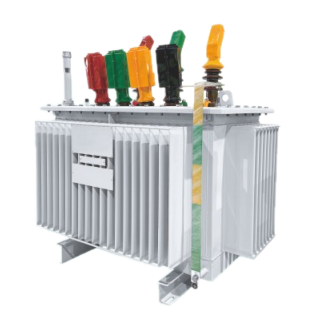
IS(B)□-M·RL Series Oil-immersed 3D Transformer (Planar / 3D Wound Core)
Guangdong Kehua Electric Power Technology Co., Ltd.