en.Wedoany.com Reported - State Grid Yancheng Power Supply Company, through data-driven management and technological upgrades, has shifted line loss management from traditional troubleshooting to targeted measures, achieving full coverage from being selected as one of the "Top Ten Cities" in the State Grid's synchronized line loss management to establishing "Top 100 Stations" among its power supply stations.
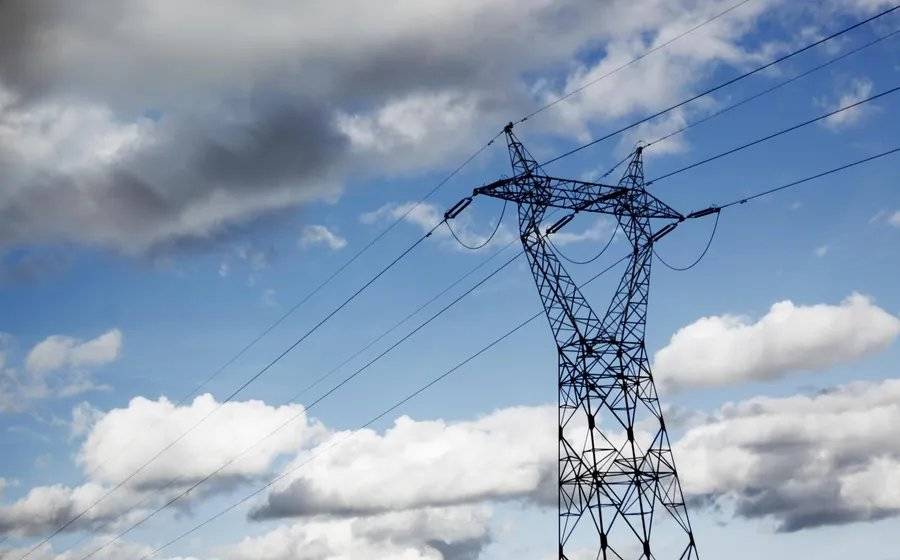
Line loss is a key indicator for measuring the operational efficiency of power grid enterprises. In the past, some high-loss and negative-loss station areas were difficult to manage due to unclear underlying data. Now, relying on the integrated electricity and line loss management system and the electricity consumption information collection system, online monitoring and multi-dimensional analysis of abnormal line losses have been realized, shifting the troubleshooting approach from "casting a wide net" to "targeted fishing." For problematic station areas with line loss rates between 3% and 4%, through hierarchical breakthroughs and the establishment of problem ledgers and cancellation management, issues such as file changes, metering faults, mismatched station-user relationships, and three-phase load imbalances can be precisely identified.
State Grid Yancheng Power Supply Company has incorporated line loss management into the performance assessment weight of its power supply stations, promoting grid-based line loss responsibility allocation and the formation of flexible teams combining "inspection and line loss" efforts. Through daily monitoring, weekly analysis, monthly scheduling, and a closed-loop cancellation mechanism, a management linkage has been established. At the same time, short-, medium-, and long-term governance and improvement plans have been formulated, focusing not only on the current "clearing" of high- and negative-loss station areas but also on planning technical loss reduction projects such as insulation renovation of medium-voltage lines, replacement of energy-saving transformers, and optimization of reactive power compensation.
The company has launched a three-year action plan for technical loss reduction, tightening line connections, replacing inaccurate meters, and investigating unauthorized electricity use to reduce ineffective energy losses at the transmission end. At the same time, line equipment has been upgraded to address new issues such as reverse power flow in station areas, voltage violations, and three-phase imbalances caused by the large-scale integration of distributed photovoltaics into rural distribution networks. By combining line loss management with grid structure optimization, power quality improvement, and enhanced power supply reliability, loss reduction has become a concomitant benefit of the grid's transformation and upgrade.