Chinese Steelmakers Leverage AI to Widen Efficiency Gap
en.Wedoany.com Reported - Artificial intelligence is accelerating its penetration into the core processes of steel production, with a group of early-adopting steel companies already widening the efficiency gap through "data dividends," opening new profit margins for industry transformation and upgrading.
Nanjing Iron and Steel recently announced a partnership with Feishu to jointly build a full-chain "excellent operations system," deploying AI capabilities in more business scenarios. Li Jinyan, President of the Artificial Intelligence Research Institute at Nanjing Iron and Steel, explained that after jointly developing the "YuanYe·Steel Large Model" with Huawei, the company has now partnered with Feishu, aiming to deeply integrate AI technology into the entire iron, steel, and rolling process and empower every frontline employee with AI capabilities.
Li Jinyan stated that AI has already deeply empowered processes such as blast furnace ironmaking and rolling temperature control at Nanjing Iron and Steel. For example, in blast furnace ironmaking, when operational anomalies occur, the AI agent system can promptly push alerts and accurately pinpoint the root cause, transforming "post-event tracing" into "real-time correction," thereby significantly reducing production risks.
Yongzhuo Holdings Co., Ltd. is also accelerating the empowerment of its core production lines with AI. Chief Information Officer Lin Jinbin introduced that the company has applied AI agents to the core blast furnace ironmaking process in the steel industry, attempting to crack this "industrial black box" that has long relied on empirical operations. Lin Jinbin noted that the high temperature and pressure inside the blast furnace previously required operators to rely entirely on the furnace master's experience, which was prone to deviations, and problems were often discovered only after the optimal adjustment window had passed. Now, the company has transformed the furnace master's accumulated experience into standardized rules, inputting them along with real-time production data into the large model. Leveraging its high-throughput information acquisition and computing capabilities, the model provides high-value decision-making references for personnel in operations, monitoring, management, and other roles. This not only reduces the difficulty and threshold of job tasks but also drives the blast furnace's operational level toward optimization.
In more specialized production stages, AI is also overcoming bottlenecks that traditional methods struggle to address. Xia Zhuqing, Digital Head of Zenith Steel and General Manager of Haoming Technology, explained that in steel cord production, AI has improved the efficiency of quality inspection for semi-finished products after the "wet drawing" process. The previous method involved manually cutting a small section from each full spool of wire and using pliers to measure the radius of the naturally formed circle. This was time-consuming, caused material waste, and the knotting after cutting could introduce new quality issues. Now, instead of cutting the wire, the "curl angle" of the wire is directly measured, and the data is input into an AI agent to obtain a coil diameter prediction. This method is more accurate than manual estimation.
Luo Honggang, an expert in manufacturing solutions at Feishu, noted that over the past two to three years, many manufacturing enterprises have been achieving manufacturing upgrades by promoting the rapid adoption of AI within their organizations. In the steel industry, from ironmaking, steelmaking, and rolling processes to the entire production and operation lifecycle, the "black box" challenge is prevalent. AI provides a pathway to solve this challenge and achieve lean operations.
Li Yiren, Vice President of the China Iron and Steel Association, pointed out that China's steel industry has entered a new development stage characterized by volume reduction adjustments, stock optimization, and quality upgrading. Companies with profit margins significantly exceeding the industry average are often promoters and practitioners of intelligent manufacturing, particularly in the "AI + Steel" field. Facing deep industry adjustments, accelerating the path toward intelligent, green, and integrated development is the only way forward.
Ouyang Rihui, Vice President of the China Internet Economy Research Institute at the Central University of Finance and Economics and Vice President of the China Marketing Association, stated that processes like blast furnace ironmaking are called "industrial black boxes" because of the extreme internal high temperature and pressure, the complexity of physical and chemical reactions, and the heavy reliance on the experience and intuition of veteran workers. Now, through AI models that perform real-time analysis, learning, and prediction on massive sensor data, "vague experience" is transformed into "visualized digital insights," achieving a paradigm shift from experience-driven to data-driven operations.
Related Products
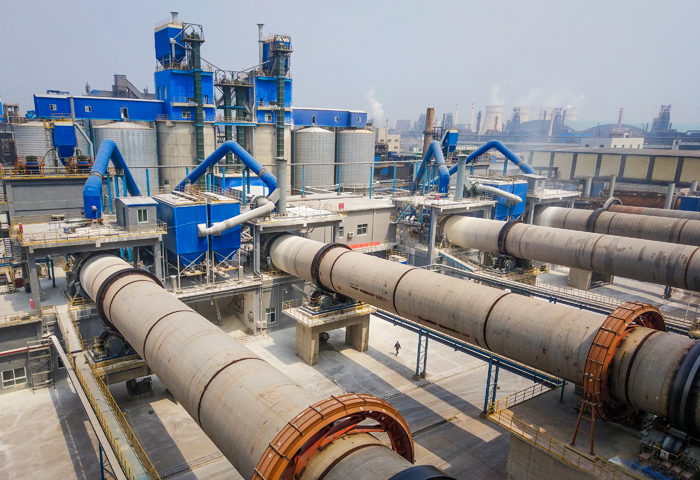

CITIC Heavy Industries Metallurgical Equipment Steel Smelting Engineering Equipment
CITIC Heavy Industries Co., Ltd.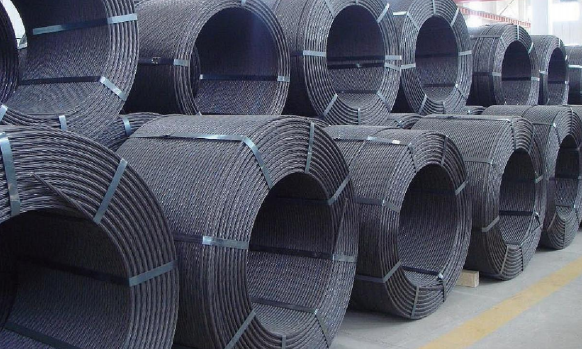
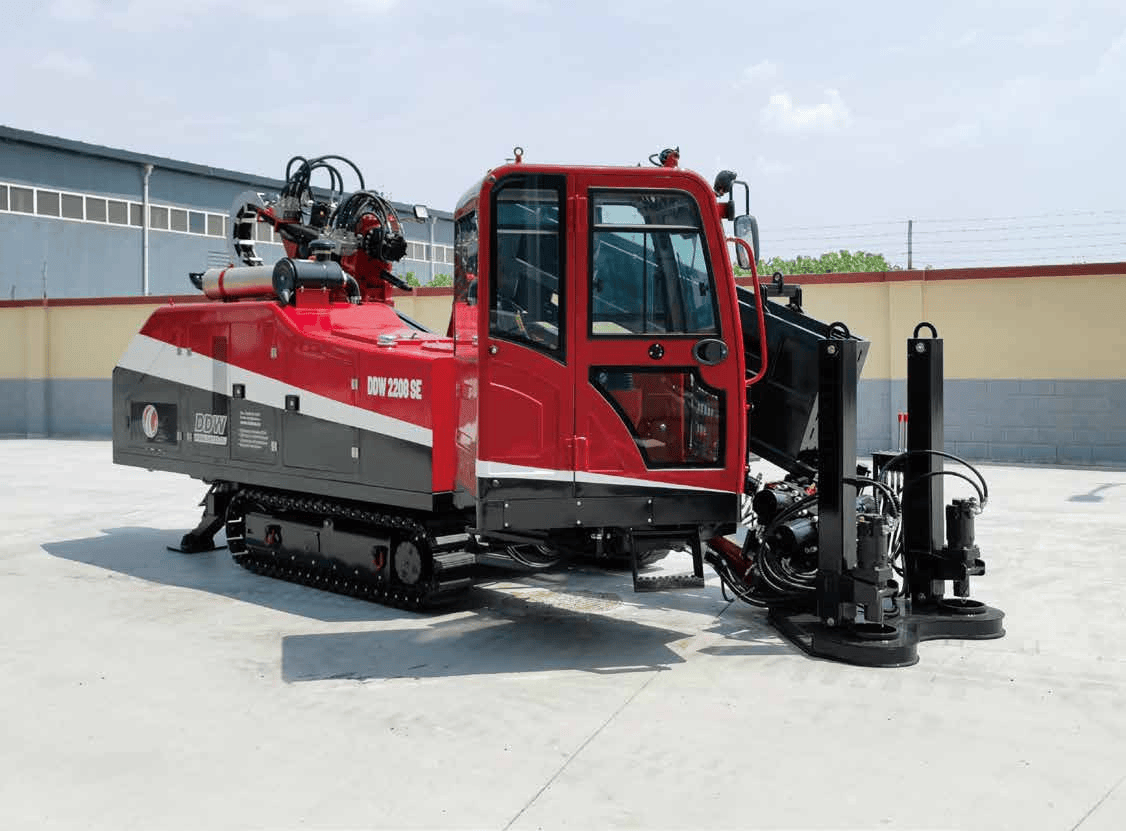
DDW22/08SE-HORIZONTAL DIRECTIONAL DRILL
DW/TXS Construction Equipment (Beijing) Co., Ltd.
High-temperature Equal Wall Thickness High-power Screw Drilling Tool
Orient Energy & Technologies Co., Ltd.