en.Wedoany.com Reported - Six national standards led by the Shanghai Artificial Intelligence Laboratory (Shanghai AI Laboratory) have recently been approved for development, covering cutting-edge AI fields such as large models, AI for science, AI safety, and embodied AI. Meanwhile, multiple key AI standards led by the laboratory are steadily advancing in their development and drafting processes, including the first IEEE international standard in the field of AI for science. Leveraging its role as the lead unit of WG9, the laboratory is systematically building a full-chain AI safety management and control framework to support the high-quality development of China's AI industry.
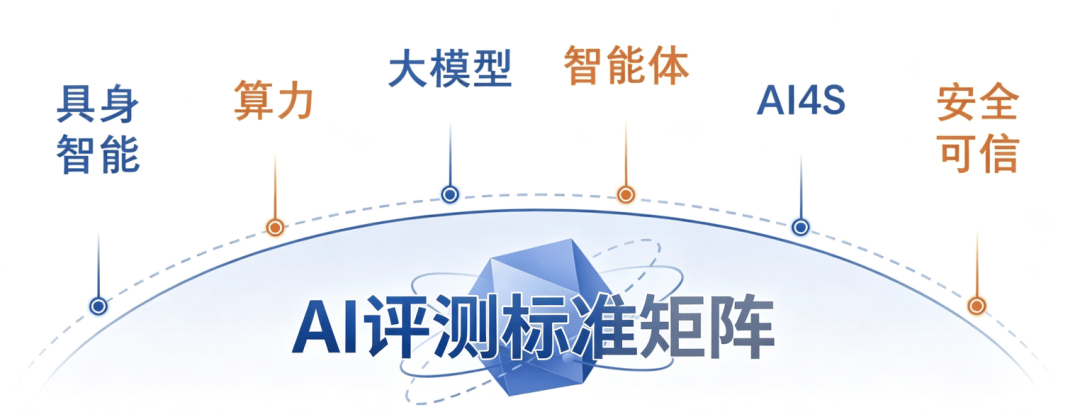
Based on a long-term industry-academia-research collaborative layout, the laboratory has established a comprehensive AI evaluation standard matrix covering a full range of domains, a multi-tiered hierarchical system, and end-to-end business processes. By creating an integrated subjective and objective evaluation system, the laboratory is exploring an assessment paradigm that balances technical performance with practical application, providing support for advancing the "AI+" initiative.
The six approved national standards are: "Artificial Intelligence - Specifications for Building Large Model Evaluation Platforms," "Artificial Intelligence - Technical Specifications for Scientific Data Preparation," "Artificial Intelligence - Technical Specifications for Scientific Data Clue Aggregation and Classification," "Cybersecurity Technology - AI Security Capability Maturity Assessment Method," "Artificial Intelligence - World Model Evaluation Specifications," and "Artificial Intelligence - Embodied AI Data Quality Specifications Part 2: Generated Data." To date, the Shanghai AI Laboratory, in collaboration with research institutes, universities, and industry partners, has built a comprehensive AI evaluation standard matrix covering a full range of domains, a multi-tiered hierarchical system, and end-to-end business processes. In terms of domain coverage, it horizontally deploys four core tracks: large models, AI for science, AI safety, and embodied AI, with detailed scenarios including general-purpose large models, multimodal models, world models, intelligent agents, and humanoid robot simulations, covering text, audio/video, embodied interaction, and real-world testing scenarios for AI products across industries. In terms of the hierarchical system, it vertically establishes a four-tier collaborative standard architecture: national standards set industry baselines, industry standards refine subjective evaluation requirements, group standards implement scenario-specific solutions, and IEEE international standards are developed concurrently, forming a system of "basic specifications—specialized indicators—implementation guidelines—international rules." In terms of end-to-end business processes, standards are uniformly drafted following a closed-loop approach of "indicator definition—testing method—dataset specification—platform construction—safety acceptance," covering key stages such as model R&D iteration, factory inspection, third-party evaluation, industry deployment, and evaluation platform operation and maintenance.
An innovation within this standard matrix is the integrated subjective-objective evaluation mechanism. This mechanism is based on objective quantitative assessment, achieving full-domain indicator coverage, end-to-end implementation, and cross-institutional result mutual recognition. Simultaneously, it standardizes subjective perception indicators such as interactive experience and scenario adaptability, quantifying and archiving scattered human feedback. The two types of evaluation data calibrate each other, upgrading AI evaluation from a mere performance scoring system to a comprehensive assessment system that balances technical capability, user experience, and industrial value.
The AI evaluation standard matrix built by the Shanghai AI Laboratory aims to break down industry evaluation barriers, unify domestic cutting-edge AI evaluation benchmarks, enable mutual recognition of cross-institutional evaluation results, and reduce duplicate evaluation costs for enterprises. The matrix will also standardize the R&D iteration of cutting-edge technologies such as large models, embodied AI, and AI for science, enhance the performance and safety compliance of AI products, and support China's international standard layout in the AI field.
Looking ahead, the Shanghai AI Laboratory will continue to focus on the field of AI evaluation standardization, iterating and upgrading the standard matrix, supplementing evaluation rules for specific scenarios, and optimizing the implementation process of integrated subjective-objective evaluation. The laboratory will deepen industry-academia-research-application collaboration, build an open and shared standard verification platform, collaborate with research institutes, universities, and industry entities on standard development and experimental validation, and promote the implementation of standards to accelerate the large-scale output of local standards.