en.Wedoany.com Reported - The Metal Cladding & Roofing Manufacturers Association (MCRMA) has published a new guide titled GD42A, aimed at instructing installers on how to ensure the correct integration of "load-bearing members" required for fire protection in boundary facade metal cladding systems. The guide document, "Installer Guide to 'Boundary' Facades Involving Load-Bearing Members," is available for reading and download on its official website.
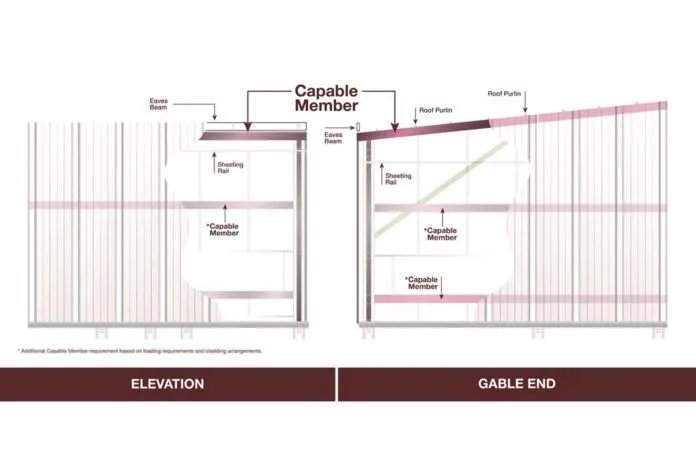
GD42A supplements GD42, a more detailed guide document compiled by MCRMA in 2025. GD42 itself references the "Boundary Facade Technical Specification" developed by the British Constructional Steelwork Association (BCSA), aiming to provide general guidance and deeper technical direction for specifiers, steelwork designers, and suppliers. According to MCRMA, GD42 aims to establish best practice standards across the entire metal building envelope sector, enabling more professional and efficient collaboration with steelwork contractors and ensuring the correct implementation of the BCSA specification.
GD42A is specifically focused on the installation phase. The document aims to help installers fully understand the complete process of integrating load-bearing members into boundary facade cladding systems. According to the latest industry best practices, such facade systems must be capable of supporting their own weight in the event of a fire to slow the spread of fire to adjacent properties. The statement notes that load-bearing members typically consist of structural beams protected by hot-rolled steel, intumescent coatings, or other fire protection methods, and must be considered during the design phase and correctly constructed and applied throughout all stages from manufacturing to installation.
Carlton Jones, Director of MCRMA, commented: "Since the BCSA 'Boundary Facade Technical Specification' came into effect in July 2025, it has clarified that load-bearing members must be incorporated into wall structures to ensure the cladding remains 'suspended' during a fire. However, for these critical fire protection components to be accurately installed, every link in the entire supply chain—from design to construction—must understand their necessity, integration methods, and respective responsibilities. Installers, in particular, need to fully understand load-bearing members so that the cladding projects they deliver meet fire protection standards while also protecting their own interests. Although installers are not responsible for the design of load-bearing members, with the right information, they can identify discrepancies between the delivered steelwork and the boundary design requirements. GD42A even includes a responsibility matrix that clearly marks the responsible parties at each stage of load-bearing member integration, enabling installers to handle potential issues during cladding installation and know who to turn to for answers."