New South Wales Expands Battery Subsidies to Apartments and Large Users from September 2026
en.Wedoany.com Reported - From September 1, 2026, New South Wales (NSW) will relaunch its battery subsidy program for homes and businesses, this time expanding eligibility to apartment buildings and larger energy users. The program can be stacked with the federal "Cheaper Home Batteries (CHB)" subsidy, potentially reducing the payback period for battery investments from seven years to under four years.
The previous incentive was designed only for standalone houses, excluding residents in multi-unit buildings and commercial or industrial operators with high energy consumption. Meanwhile, strong demand following the launch of the federal CHB subsidy has raised concerns about the pace of fund flow. Expanding eligibility for the Peak Demand Reduction Scheme (PDRS) can distribute demand across more building types, easing pressure on the grid during peak hours. The revamped program is divided into four distinct tiers, each with its own eligibility rules and stacking potential.
The two separate incentives can generally be applied for simultaneously. The federal CHB is a nationwide program that deducts a fixed amount from the upfront cost based on the capacity of a home battery. The NSW PDRS is a state-level scheme that generates certificates for batteries that help reduce grid pressure during peak periods; installers can convert these certificates into discounts for customers. Since September, the PDRS has been expanded to cover apartment buildings and larger commercial systems (up to 30 MWh).
For owners of standalone houses, the changes are minimal. Households were already eligible for the CHB subsidy, and PDRS eligibility for single-family homes was primarily tied to joining a virtual power plant (VPP) for additional income.
Apartment buildings represent the most significant change. Previously, apartment residents could not install home batteries or apply for subsidies. The new PDRS rules allow buildings with more than four residential units that do not yet have batteries to apply for subsidies for shared systems with capacities between 20 kWh and 200 kWh, capped at 5 kWh per dwelling. This shared system can be stacked with the federal CHB subsidy, up to a limit of 100 kWh. For example, a 10-unit apartment building installing an 80 kWh shared battery, with each dwelling's capacity within the 5 kWh cap, can receive both CHB and PDRS subsidies, making energy storage costs viable for the first time when shared. Applications must be initiated through the owners' corporation.
Small and medium-sized businesses installing batteries with capacities from 20 kWh to 200 kWh (with a maximum battery duration of 4 hours) are eligible for PDRS subsidies, with additional incentives for pairing with new solar installations. The CHB stacking limit is 100 kWh. A small business installing a 100 kWh battery paired with new solar can stack the CHB subsidy, standard PDRS subsidy, and solar pairing bonus, reducing the commercial payback period from approximately seven years to under four years.
Large commercial or industrial energy users (such as manufacturing facilities, cold storage, large retail areas, and data centers) can receive PDRS support for systems with capacities from 200 kWh to 30 MWh, with a certificate cap of 10 MWh per project. CHB stacking does not apply at this scale, with value derived from PDRS certificate revenue. For businesses already investing heavily in peak demand charges, batteries with capacities ranging from hundreds of kWh to low MWh can justify investment based solely on certificate revenue and demand charge savings. Huon Hoogesteger, CEO of Smart Commercial Energy, noted that battery storage has now entered the capital planning landscape for commercial and industrial operations alongside solar. Such sites need to check whether development approval is required for the battery size.
Before signing documents, verify the following: confirm the installer is CEC accredited and has experience applying for both CHB and PDRS simultaneously; request the total stacked subsidy amount in writing; for apartment buildings, check the management method of the owners' corporation to determine who initiates the application; commercial and industrial sites should ask suppliers about PDRS certificate handling, whether it provides an upfront discount or passes certificate revenue over time; obtain multiple quotes, as savings may vary between different installers.
Regarding common questions: there is no need to apply for the two subsidies separately, as installers typically handle both together; the apartment subsidy targets buildings without existing batteries; the 30 MWh cap applies per project, and businesses with multiple sites can be assessed individually; tenants require the property owner to apply for the subsidy.
Related Products

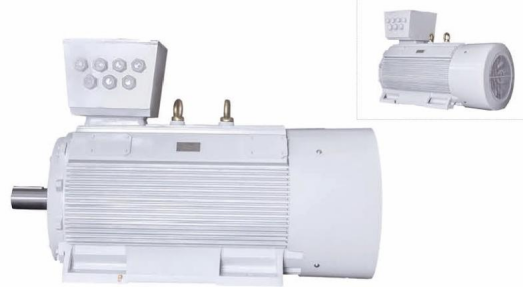
YE3 Series Low Voltage High Power Three-Phase Asynchronous Motor
Shandong Lijiu Electrical Machinery Co., Ltd.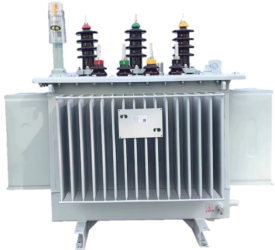
Oil-immersed Amorphous Alloy Core Distribution Transformer
Pinggao Group Smart Electric Co., Ltd.
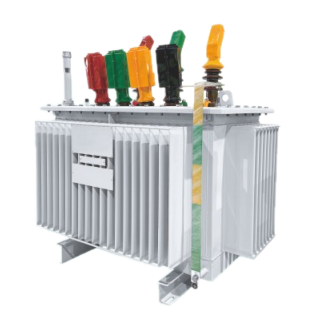
IS(B)□-M·RL Series Oil-immersed 3D Transformer (Planar / 3D Wound Core)
Guangdong Kehua Electric Power Technology Co., Ltd.

40.5kV-1100kV Gas Insulated Metal-Enclosed Switchgear (GIS)
Henan Pinggao Electric Co., Ltd.