US Infoblox Acquires Kentik to Enhance Network Visibility
en.Wedoany.com Reported - Infoblox announced the acquisition of network observability platform Kentik, with the financial terms of the deal undisclosed. The acquisition integrates Infoblox's expertise in enterprise network control planes (network identity services such as DNS, DHCP, and IP address management) with Kentik's capabilities in flow data, routing visibility, path analysis, synthetic testing, device telemetry, and cloud VPC logs into a single platform. The two systems respectively manage what the network "should be" and what it "actually does."
Today's enterprise networks are dispersed across data centers, public clouds, SaaS, branch offices, carrier links, Kubernetes environments, and the public internet. Troubleshooting often requires switching between multiple systems, including DNS logs, routing tools, cloud consoles, observability platforms, SIEM, and packet data. This acquisition aims to address this fragmentation, providing trusted infrastructure context for AI operations.
Infoblox positions this acquisition as "AgenticOps," with the core logic being to enable AI systems to execute actions based on accurate operational data without causing additional harm. Kentik provides Infoblox with real-time traffic intelligence, while Infoblox contributes authoritative DNS and asset context. The combination allows teams to see traffic destinations, origins, performance, and whether behavior matches expected infrastructure identity.
For security teams, DNS-based threat signals can be confirmed through flow data, improving attack classification. The three previously distinct categories of observability, security, and network operations are converging, as the underlying systems have become increasingly aligned.
The combined company faces execution challenges. Regulatory approval is one variable, but a deeper issue lies in operational trust—network teams have good reason to be cautious, as erroneous automated changes to routing, DNS, or access policies could disrupt production environments. Kentik ingests large volumes of telemetry data in complex environments, while Infoblox manages critical network services. Customers expect the integration to work across existing tool stacks, rather than adding another console. Data quality issues persist: messy DNS records, inconsistent cloud tags, incomplete routing data, or unclear ownership can all impact automation effectiveness. Therefore, the adoption path may start with visibility, correlation, and guided remediation, before moving toward more autonomous workflows.
The security domain is a highlight of this acquisition. Infoblox already provides DNS-based preventive security and threat intelligence, while Kentik can demonstrate traffic movement across data centers, WANs, clouds, and internet paths. Combining DNS context with traffic behavior helps security teams determine whether suspicious domain queries translate into actual activity. However, the value depends on how Infoblox encapsulates workflows, how cleanly Kentik telemetry data maps to Infoblox identity data, and whether customers can feed the resulting intelligence into existing tools. Infoblox has indicated open protocols, including its Model Context Protocol Server, as part of the integration strategy.
In the market, independent observability vendors are being pushed toward broader platforms, security vendors need network context, and network vendors require AI workflows. Infoblox's acquisition of Kentik provides a stronger narrative beyond core network services and opens access to a larger enterprise customer base for Kentik. Competitors such as Cisco, Cloudflare, Datadog, Dynatrace, New Relic, Akamai, and Palo Alto Networks are also approaching this space from different angles. The deal involves advisors: Oppenheimer and Fenwick are serving Kentik, while Cleary Gottlieb is advising Infoblox.
Related Products


Industrial and Commercial Point-Type Gas Detector
Jinan Benan Technology Development Co., Ltd.

Multi-function Marine Monitoring Low-altitude Detection Radar Sea-air Boundary Ocean Dynamic Environment Measurement
Chengdu Dixin Technology Co., Ltd.


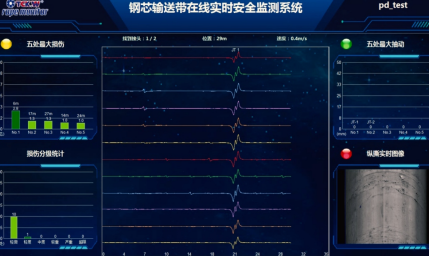
Conveyor Belt Intelligent Monitoring System
LUO YANG WIRE ROPE INSPECTION TECHNOLOGY CO., LTD.


MUX Series Communication Interface Device for Security and Stability Control System
Nanjing NR Electric Co., Ltd.
Mine Explosion-proof and Intrinsically Safe Industrial Ethernet Ring Network (10 Gigabit/Gigabit)
Chongqing Mas Sci&Tech Co., Ltd.