en.Wedoany.com Reported - The Aragón Logistics Cluster (ALIA) has launched the cross-border cooperation project INTEGRA-LOG, aimed at optimizing logistics efficiency on the Spain-France border, improving connectivity with Europe, fostering a collaborative ecosystem among logistics stakeholders in Aragón and France's Nouvelle-Aquitaine region, and enhancing business competitiveness and sustainability. The project has a budget of €2.76 million over three years (until 2029), with 65% co-financed by the EU Interreg VI-A Spain-France-Andorra Programme (POCTEFA 2021-2027).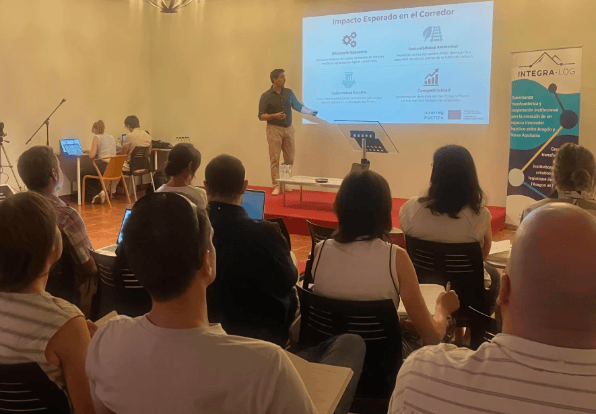
The project consortium is coordinated by ALIA and includes the University of Zaragoza (UNIZAR), the Aragón Institute of Technology (ITA), the Zaragoza Logistics Center (ZLC), and the startup management company Init from Spain, as well as the University of Pau and the Adour Region (UPPA), ESTIA Engineering School, and Fondolog from France.
Annual trade between Spain and France exceeds €70 billion, with most freight transported via the Irun-Hendaye and La Jonquera-Le Perthus corridors, which suffer from severe traffic congestion. The project proposes activating the Zaragoza-Pau central corridor as a strategic alternative to alleviate current pressure and promote multimodal transport.
One of the key actions is the development of a cross-border logistics digital twin by the Aragón Institute of Technology (ITA). This tool can simulate future scenarios, analyze policy impacts, and optimize goods flows.
Ángel Gil, Director of the ALIA Cluster, stated that the central Pyrenees remain underutilized. The digital twin will provide reliable data on possible scenarios, such as closures, disruptions, or evaluating the reopening of Canfranc or strategic infrastructure like the TCP. He noted that the project has a global and long-term vision, aiming to drive regional economic development and increase the permeability of the Pyrenees, which is crucial for the fluidity and sustainability of transport in Southern Europe.
The project will also develop another digital tool, including a platform and mobile application for logistics operators, integrating cargo management, cross-border traffic information, and real-time carbon footprint calculation functions.
ALIA will guide the creation of a new cross-border logistics innovation cluster, with a node in Pau connected to Aragón. The goal is to accelerate startups, promote open innovation in transport technologies, and help companies adapt to sustainable supply chains.
The project also promotes joint professional training programs, applied research projects, and a logistics innovation ecosystem between Pau and the CIEM in Zaragoza to foster entrepreneurship, knowledge transfer, and business competitiveness.
Additionally, the project will establish a Cross-Border Logistics Coordination Committee (CTCL), bringing together public administrations, universities, clusters, and companies to facilitate joint planning of the corridor and ensure the continuity of cooperation after the project ends in 2029. This committee is expected to serve as a long-term regional advisory body, and its technical and governance model could be replicated at other EU border crossings.