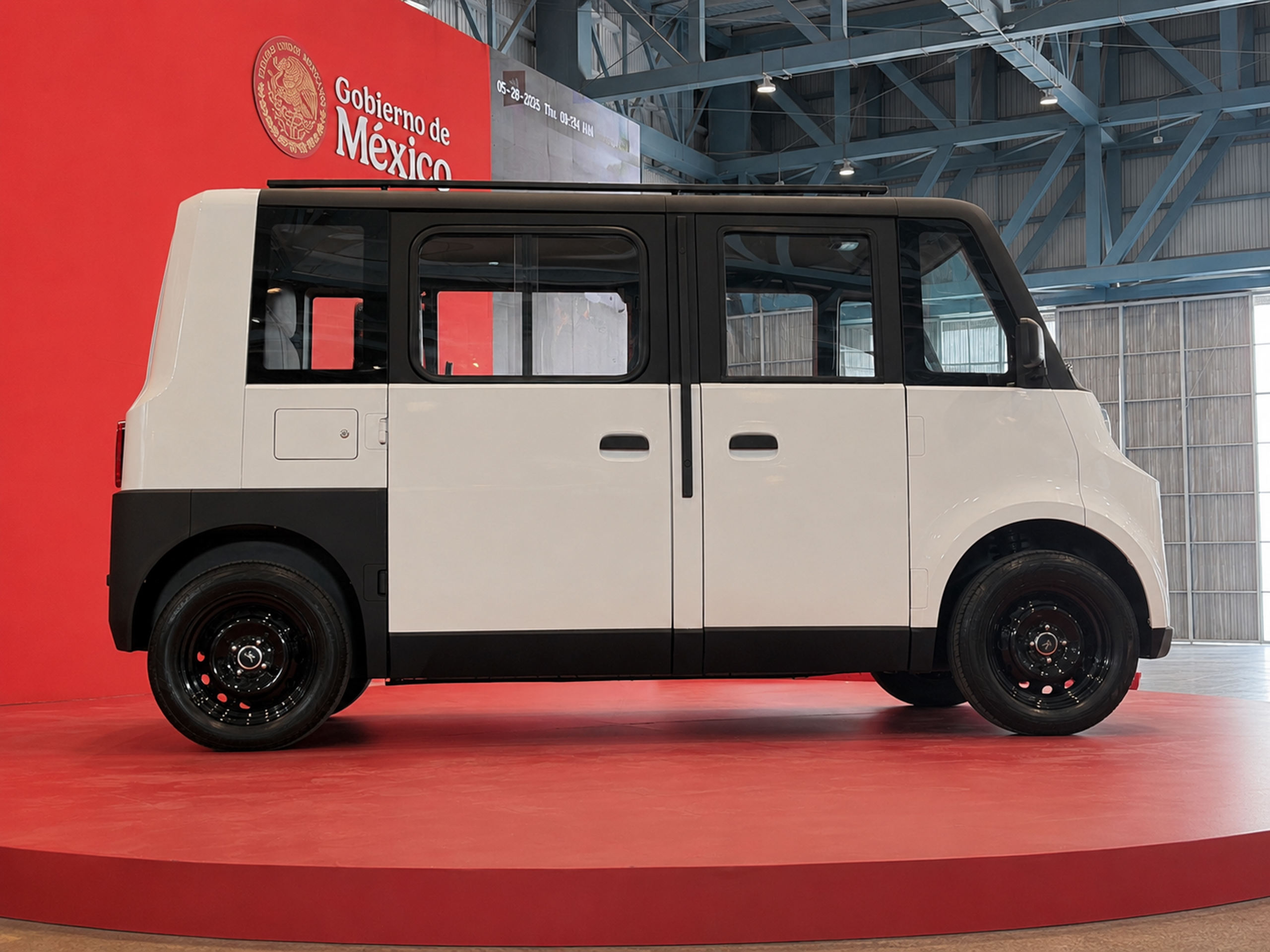
en.Wedoany.com Reported - Mexican President Claudia Sheinbaum stated at a media preview of the country's first mass-produced electric vehicle that Mexico has proven its technological innovation capabilities. The fully electric six-seat vehicle, named Olinia, is priced at 150,000 Mexican pesos (approximately $8,600) and is scheduled to go on sale starting next year. The model was unveiled in June alongside Mexico's first domestically produced electric bus.
The Olinia project began in late 2024, with funding and objectives originating from the government rather than the private sector, initially aiming to strengthen research and development capabilities at Mexican universities and public institutions. Under the leadership of engineer Roberto Capuano, the project gradually evolved into a platform leveraging local automotive expertise and talent to develop vehicles for the domestic market. The Mexican government aims for 50% of new car sales in the country to be zero-emission models by 2030, compared to just 7% in 2025. Olinia will focus on the ride-hailing and light commercial vehicle markets, aiming to offer the most economically competitive affordable electric vehicle products for fleets.
Research from the Global South Clean Transportation Center shows that since 2020, the share of electric vehicles produced in the Global South (excluding China) has tripled. In 2025, electric vehicle sales in Colombia, Mexico, Chile, and Brazil grew 78% year-on-year, with governments viewing the electric vehicle transition as a competition for investment, technological leadership, and industrial competitiveness. Mexico's automotive industry exports over 70% of its light vehicles to the United States, making it vulnerable to trade policies and tariffs. Developing a domestic electric vehicle industry is seen as an opportunity to revitalize the industrial strategy.
To advance market transformation, Mexico needs to create a predictable and growing consumer market for zero-emission vehicles. Strengthening and effectively implementing fuel efficiency regulation NOM-163 could incentivize manufacturers to shift toward zero-emission solutions by increasing compliance costs for internal combustion engines. A predictable path for vehicle energy efficiency and emission standards helps signal growing domestic demand for electric vehicles to investors, thereby reducing investment risks and creating high-skilled jobs. A survey by the Mexican Electric Vehicle Association shows that 90% of electric vehicle users say they would purchase again, citing lower maintenance costs and tax reductions. With affordable electric vehicles entering the market, demand growth expectations are clear, as the market shifts from environmentally conscious early adopters to cost-focused consumers.
For Mexico, the true significance of the Olinia project lies not in sales volume, but in whether it helps establish the country as an innovator in the clean mobility future.