Engel Showcases Technology to Reduce Automotive Emissions by 60% in Italy
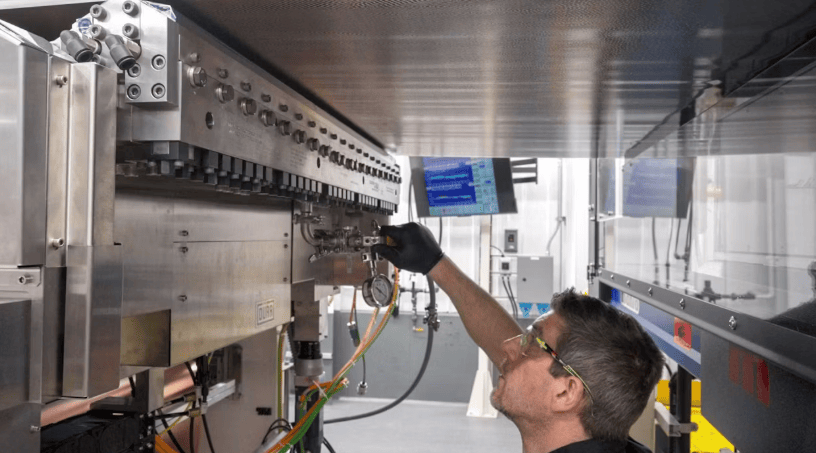
en.Wedoany.com Reported - Over 300 automotive industry professionals from around the world gathered in northern Italy to witness a manufacturing technology from Engel that promises to eliminate one of the most expensive and energy-intensive processes in car production. From June 29 to July 2, 2026, Engel demonstrated the industrial maturity of its clearmelt process at the facility of mold maker INEVO in San Polo di Piave. On an Engel duo 4000 combi M two-platen injection molding machine with a clamping force of 40,000 kN, a live demonstration showed how polyurethane overflow technology directly produces scratch-resistant, self-healing Class A surfaces for large automotive exterior components within the injection mold, eliminating any subsequent painting or coating steps.
Paint lines account for a significant portion of CO2 emissions in automotive production and require substantial capital investment and ongoing maintenance. Engel's clearmelt technology can reduce CO2 emissions by up to 60% and completely eliminates the need for investment in expensive paint line infrastructure. The process overflows components directly with polyurethane in the injection mold, producing high-quality, scratch-resistant, UV-resistant, and weather-resistant surfaces in a single process step. The polyurethane system exhibits high chemical resistance, and small, non-abrasive scratches can self-heal at room temperature. In addition to eliminating painting, coating, and polishing steps, this technology significantly reduces scrap rates compared to traditional painting processes, thereby lowering unit costs and delivering environmental benefits. Furthermore, the technology offers great design freedom and allows functional films (e.g., for LiDAR, radar transparency, or lighting functions) to be directly integrated into the component, while color and decoration changes are easier to implement during production than on traditional paint lines.
Dr. Clemens Kastner, Head of Business Development Automotive & Mobility at Engel, stated that the clearmelt technology has reached a decisive level of maturity in recent years. Machine technology, mold making, metrology, and materials have advanced to the point where large Class A surfaces can be economically produced in series production. Through the Engel clearmelt Capability Center (CCC), Engel pools the necessary expertise and assumes full responsibility for customers, from initial feasibility assessment to series production. Historically, the market for polyurethane surface technology was fragmented, requiring processors to coordinate multiple suppliers. With the CCC, Engel acts as a system supplier taking full responsibility, giving processors a single point of contact from the concept phase to series production, shortening coordination cycles and reducing technical risk.
The CCC operates internationally with teams in Europe, North America, and Asia. The system series for trials is located in St. Valentin, including an Engel duo 5500 with a clamping force of 55,000 kN, with additional capacity available in Schwertberg and at partner locations in Asia and North America. Consultations are conducted through Engel's sales organization, enabling processors to quickly obtain feasibility assessments and solution proposals. During the Surface Innovation Day event, expert presentations from INEVO, Engel, Borealis, Mankiewicz, and DMP showcased the collaborative ecosystem supporting the industrial deployment of this technology.
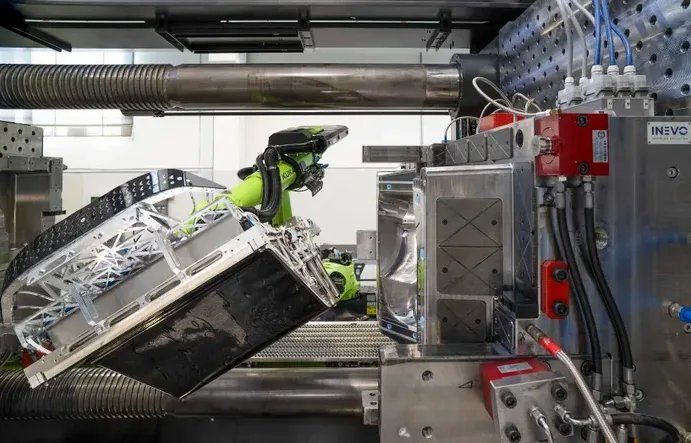
The live demonstration at the INEVO Technology Center illustrated the technology's industrial readiness. On an Engel duo 4000 combi M rotary table machine, a bumper demonstrator part with an integrated front-end module was produced in a few hours, combining multiple individual components into a single part. The process chain integrates several steps within a single mold: a robot places a body-color 2D film, which is thermoformed, followed by the insertion of a second film with the brand logo; both films are back-injected with polypropylene. After rotating the center platen, the front panel area is overflowed with polyurethane in the second station. Andreas Popp, Managing Director of INEVO Germany, stated that functional integration is high on the agenda for new automotive projects. With the Engel duo 4000 combi M at its technology center, the company is specifically expanding its component range to include large exterior parts such as engine hoods, bumpers, and roof modules. This system combines the complete process chain from film back-injection to polyurethane overflow. This process integration results in fewer parts, less assembly work, shorter process chains, and lower unit costs for processors.
With this machine, INEVO and Engel have established a joint testing facility where processors and OEMs can validate new component concepts and mold designs before series production. Demand for testing capacity is high, indicating that interest in integrated surface solutions extends beyond the European market. The market backdrop supports this technological shift, as paint lines are costly and maintenance-intensive, while functional integration of exterior components is increasing. Traditional bumpers are evolving into components integrating air intakes, headlight housings, sensors, and grilles, and Clearmelt surfaces can meet the optical and mechanical requirements of such parts, fully replacing paint in many applications.
Material development is accelerating the transition. Polypropylene as a substrate is becoming increasingly important in exterior applications, and Borealis showcased new material solutions combined with clearmelt. The thickness of the polyurethane layer has been continuously reduced, further lowering material costs and the CO2 footprint. The first large-scale series application for exteriors has been established with the BMW iX kidney grille. Roof modules, front-end structures, doors, and trim parts are the most frequently requested new applications in this new phase. For processors considering a switch from painting to clearmelt, machine technology, mold concepts, materials, and metrology are ready for series production. The industrial framework provided by the CCC enables this step to be taken in a structured and risk-controlled manner. Early trials can provide reliable data on part quality, cycle time, and unit costs under real conditions, safeguarding investment decisions and shortening the path to stable series production.
Related Products

Forest and Grassland Heat Source Infrared Monitor
China Huayun Meteorological Technology Group Co., Ltd.
Post-type AC Pollution-resistant Disc Suspension Porcelain Insulator (Triple Umbrella Type)
Shandong High Voltage Insulator Co., Ltd.
72.5kV 1250A 31.5kA SF6 free Gas-insulated Metal-enclosed Switchgear
Zhejiang Juhonkia Intelligent Electric Co., Ltd.
Double-slide Triple-sealed Hot Air Isolation Door
Xi'an Yingchuan Electric Power Equipment Co., Ltd.
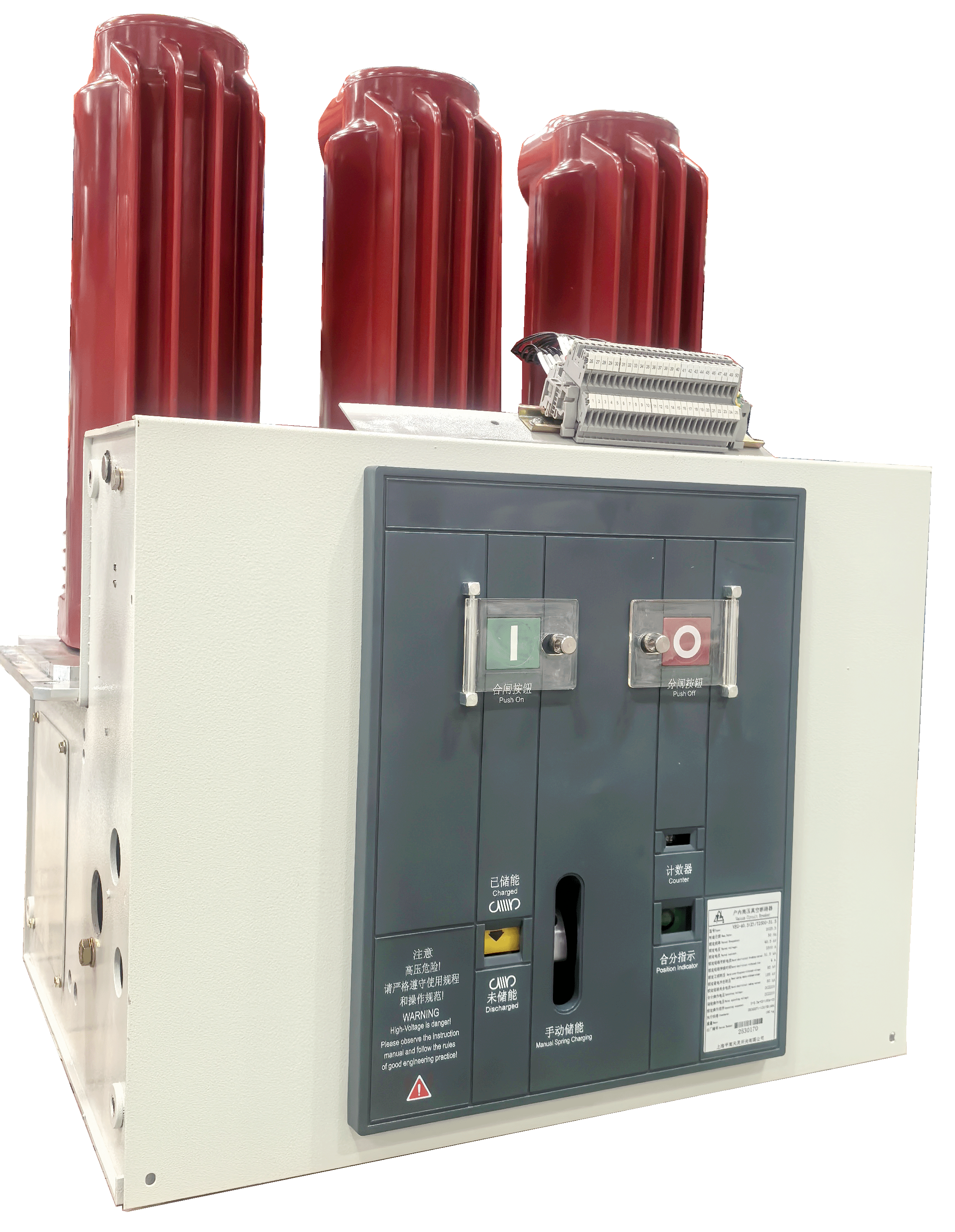
VEG-12/24/40.5 Series Vacuum Circuit Breaker
SHANGHAI PINGGAO TIANLING SWITCHGEAR CO., LTD.
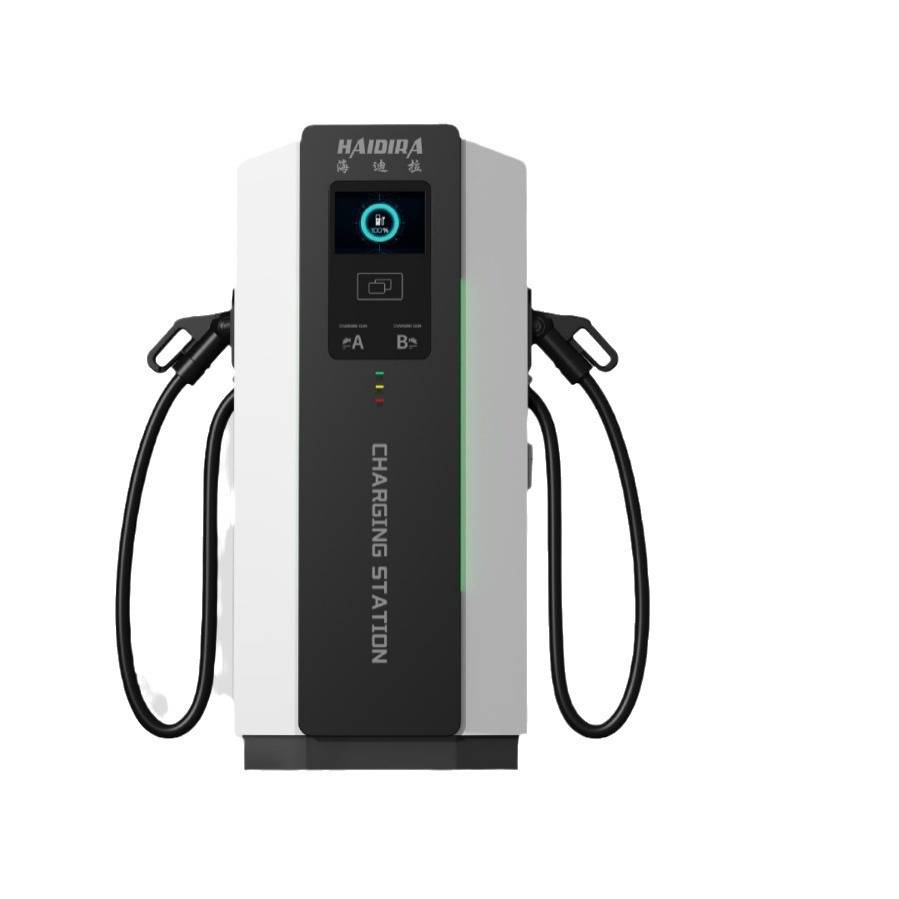
Manufacturer Direct Sales Tesla New Energy Electric Vehicle Universal DC 180kW Dual-gun Charging Pile Commercial Fast Charger
Anhui Haidira Electric Technology Co., Ltd.