Microsoft's Earth System Foundation Model Aurora 1.5 Upgrade Reduces Hurricane Path Prediction Errors by One-Third
en.Wedoany.com Reported - Microsoft has made a significant upgrade to its open-access Earth system foundation model, Aurora 1.5. The new version adds 22 meteorological variables that are critical for energy, agriculture, transportation, and climate risk assessment.
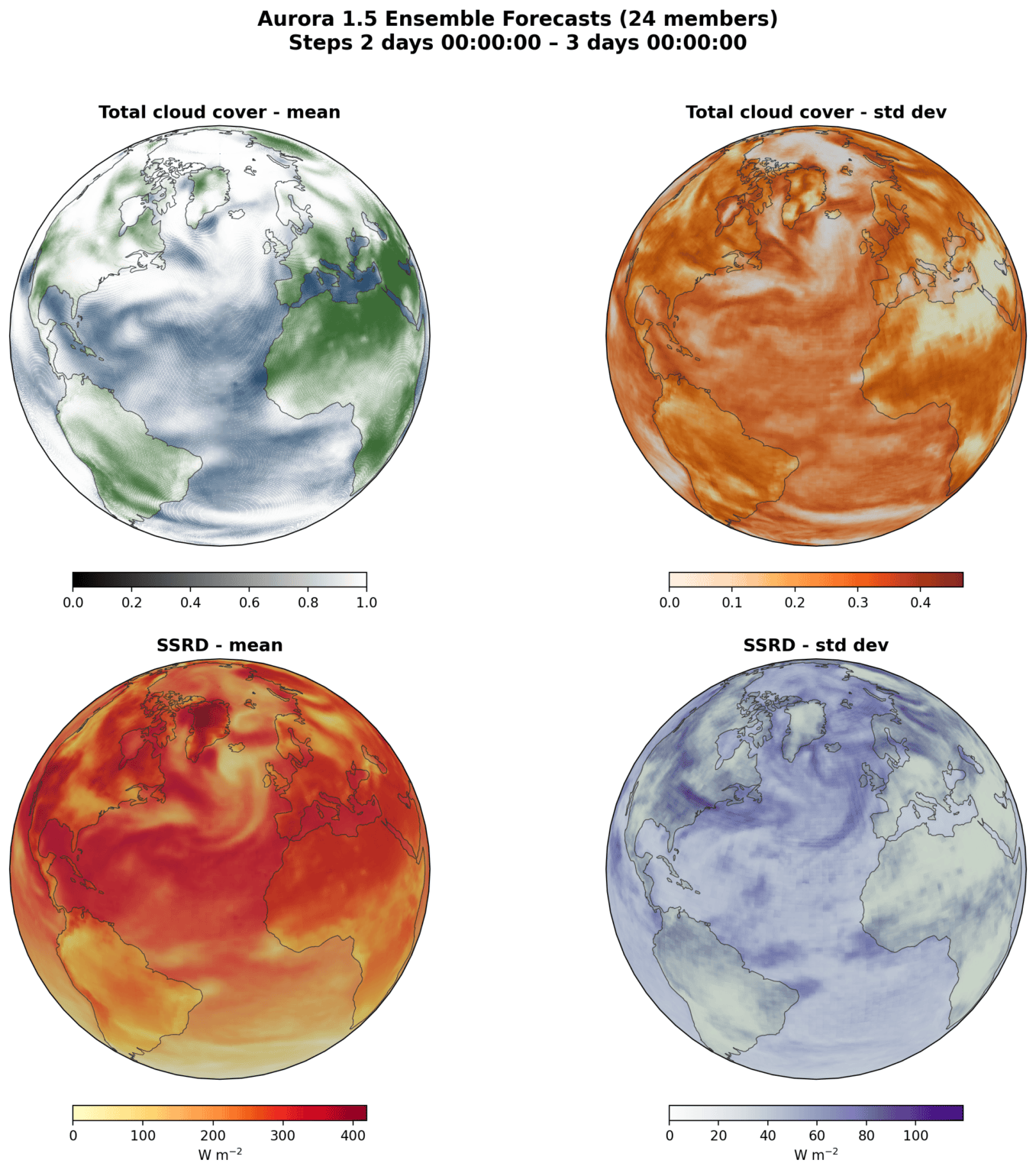
The model now offers hourly temporal resolution and supports ensemble probability forecasting.
In the field of hurricane or typhoon path prediction, multiple forecasting models are available. Traditionally, the ensemble model from the European Centre for Medium-Range Weather Forecasts (ECMWF) has been considered the benchmark. Microsoft states that Aurora 1.5 outperforms competitors in 88.9% of evaluation metrics.
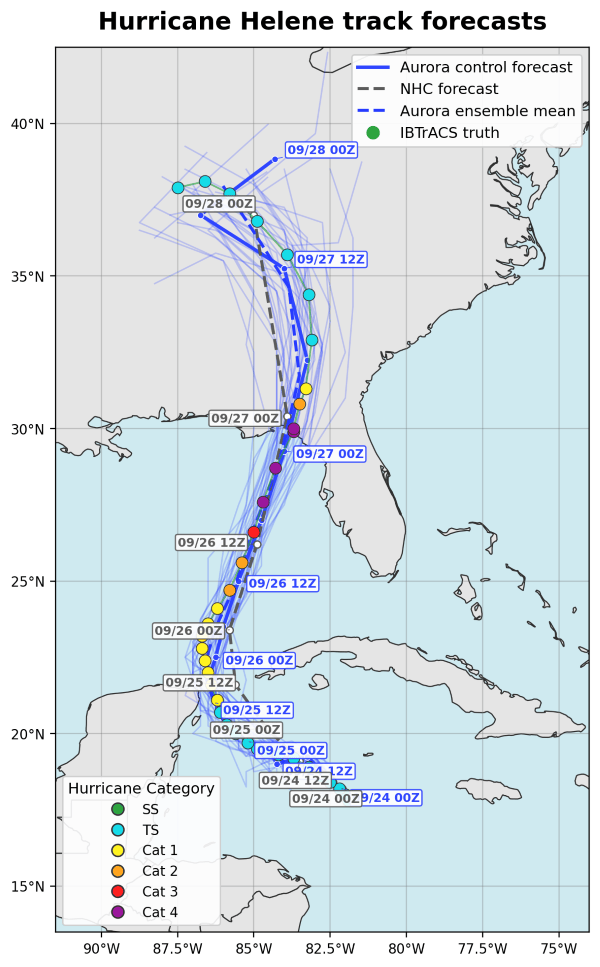
Compared to the previous generation, the new version also performs better. Test results show that the ensemble median reduces the path error for tropical cyclones (e.g., Hurricane Helene) by one-third.
Aurora 1.5 is released under an open-access model, which is a positive signal for researchers, government agencies, businesses, and the public. Microsoft also plans to integrate it into commercial products such as Microsoft Weather.
Given that artificial intelligence can sometimes produce inaccurate or questionable results, developers intend to use Aurora 1.5 in conjunction with physical-mathematical models (such as ECMWF) rather than replacing traditional models. The most accurate cyclone predictions often combine data from multiple models, and incorporating Aurora 1.5's forecasts will enrich the integrated information.
Meanwhile, the National Oceanic and Atmospheric Administration (NOAA) has, for the first time, put an AI weather forecasting model into operational use. Its flagship model, AIGFS, is built on Google DeepMind's GraphCast and fine-tuned with NOAA data. It can generate 16-day forecasts in 40 minutes, consuming only 0.3% of the computational resources of the traditional GFS model.
Related Products

Comprehensive Mining Automation Control System
Beijing Tianma Intelligent Control Technology Co., Ltd.
MUX Series Communication Interface Device for Security and Stability Control System
Nanjing NR Electric Co., Ltd.
Automatic Aiming Laser Remote Obstacle Removal Robot
Pinggao Group Weihai High-Voltage Apparatus Co., Ltd.
Industrial and Commercial Point-Type Gas Detector
Jinan Benan Technology Development Co., Ltd.


Hot Selling 10 Inch Intel N5100 I5 I7 FHD 8 +128GB 16+256GB Win10 Pro Win11 Pro 4G 5G Rugged Tablet PC Pad with NFC Barcode
Highton Electronics Co., Ltd.
GYTA Type Non-Self-Supporting Aerial/Duct Optical Cable
TONGDING INTERCONNECTION INFORMATION CO., LTD.

20 Inch 1600*900 Full HD 60Hz TFT LED Monitor with VGA and DP Interfaces for Desktop Computers-Business Use
Guangzhou Zanying Optoelectronics Technology Co., Ltd.