China Snowman Group Launches Shaftless Ammonia Compressor Targeting Low-Charge Small and Medium-Sized Refrigeration Market
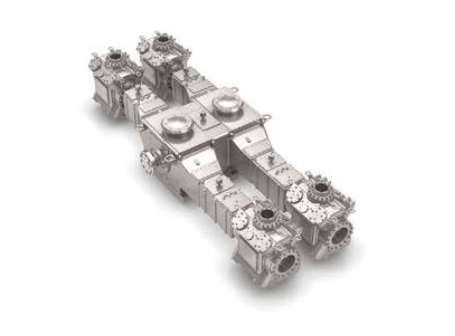
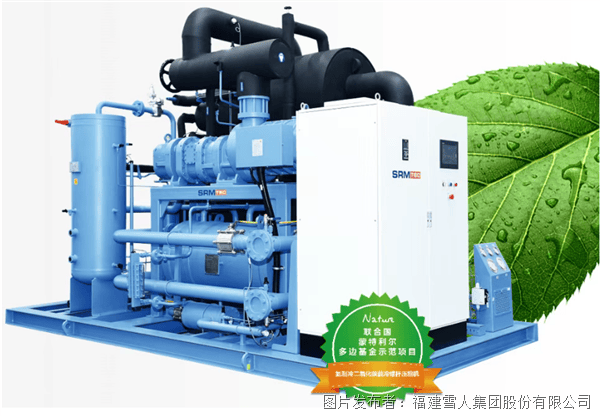
en.Wedoany.com Reported - Ammonia (R717), as a natural refrigerant, boasts excellent thermodynamic properties and environmental advantages of zero ODP and zero GWP, transitioning from traditional large-scale industrial applications to small and medium-sized refrigeration scenarios. The key to this shift lies in breakthroughs in low-charge technology. The SRS series semi-hermetic screw compressors, launched by SRM brand under Snowman Group, address leakage issues at the source through a shaftless design, providing core support for the miniaturization of ammonia refrigeration systems.
From the late 19th to early 20th century, ammonia was the most widely used refrigerant. After the emergence of first-generation fluorocarbon refrigerants, ammonia gradually withdrew from residential and small commercial applications due to safety concerns, remaining only in large centralized systems. The risk of shaft seal leakage in traditional open-type compressors, along with public concerns over ammonia's flammability and toxicity, became two major constraints for its promotion in small and medium-sized refrigeration scenarios. Following two major ammonia-related accidents in China in 2013, the critical threshold for liquid ammonia storage constituting a major hazard source was reduced from 40 tons to 10 tons, subjecting traditional ammonia systems to stricter regulations. Subsequently, high-GWP hydrofluorocarbon (HFC) refrigerants such as R507A and R404A saw widespread use, exacerbating carbon emission issues.
The EU's F-Gas Regulation, implemented in 2014, introduced a phased reduction mechanism for the production and use of HFC refrigerants, aiming to cut consumption to 21% of 2015 levels by 2030. Through a combination of policies including bans on new projects, inventory controls, and alternative incentives, the regulation opened the market for ammonia refrigeration systems in small and medium-sized applications.
China is advancing its National Plan under the Montreal Protocol (2025-2030), which will prohibit the use of HFC refrigerants such as R507A and R404A in new projects starting in 2029. Meanwhile, the dual-control system for carbon emissions requires large and medium-sized cold storage facilities to accelerate the adoption of ammonia (R717) or carbon dioxide (R744) and their composite systems, with medium-sized systems prioritizing ammonia or carbon dioxide, and small systems needing to monitor annual leakage of HFC refrigerants.
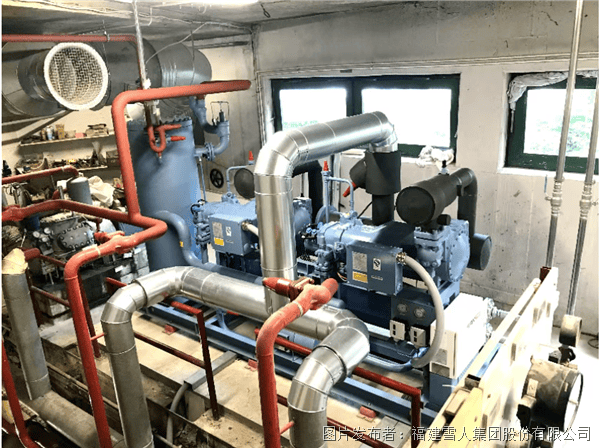
The SRS series semi-hermetic screw compressors, launched by SRM brand under Snowman Group, completely eliminate the shaft seal structure in design. The integrated closed design of the compressor and motor eliminates the possibility of shaft seal leakage at the source. This technological innovation brings multiple benefits: the shaftless design allows the system to be shut down for extended periods without leakage risk; the compact structure reduces size, with small single-unit displacement suitable for small and medium-sized refrigeration scenarios; the simplified system reduces pipeline welding and potential leakage points, lowering installation costs and maintenance difficulty.
Leveraging this compressor, engineers have developed multiple low-charge ammonia refrigeration system solutions, including indirect refrigeration methods (such as chilled water, brine, carbon dioxide secondary coolant units, or cascade refrigeration), direct refrigeration distributed all-in-one units or compact ammonia refrigeration rooms, and refined liquid supply methods in centralized systems such as wet direct expansion, distributed gravity feed, and single-cycle ratio pump feed, all effectively reducing ammonia charge.
In 2017, Europe's first semi-hermetic ammonia twin-screw compressor unit was successfully commissioned at an ice rink in Braunlage, Germany. The unit uses a permanent magnet synchronous motor, PLC control, and variable frequency drive to precisely match load and environmental changes, achieving an efficient, low-charge ammonia refrigeration system.
A cold storage facility in Germany converted an existing fluorocarbon system to an ammonia system, applying semi-hermetic ammonia screw compressors in parallel compressor units, ammonia plate heat exchangers, and glycol pump systems, with the entire set of equipment housed in a standard container. This solution significantly reduced on-site installation costs and ammonia charge while maximizing the use of existing storage facilities, resulting in extremely low retrofit costs.
A 175-year-old brewery in Bavaria, Germany, chose ammonia to replace R404A when expanding its refrigeration plant. Using semi-hermetic ammonia compressor units, the variable frequency drive allows the compressor to perfectly follow load changes. The dual-compressor design with one standby provides redundancy and production safety assurance during low-load operation, with the supporting design highly matching the brewery's actual production load variations.
The world's first semi-hermetic ammonia chiller/heat pump combination unit was commissioned in a renovation project of a former Philips factory in the Netherlands. The system can switch between summer cooling and winter heating modes. In winter operation, the ammonia receiver acts as an economizer to enhance heating capacity. The use of dry coolers and high-efficiency shell-and-plate heat exchangers minimizes refrigerant charge, while the shaftless design of the semi-hermetic compressor effectively alleviates public concerns about ammonia safety.
Europe has accumulated more application cases: a cold storage facility in northern Germany uses semi-hermetic ammonia single-machine two-stage compressors with variable frequency drives, offering higher efficiency, simpler systems, and smaller footprint compared to booster systems; a cheese ripening room in Austria uses two sets of SRS twin parallel compressor units, with miniaturized ammonia system design and variable frequency drive closely matching capacity to demand; a marine refrigeration system in the Middle East replaced old equipment with three Snowman SRS semi-hermetic ammonia compressors, resulting in a more compact and efficient system.
China is advancing its National Plan under the Montreal Protocol (2025-2030), with HFC refrigerants such as R507A and R404A banned in new projects starting in 2029. Meanwhile, the country is about to introduce a dual-control system for carbon emissions in the cold chain industry, effectively linking cold storage operators with the national carbon emissions trading market.
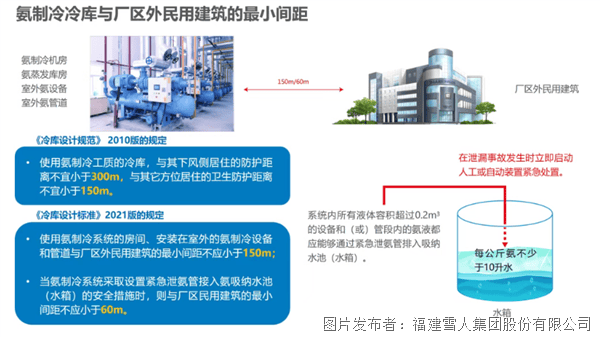
Small and medium-sized refrigeration systems can more easily control liquid ammonia charge below 10 tons compared to large systems. The Chinese national standard "Cold Storage Design Standard" released in 2021 also imposes more favorable distance requirements between ammonia refrigeration systems and off-site residential buildings compared to the 2010 version.
By integrating SRM's European technical resources, Snowman Group has achieved localized production of semi-hermetic ammonia screw compressors at its headquarters base in Fujian. From Europe's first semi-hermetic twin parallel compressor unit in 2017 to the world's first semi-hermetic ammonia chiller/heat pump combination, Snowman is introducing mature European low-charge ammonia refrigeration technology solutions to the Chinese market.
Located in Xundian County, Kunming, Yunnan, the Xundian Zhihe Green Low-Carbon Cold Chain Logistics Park covers 163 mu (approximately 10.9 hectares) with a total storage capacity exceeding 220,000 cubic meters, including 63 cold storage rooms at 0 degrees Celsius, equipped with 5 centralized ammonia refrigeration rooms. The project uses an ammonia refrigeration system with main equipment being Snowman SRS series ammonia semi-hermetic parallel compressor units, featuring permanent magnet synchronous variable frequency motors that automatically adjust to optimal operating load conditions in real time based on cold storage usage, combined with low-charge technology for efficient, energy-saving, and low-carbon operation.
The Wanwei Chengdu Xinjin Cold Chain Logistics Park covers an area of 51,000 square meters, using an R717/R744 secondary coolant system with main equipment being Snowman SRS series ammonia semi-hermetic parallel compressor units. Low-charge technology combined with a carbon dioxide secondary coolant system significantly reduces the circulating ammonia charge. Multiple parallel compressor units enable flexible load adjustment and mutual backup of compressors, providing multi-temperature zone storage from minus 25 degrees Celsius to plus 15 degrees Celsius.
Related Products

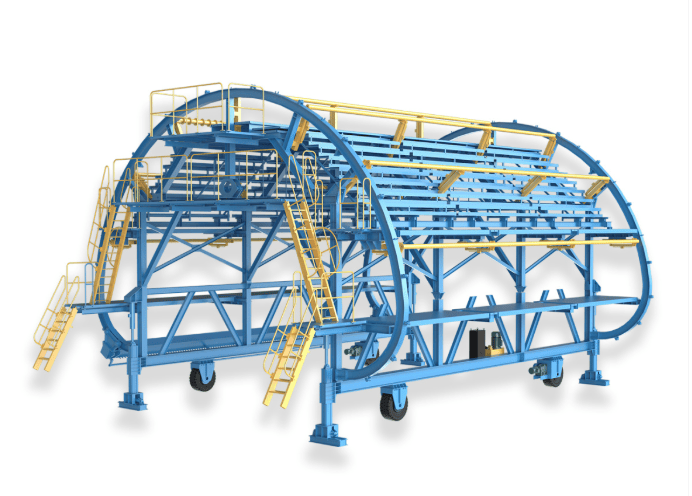
QLZNGJ Intelligent Steel Reinforcement Trolley
Luoyang China Railway Qiangli Machinery Co., Ltd.

Pneumatic high-pressure wear-resistant ball valve
Zhejiang Deca Control Valve Meter Co., Ltd.
CAP1400 main feedwater flow nozzle flowmeter.
Jiangsu Hongda Instrument Technology Co., LTD.

Industrial and Commercial Point-Type Gas Detector
Jinan Benan Technology Development Co., Ltd.