Brazil's Epamig Completes Deployment of 26 Coffee Demonstration Units
en.Wedoany.com Reported - The Agricultural Research Company of Minas Gerais (Epamig) has completed the deployment of 26 Arabica and Canephora coffee demonstration units (UDs) in the Jequitinhonha Valley, Mucuri Valley, and Northern Minas regions, with crops currently showing good field development. The project aims to strengthen the agricultural production chains in these areas through research, selection of superior varieties, technology development, and producer training via the demonstration units. Additionally, eight cassava variety demonstration units have been deployed.
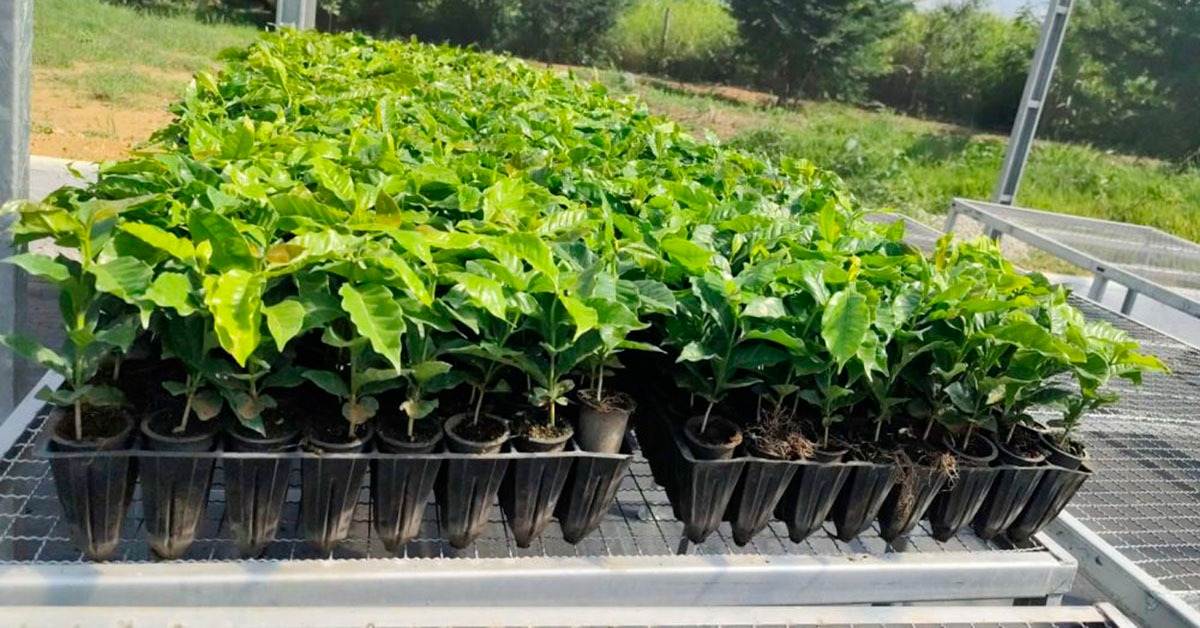
Fifteen selected producers from 11 municipalities received seedlings of 16 Arabica coffee varieties and 10 Canephora coffee materials (9 clones (grafted) and 1 seed). These producers were selected based on criteria such as coffee farming experience, diverse climate and soil conditions, irrigation utilization, and willingness to participate in extension activities.
Epamig researcher and project coordinator Jéfferson de Oliveira Costa stated that a technical diagnosis conducted before the project launch revealed a low adoption rate of coffee technologies in the region, affecting producer outcomes. Consequently, the project developed a plan to strengthen production chains for coffee, cassava, legumes, and fruits. In these three regions, the project will be carried out in partnership with the Technical Assistance and Rural Extension Company of Minas Gerais (Emater-MG), the State University of Montes Claros (Unimontes), the Federal Institute of Northern Minas Gerais (IFNMG), the Federal University of the Jequitinhonha and Mucuri Valleys (UFVJM), and the Coffee Division of the Brazilian Agricultural Research Corporation (Embrapa Café).
Costa noted that the goal is to strengthen these activities through research, training, and technology dissemination. The coffee demonstration units, deployed on cooperating producers' farms, will serve as areas for evaluating genetic materials under local cultivation conditions, assessing plant development, disease incidence, yield, and beverage sensory quality. In addition to monitoring crop growth at cooperating units, the team will deliver evaluation results to participants, including reports on different varieties, technical advice, and training activities.
In cassava cultivation, demonstration units are also in place, with experiments covering varieties for fresh consumption and industrial use, tracking plant development and yield performance. Additional research-related work is conducted by partner institutions: Unimontes is responsible for studies on soil amendments, drought-tolerant cowpea varieties, and cassava experiments under irrigated and rainfed conditions in collaboration with Epamig; IFNMG is conducting research on cocoa, dragon fruit, and grapes. Costa stated that as the project progresses, field days, seminars, and other events will be held to showcase different management practices at partner institutions and product demonstration units, helping other producers understand and observe performance, and encouraging cultivation and technology adoption.
Costa emphasized that coffee cultivation has promising prospects in the region. "Coffee farming, if properly managed, can bring high added value to producers and can transform the situation, generating financial returns even on small areas."
Related Products



4HS-8 High-efficiency Peanut Inverted-laying Harvester
Hebei Yongfa Hongtian Agricultural Machinery Manufacturing Co., Ltd.
Industrial and Commercial Point-Type Gas Detector
Jinan Benan Technology Development Co., Ltd.
714CD Series C-Band Weather Radar
Chengdu Zhongdian Jinjiang Information Industry Co., Ltd.