Samsung Develops PC AI Accelerator GAIA, Mass Production Expected in 2027, Samples Provided to Lenovo and HP for Verification
en.Wedoany.com Reported - Samsung Electronics is developing a new AI accelerator for personal computers, named GAIA, with samples already provided to Lenovo and HP for performance verification. Mass production could begin as early as 2027. Samsung has not officially confirmed the project or announced a product release timeline. The evaluation of samples by Lenovo and HP does not imply that either PC manufacturer has committed to commercial adoption or completed design integration. GAIA remains in the product verification and commercialization preparation stage.
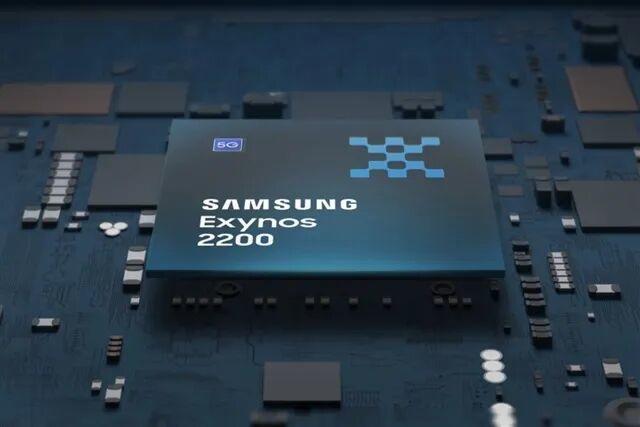
According to ET News and The Korea Economic Daily, citing industry supply chain sources, GAIA aims to push Samsung's System LSI business beyond its long-standing focus on smartphone processors. The chip is reportedly developed using a 4nm process, with its core being a Neural Processing Unit (NPU) optimized for local generative AI workloads on PCs. Its design emphasizes a "memory-centric" approach, deploying computing functions closer to memory to reduce data movement when handling large-scale AI tasks, thereby lowering latency and power consumption caused by data transfer.
Samsung is also advancing the interoperability of GAIA with Processing-in-Memory (PIM) technology. PIM integrates some processing functions directly into memory, reducing the need for repeated data transfers between memory and the processor. However, this collaboration is still under development, and there is currently no information confirming that GAIA has integrated PIM hardware, nor are there public results showing that the two have completed technical verification. Samsung has not disclosed GAIA's computing power, power consumption, memory capacity, software support, or physical form factor. It remains unclear whether the chip will ultimately be deployed as a standalone accelerator, a co-processor, or integrated into a larger System-on-Chip (SoC).
Samsung's System LSI business has long centered its processor lineup around the Exynos application processors used in smartphones. If GAIA progresses smoothly, it will extend Samsung's chip design footprint into the PC market and provide a new product pathway for entering the edge computing market. This is not Samsung's first attempt at PC chips. In 2012, Google Chromebooks powered by Samsung's Exynos 5 Dual processor were already on the market. Compared to that time, the competitive dynamics of the current PC market have significantly changed: as software developers seek to run more generative AI models and agent tasks locally, dedicated AI engines are becoming a crucial component of next-generation PC platforms. Local processing reduces latency and dependence on cloud services, while also helping users maintain control over sensitive data. At the same time, laptops impose stricter requirements on energy efficiency, memory performance, thermal management, and software compatibility.
Nvidia launched the RTX Spark platform in May 2026, integrating Blackwell RTX GPUs, a 20-core Grace CPU, and up to 128GB of unified memory, targeting local AI agents, content creation, and gaming. Qualcomm, with its Snapdragon C, targets the entry-level notebook market starting at around $300, bringing AI capabilities through an integrated NPU. GAIA does not necessarily directly compete with RTX Spark or Snapdragon C. Both of the latter integrate multiple computing functions, while GAIA is currently described solely as an AI accelerator. Samsung is more likely to enter the same wave of the AI PC market through a different product form factor, rather than launching a complete processor platform that directly benchmarks against them.
The fact that Lenovo and HP are testing samples only indicates that GAIA has entered an early customer verification phase, which does not equate to receiving orders or design wins. Its market prospects will depend on actual performance, energy efficiency, software support, manufacturing readiness, and whether Samsung can convince PC manufacturers and developers to jointly support the platform. Samsung also needs to manage its dual role as a chip developer and foundry. When its own products overlap with the chip layouts of foundry clients, issues such as customer trust, technology isolation, and capacity allocation may become long-term management challenges. Currently, there are no signs that GAIA has sparked disputes between Samsung and its clients.
From an industry chain perspective, the strategic significance of GAIA extends beyond Samsung's re-entry into the PC chip market; it represents an attempt to connect logic chip design, memory architecture, PIM technology, and manufacturing capabilities. If this synergy materializes, Samsung could forge a product roadmap distinct from traditional CPU or GPU vendors. However, this combination of resources does not automatically translate into a market advantage. Competition in AI PC chips is not merely about comparing process nodes or peak computing power; it is a systemic competition involving hardware architecture, drivers, compilers, model adaptation, operating system compatibility, overall system power consumption, and cost. If GAIA is launched as a standalone accelerator, it will also need to address coordination efficiency with CPUs, GPUs, and memory, as well as interface standards, thermal design, and total bill of materials. Therefore, GAIA is currently closer to a strategic positioning move by Samsung in the AI PC market rather than a confirmed product victory. Whether it can progress from sample verification to large-scale commercialization hinges on Samsung's ability to establish a stable software ecosystem and convert testing by manufacturers like Lenovo and HP into sustainable design wins.