Sweden's SmartTrap System Achieves Fully Automated Optical Tweezers Operation
en.Wedoany.com Reported - A research team from the University of Gothenburg and Chalmers University of Technology in Sweden has published findings in Nature Methods, successfully training an artificial intelligence system called SmartTrap to use optical tweezers, thereby achieving fully automated operation. The system can autonomously complete the entire process of particle capture, positioning, measurement, and sample replacement, conducting experiments continuously like an assembly line, significantly enhancing the efficiency of microscopic particle analysis. Research shows that SmartTrap can classify and characterize hundreds of particles per hour, and in single-molecule DNA stretching experiments, it completes 10 to 15 tests per hour, with performance reaching or even surpassing that of experienced human operators. This achievement is expected to free researchers from tedious and repetitive operations, driving the intelligent development of experiments in life sciences, biophysics, and disease research.
Traditional optical tweezers operation has an extremely high threshold, requiring professionally trained researchers to monitor and make decisions throughout the process, leading to low experimental throughput, long durations, and operational variability among different researchers. SmartTrap integrates image analysis, real-time deep learning algorithms, custom electronic hardware, precision fluid control, and closed-loop feedback mechanisms to achieve nanoscale three-dimensional positioning and autonomous experimental workflows. After completing one measurement, it can automatically load new samples and continue experiments.
Tests show that the same tasks typically take 10 to 100 times longer when performed manually compared to the AI system, and are susceptible to fatigue and decreased attention. The research team also used the system to measure the mechanical stiffness of red blood cells and map nanoscale electrostatic forces between particles under different salt concentrations. Built on open-source software, SmartTrap has the potential to develop into a shared platform in the future, promoting the construction of intelligent microscopes and automated laboratories, with profound implications for biomedicine, drug development, and basic scientific research.
Related Products
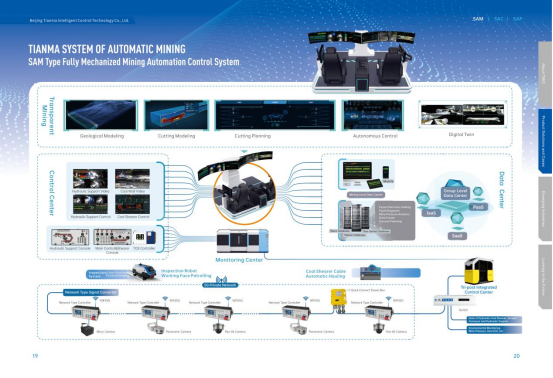

Comprehensive Mining Automation Control System
Beijing Tianma Intelligent Control Technology Co., Ltd.


Multi-function Marine Monitoring Low-altitude Detection Radar Sea-air Boundary Ocean Dynamic Environment Measurement
Chengdu Dixin Technology Co., Ltd.


Mine Explosion-proof and Intrinsically Safe Industrial Ethernet Ring Network (10 Gigabit/Gigabit)
Chongqing Mas Sci&Tech Co., Ltd.
Flat Portable Satellite Terminal 0.35m Aperture Manual Portable Terminal
China Starwin Science & Technology Co., Ltd.

GYTA Type Non-Self-Supporting Aerial/Duct Optical Cable
TONGDING INTERCONNECTION INFORMATION CO., LTD.

TWP16 P-Band Tropospheric Wind Profile Radar
China Huayun Meteorological Technology Group Co., Ltd.