Tusker Minerals Announces Rutile Exploration Target of Approximately 8 Million Tonnes at Cameroon Project
en.Wedoany.com Reported - Tusker Minerals has announced that its Diwong South deposit within the Douala Basin project in Cameroon has a Jorc-compliant exploration target of 2.1 to 2.6 billion tonnes, with total heavy minerals (THMs) grades of 2.1% to 2.3%, including indicative in-situ grades of rutile at 0.3% to 0.35% and zircon at approximately 0.06% to 0.07%. Based on the modelled mineral assemblage, this exploration target contains approximately 48 to 55 million tonnes of heavy minerals, including about 7 to 8 million tonnes of rutile and 1.4 to 1.7 million tonnes of zircon, positioning Diwong South as a significant emerging rutile-bearing mineral sand system. The exploration target covers only a portion of one license within Tusker Minerals' Douala Basin project (totaling 2,580 square kilometres), with multiple additional targets beyond the current model, and preliminary reconnaissance drilling has identified significantly higher-grade near-surface rutile and zircon mineralisation elsewhere in the basin. The company noted that the potential quantity and grade of this exploration target are conceptual in nature, with insufficient exploration conducted to estimate mineral resources, and it is uncertain whether further exploration will lead to resource estimation.
Chief Executive Officer Cliff Fitzhenry described the Douala Basin exploration target as a "game-changing milestone" for Tusker Minerals, establishing a multi-billion-tonne-scale, shallow, infrastructure-advantaged rutile and zircon system. "What makes Douala special is the scale of its upside. The current target covers only a portion of one license within our 2,580-square-kilometre project area, and preliminary reconnaissance drilling has already identified significantly higher-grade near-surface zones, including a 3.2-metre-thick section from surface grading 0.76% rutile. We now have exceptional scale, clear high-grade upside, a premium rutile-rich titanium mineral assemblage, and outstanding infrastructure and logistics positioning. We believe Douala has the potential to be one of the most significant rutile-bearing mineral sand discoveries in recent decades—and we are only just beginning to unlock the broader basin," Fitzhenry said.
Executive Chairman Daniel Smith added that the Douala Basin has the potential to be a true company-maker for Tusker Minerals. "This exploration target delivers multi-billion-tonne scale at an early stage, combining a high-quality titanium mineral assemblage rich in rutile with one of the best infrastructure positions of any large-scale African mineral sand project. Our focus now is on executing a clear, capital-efficient path to define resources while continuing to test the substantial remaining upside across the entire project area. This positions Douala as a cornerstone of our strategy to build a leading African titanium company," Smith said.
The modelled total mineral assemblage comprises approximately 15% rutile and 3% zircon of THMs, implying that the current exploration target contains about 7 to 8 million tonnes of rutile and 1.4 to 1.7 million tonnes of zircon. The Douala Basin exploration target marks the potential formation of a significant new rutile-bearing heavy mineral province in Central Africa. Large-scale natural rutile systems are rare globally, and Douala's distinctiveness lies in its multi-billion-tonne scale, rutile-rich titanium mineral assemblage, significant kyanite by-product potential, shallow mineralisation, and proximity to existing ports and infrastructure—features rarely combined at this scale. The current exploration target is limited to the modelled Diwong South area of approximately 152 square kilometres, representing only about 6% of Tusker Minerals' entire 2,580-square-kilometre Douala Basin project. The target is also vertically constrained by the interpreted basement surface, with many historical drill holes terminating at depths of approximately 18 to 24 metres, and mineralisation remaining open at the base of holes in multiple zones, providing clear potential for additional scale at depth.
Beyond Diwong South, Tusker Minerals has completed limited reconnaissance work, with initial testing showing rutile mineralisation at multiple additional targets across the project area. Initial reconnaissance drilling has already identified significantly higher-grade near-surface mineralisation outside the current exploration target, highlighting the potential for further mineralised zones within the basin. With Diwong South demonstrating extensive lateral continuity, historical drilling locally terminating in mineralisation, and higher-grade reconnaissance results elsewhere, there remains significant scope to expand the known mineralisation footprint both laterally and at depth. The current exploration target represents an initial foundation within a larger, largely untested 2,580-square-kilometre district-scale opportunity.
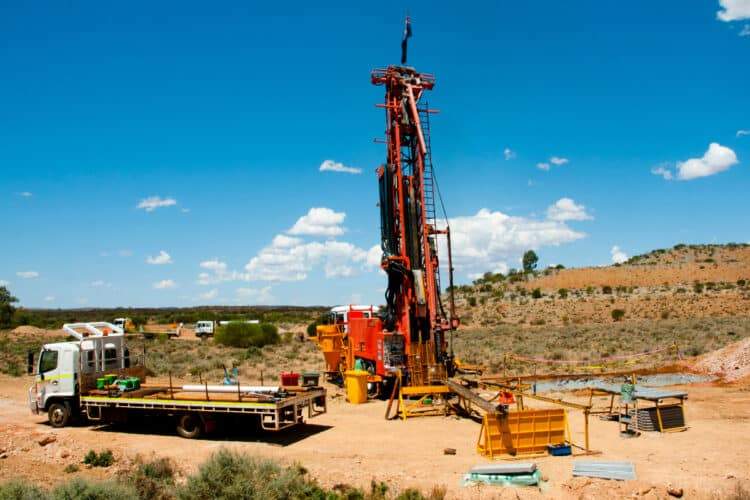
Tusker Minerals' preliminary reconnaissance drilling has shown potential for significantly higher-grade near-surface mineralisation, including: 3.2 metres thick from surface grading 0.76% rutile and 0.08% zircon; 4.2 metres thick from surface grading 0.53% rutile and 0.08% zircon, with a single sample peak of 1 metre thick grading 0.86% rutile and 0.12% zircon.
Douala also features an unusually kyanite-rich heavy mineral assemblage, creating significant additional by-product opportunities beyond rutile and zircon. Kyanite accounts for approximately 70% of the modelled THM assemblage, highlighting the potential for a future important industrial mineral opportunity. No economic value has been assigned to kyanite at this stage, but successful recovery and certification of a marketable kyanite or calcined mullite product could provide an additional revenue stream and significantly improve overall heavy mineral utilisation. The company plans to advance representative bulk testing, expand mineralogical characterisation, and conduct early market engagement to assess recovery rates, product quality, and potential commercial pathways.
Few globally significant mineral sand projects combine multi-billion-tonne scale with direct access to existing port, power, transport, and industrial infrastructure. Douala's fundamental distinction lies in its proximity to existing roads, power, industrial services, skilled labour, and international port infrastructure, with the project located within approximately 40 kilometres of the Port of Douala, providing access to existing export infrastructure and major international shipping routes.
An independent review by Mineral Technologies has established a clear pathway to advance the Douala Basin from the current exploration target to a first Jorc mineral resource estimate. The existing dataset reveals two coherent mineralised zones with extensive lateral continuity, with the upper plateau and core mineralised area providing the strongest initial focus for resource conversion. The company intends to pursue a targeted, capital-efficient path to deliver a first Jorc mineral resource estimate, setting multiple near-term objectives, including priority infill and extensional drilling in the highest-confidence portion of the current exploration target (the upper aeolian plateau) to support resource conversion, and deeper drilling below the historical approximately 18 to 24-metre depth limit to test mineralisation extensions. The company also aims to expand mineralogical and metallurgical testing focused on rutile, zircon, and kyanite recovery and product characteristics, and to update geological and block models, targeting support for a first Jorc mineral resource estimate (MRE) in priority areas within approximately 6 to 9 months, subject to drilling results, permitting, assay turnaround, and technical outcomes. The company intends to advance the conversion of the exploration target to a first MRE concurrently with broader growth drilling.
The Diwong South exploration target represents a transformative step in Tusker Minerals' strategy to build a leading African titanium company. Combined with the Central Rutile project in Cameroon and the Mzimba Rutile project in Malawi, Tusker Minerals now controls multiple large-scale rutile opportunities across two highly prospective African titanium jurisdictions. The portfolio encompasses complementary deposit types—coastal heavy mineral sands and residual rutile systems—providing multiple pathways for discovery, resource growth, and future development. With an established local team, growing technical capabilities, and a focused titanium strategy, Tusker Minerals is building a differentiated African portfolio characterised by scale, high-quality titanium feedstocks, and high-impact discovery potential, with the Douala Basin now serving as the cornerstone of its strategy to build a diversified African titanium company.
Related Products

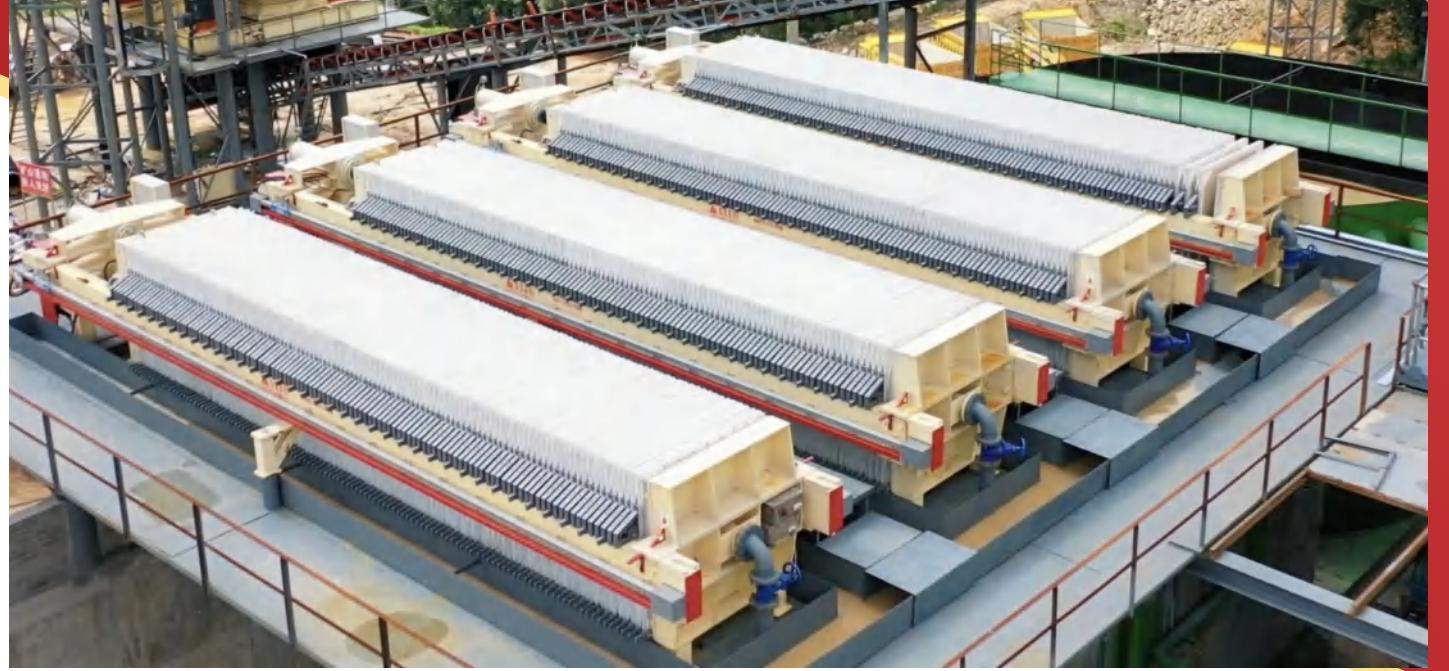
Hydraulic Plate and Frame Filter Press
Guangdong Leimeng Intelligent Equipment Group Co., Ltd.
Comprehensive Mining Automation Control System
Beijing Tianma Intelligent Control Technology Co., Ltd.

Mine Explosion-proof and Intrinsically Safe Industrial Ethernet Ring Network (10 Gigabit/Gigabit)
Chongqing Mas Sci&Tech Co., Ltd.
Core Technologies of the Mining Technology and Equipment Business Unit: Efficient Mining Methods and Processes
CHANGSHA INSTITUTE OF MINING RESEARCH CO., LTD.