Midea's €1,200 Installation-Free Air Conditioner Sold Out in Europe
en.Wedoany.com Reported - Midea's PortaSplit air conditioner has recently sold out in the European market. In Germany, a programmer developed a dedicated inventory monitoring website to snap up the product, priced at around €1,200, which automatically captures inventory information from various channels and pushes restock alerts. Some users have driven hundreds of kilometers to pick up the product from other locations. On German second-hand trading platforms, the product's price once reached two to three times the official retail price. On foreign social media, European users have dubbed screenshots of successful orders as "the most worthy trophy of this summer."
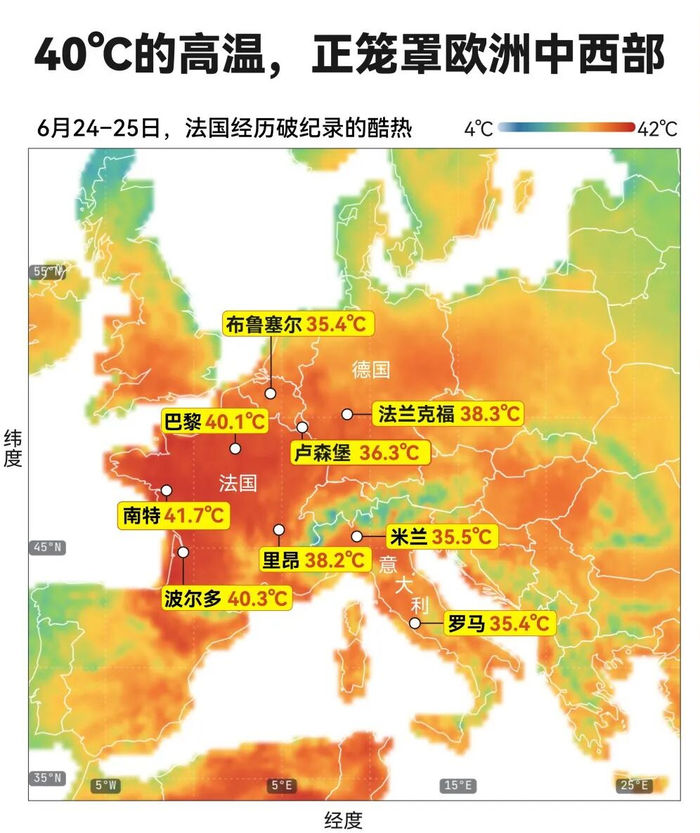
The direct reason for PortaSplit's popularity in Europe is extreme weather. This summer, Europe experienced its most severe heatwave in recent years. Starting in late June, a heat dome enveloped Western Europe, with countries like France, Spain, Germany, and Italy continuously exceeding 40 degrees Celsius. France's national average temperature set a new record since meteorological records began. The European Environment Agency pointed out that Europe is the fastest-warming continent globally, with a warming rate more than double the global average. Cities like London, Paris, and Berlin were not extremely hot in past summers, and old houses were primarily designed for cold protection. With climate change, this building system is increasingly struggling to adapt to sustained high temperatures.
Multiple air conditioning companies, including Midea, LG, Samsung, and Mitsubishi Electric, have reported significant order growth in the European market this year. Samsung stated that sales in markets such as France, Spain, and Italy achieved double-digit growth. LG revealed that its Korean factory has been operating at full capacity since April. Mitsubishi Electric also noted continuously increasing demand in markets like Germany, France, and the UK.
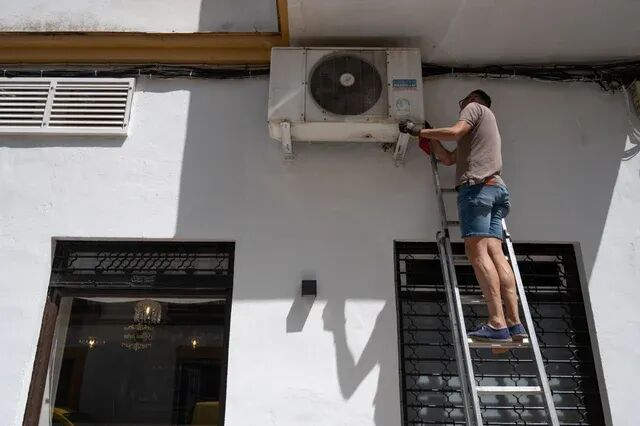
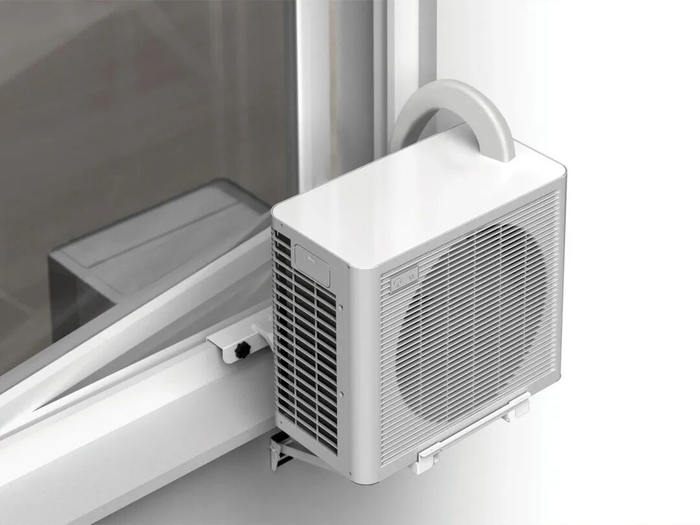
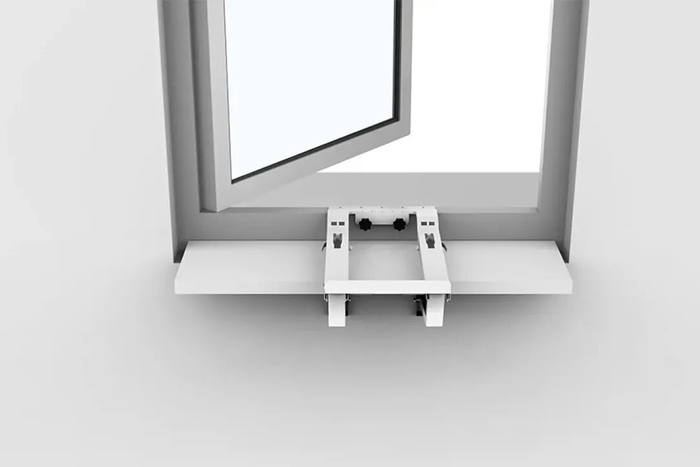
The core reason for PortaSplit's hot sales lies in its solution to the installation pain points of European users. In Europe, installing a traditional split air conditioner costs approximately €1,000 to €2,000 and requires property management approval. Renters need permission from their landlords and must restore the original state when moving out. Many historical buildings cannot have holes drilled in their exterior walls, and apartment facades are managed by homeowners' associations. Some cities even require an approval process. Procedures such as drilling holes, laying copper pipes, vacuuming, electrical work, and hiring refrigeration engineers all require appointments, with queues lasting months during peak seasons. In contrast, PortaSplit comes pre-connected between the indoor and outdoor units at the factory. During installation, users only need to hang the outdoor unit on a window bracket and route the connecting pipe through the window for use, without drilling holes in walls, reconnecting the refrigeration system, vacuuming, or charging refrigerant. This product retains the high cooling efficiency and low noise advantages of split air conditioners while bypassing the most troublesome and costly installation steps of traditional split units.
According to data from the International Energy Agency, the overall air conditioning ownership rate in Europe is about 20%, compared to 60% in China and over 90% in the United States and Japan. The gap is not entirely due to purchasing power; the high installation barrier is a significant factor. In 2025, PortaSplit was selected as one of *Time* magazine's "Best Inventions of the Year," with the review stating that it has re-solved Europe's long-standing air conditioning installation challenge.
From an industrial perspective, this product is not a new design from Midea's Chinese headquarters for Europe but originated from Midea's Stuttgart R&D center in Germany. After years of research, the R&D team found that European consumers' real complaints were not about insufficient cooling but about mobile air conditioners being too noisy and inefficient, and split air conditioners being too expensive and complicated to install. The team repeatedly studied window structures, building types, and usage habits in different European countries, ultimately developing a product tailored to the European lifestyle. The successful development of this product involved three hurdles that European local companies find difficult to overcome: Within European home appliance companies, products like PortaSplit would be classified under the low-margin mobile air conditioner category, making it hard to pass financial ROI calculations, whereas Midea's German R&D center could leverage China's supply chain for rapid validation; Europe has lost its manufacturing capability for precision molds and miniaturized heat exchangers, while Midea, backed by the Pearl River Delta industrial belt, has the ability for rapid prototyping and iteration; the European air conditioning market's profits are divided among installation service providers and retailers, and Midea, as an outsider, directly reaches users through e-commerce, using "installation-free" as a wedge to break in. China possesses a complete air conditioning industry chain, with R&D, manufacturing, molds, and components concentrated in the same industrial cluster, allowing new designs to be quickly prototyped and repeatedly modified and validated. This model of global R&D, local insight, industrial synergy, and large-scale manufacturing has enabled PortaSplit to rapidly open up the European market.
This case also reflects the upgrading trend in China's home appliance industry. In the past, Chinese companies mainly competed on price and production capacity for products defined by foreign brands. Now, they are proactively identifying market gaps and redefining product categories. DJI transformed drones from professional tools into mass consumer products, EcoFlow pioneered the portable power station category, and HOVERAir launched the 99-gram ultra-light flying camera X1S, all following a similar logic.
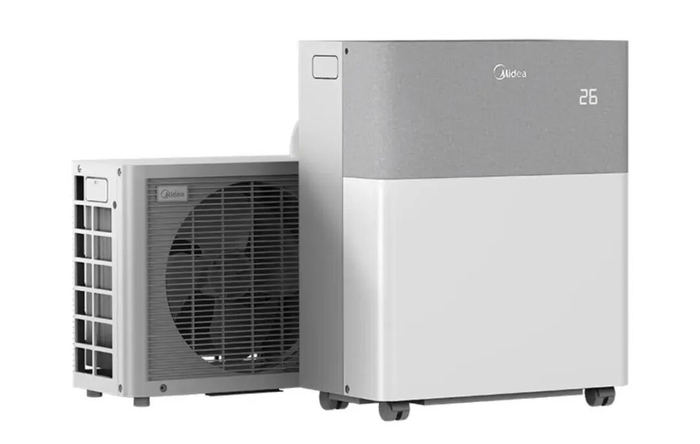

The design of PortaSplit originated from Midea's Stuttgart R&D center in Germany. The demand came from Europe, R&D was based in Germany, manufacturing was in China, and the supply chain covered the globe. Local teams were responsible for understanding the market, while Chinese manufacturing handled rapid product realization, relying on the global supply chain for scaled delivery. This new capability has enabled Chinese companies to shift from exporting manufacturing capacity to exporting product definition capabilities.