Hutchinson France and Leju Robot Forge Strategic Partnership
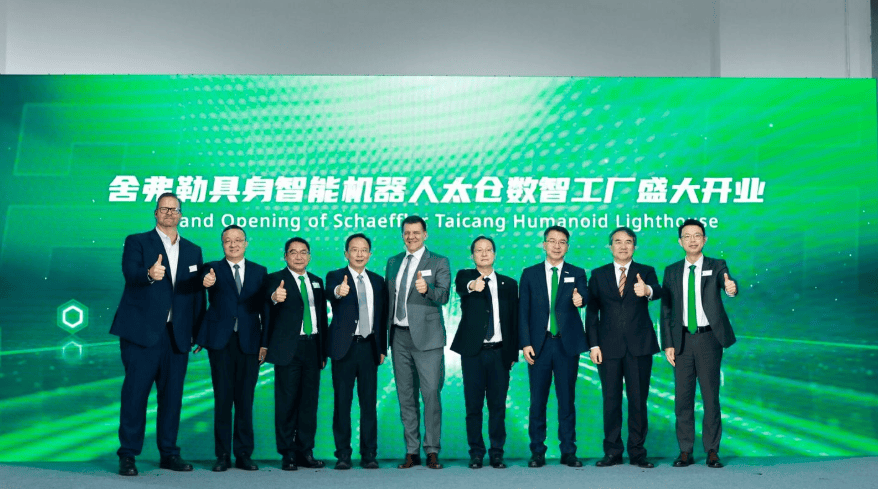
en.Wedoany.com Reported - Recently, French industrial giant Hutchinson entered into a strategic partnership with China's Leju Robot. This marks the second global manufacturing leader in six months, following Germany's Schaeffler, to engage in deep collaboration with a Chinese embodied intelligence company. Over the past three years, the industry has unveiled over a hundred humanoid prototypes, yet very few can stably adapt to ordinary small and medium-sized factory environments. Leju is one of the very few Chinese embodied intelligence companies to secure deep partnerships with two global industrial giants within half a year.
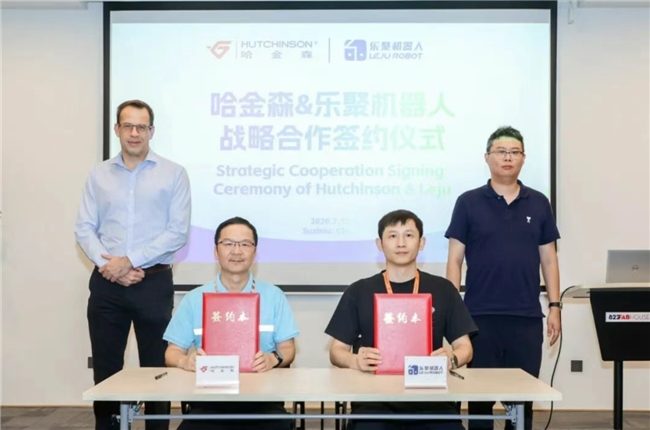
These two collaborations reflect a reassessment of next-generation productivity by leading manufacturing enterprises. For manufacturers, whether a new technology is advanced is not the primary concern; the key is whether it can become part of the manufacturing system for the next decade. While humanoid robots have previously demonstrated their capabilities, global industrial giants are now focusing on whether these products truly understand factories and can participate in actual production. The partnerships with Schaeffler and Hutchinson indicate that humanoid robots are moving from the technology validation stage to being integrated into the upgrade path of the global manufacturing system.
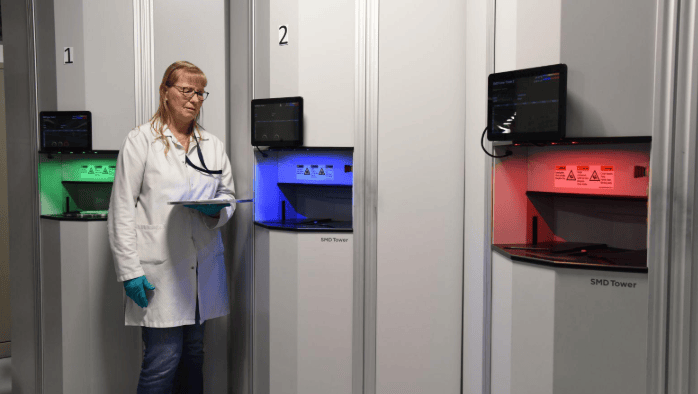
The core challenge facing the manufacturing industry today is no longer standardization, but flexibility. Industries such as automotive, 3C, and new energy have largely completed large-scale automation transformation, with some large-scale enterprises achieving automation rates of 95%. However, processes like carton depalletizing, bin handling, and SMT tray delivery still require significant manual labor due to frequent changes. Traditional industrial robots excel at deterministic tasks but struggle to adapt to constantly changing environments. Every product switch or process adjustment necessitates reprogramming and line modification; the higher the degree of automation, the higher the reconfiguration cost.
The fundamental difference between humanoid robots and traditional industrial robots is that the former attempts to change how processes adapt, actively understanding and adjusting to workflows. What manufacturing needs are robots that understand the factory, not factories that adapt to robots. This means robots must master production rhythms, process flows, and the collaborative relationship between humans and equipment. Over the past few years, Leju has continuously delved into real-world scenarios like automotive manufacturing and industrial logistics, conducting long-term validation of typical processes such as carton depalletizing, bin handling, and SMT tray retrieval. In projects like FAW Hongqi, it has achieved an overall operational success rate exceeding 95% and stable operation for 8 consecutive hours.
Within six months, two global industrial giants from Germany and France have successively chosen Leju, proving its replication capability across industrial systems. Schaeffler represents the global high-end equipment manufacturing system, while Hutchinson represents the global precision manufacturing system. These two collaborations occurred in different countries and segments of the industrial chain, pointing to the same outcome: Chinese humanoid robots are beginning to demonstrate potential for sustained validation across diverse industrial scenarios. True commercialization is not about landing the first customer, but about consistently creating value across different industrial contexts.
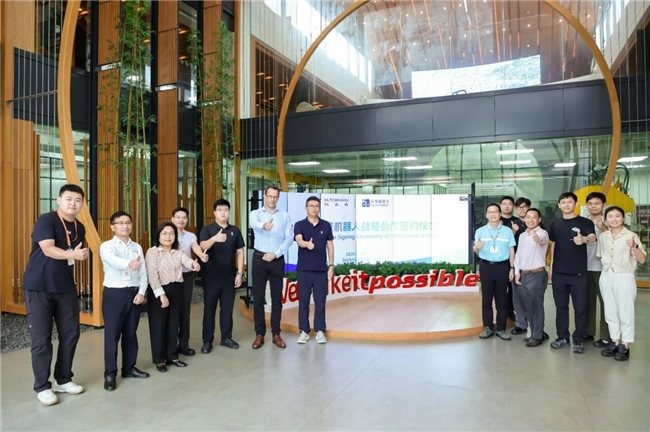
The global manufacturing system is sending new signals. An increasing number of industrial leaders are incorporating humanoid robot products from top companies into their long-term manufacturing plans, rather than just for technology validation. The manufacturing industry does not easily change its technological path, as a production line or automation system often corresponds to a lifecycle of over a decade. The deep collaborations between companies like Schaeffler and Hutchinson and embodied intelligence firms are essentially a joint, early-stage layout for next-generation manufacturing capabilities. Future investment in manufacturing will shift from automation to intelligent systems capable of continuously adapting to change. This will drive components, control systems, industrial software, perception systems, logistics equipment, and even the entire industrial supply chain to re-establish collaborative relationships centered around embodied intelligence.
Humanoid robot technology is entering a critical phase from technology validation to integration into the manufacturing system. The benchmark for measuring industry competition is no longer a single technological breakthrough, but whether a company can continuously enter real factories and accumulate production capabilities. Industrial robots have defined manufacturing efficiency for the past two decades, while humanoid robots are attempting to define manufacturing flexibility for the next two decades. What truly transforms an industry is not a single device, but a new manufacturing approach that restructures automation systems around change.
Related Products
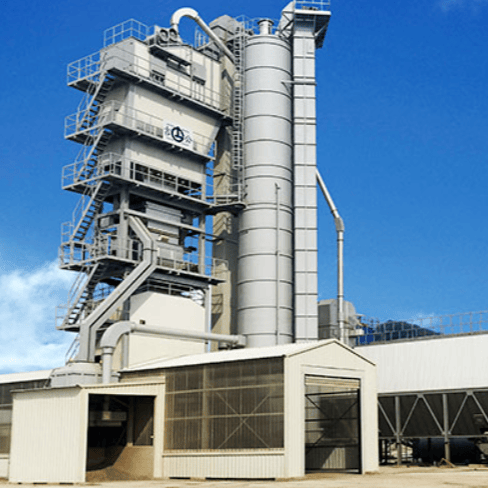

LBH4000 Batch Environmental Protection Asphalt Mixing Plant | Asphalt Batching Plant | Asphalt Mixing Plant
Jilin Province Road Construction Machinery Co., Ltd.

Industrial and Commercial Point-Type Gas Detector
Jinan Benan Technology Development Co., Ltd.


CAP1400 main feedwater flow nozzle flowmeter.
Jiangsu Hongda Instrument Technology Co., LTD.