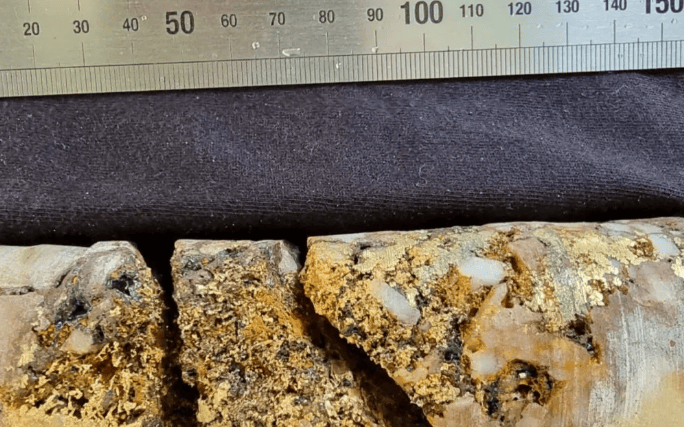
en.Wedoany.com Reported - First Atlantic Nickel & Cobalt Corp. has achieved new progress at its wholly-owned Pipestone XL nickel-cobalt alloy project in Newfoundland and Labrador, Canada. The company's second drill hole, XL-26-16, completed at the Alloy Max zone, intersected coarse, visible disseminated awaruite throughout its entire 525-meter length, making it the deepest drill hole to date at the project.
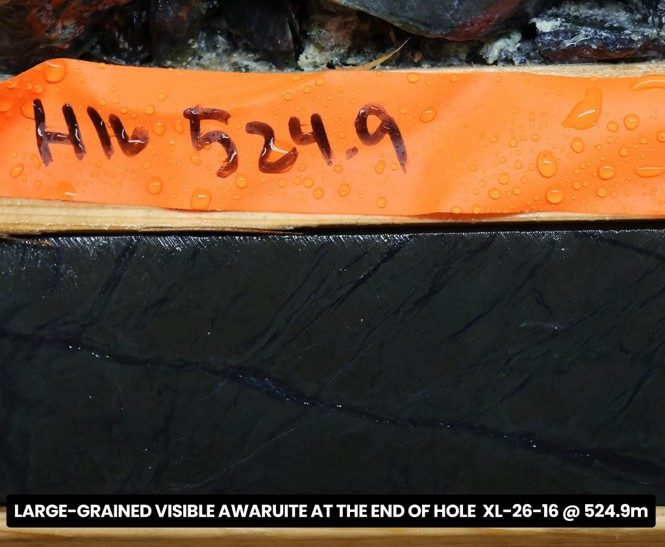
Drill hole XL-26-16 is located approximately 445 meters south of the Alloy Max discovery hole XL-26-15, announced on June 15, 2026, and remained mineralized at its termination. Compared to the discovery hole, this drill hole shows higher apparent abundance of awaruite and coarser grain frequency, with abundance and grain size increasing with depth. Alloy Max is the company's second large-scale awaruite zone at the Pipestone XL project, following the RPM zone.
Drill hole XL-26-16 entered bedrock after only approximately 9 meters of overburden and continued to a final depth of 525 meters, with awaruite still clearly visible in the last core section, indicating further mineralization potential at depth. Drilling has now confirmed approximately 445 meters of strike length within the approximately 4-kilometer-long Alloy Max target area, representing about 11% of the target's strike length. Most of the zone remains untested along strike and at depth.
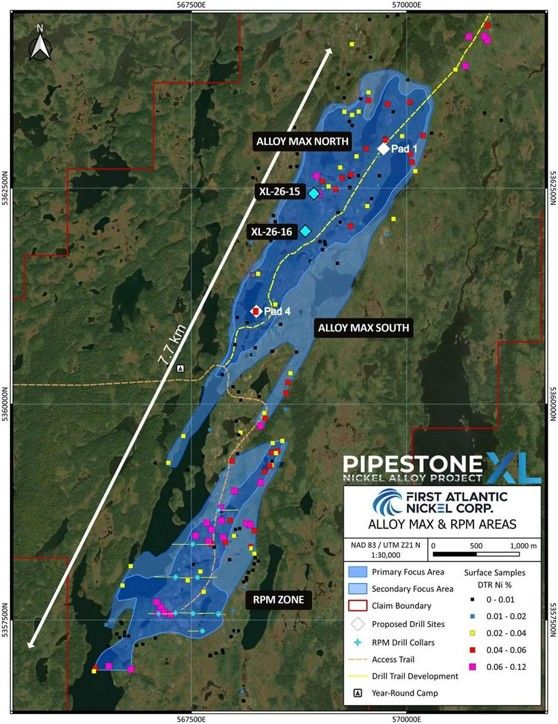
Pipestone XL is a district-scale project wholly owned by First Atlantic, spanning the 30-kilometer-long Pipestone ophiolite complex in central Newfoundland. The project hosts multiple awaruite (Ni₃Fe) mineralized zones, with the RPM zone's drilling having delineated over 1.2 kilometers of strike and over 800 meters of width of magnetic awaruite. Drilling at the Alloy Max zone is ongoing, with a strike length of approximately 4 kilometers and a width of up to 1.5 kilometers.
Awaruite is a naturally occurring nickel-iron-cobalt alloy (Ni₃Fe) containing approximately 77% nickel. Due to its metallic state, it can be upgraded through the company's ONSHORE MAX™ process without smelting, roasting, or high-pressure acid leaching. Preliminary metallurgical test work upgraded RPM zone rock samples to a high-grade alloy concentrate averaging 67.4% nickel, with grades up to 71.9% nickel and 1.76% cobalt. This concentrate can be directly used for downstream battery chemical refining or specialty alloy and stainless steel manufacturing.
Company geologists also observed during drilling that areas of reduced magnetite are positively correlated with increased awaruite abundance, consistency, and grain size, a finding that may alter assessments of the mineralized zone's scale. The company is reinterpreting regional magnetic data accordingly to expand the potential extent of the Alloy Max and RPM zones.
All exploration activities are supervised by the company's Director and CEO Adrian Smith (P.Geo.), a qualified person as defined by National Instrument 43-101.