en.Wedoany.com Reported - A study by Portuguese real estate online platform Imovirtual shows that between April and June 2026, 85% of the country's housing demand was concentrated in coastal areas.
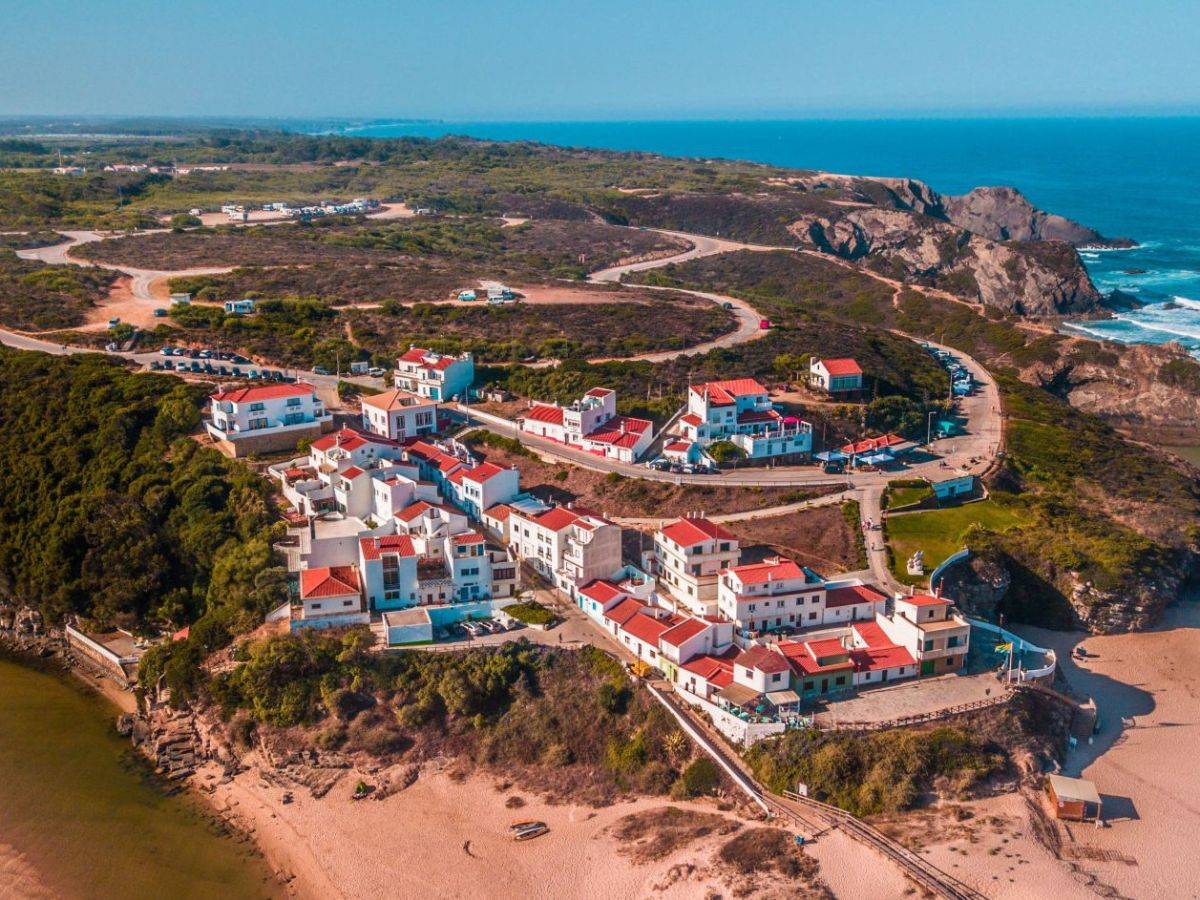
The study assessed the Portuguese real estate market, revealing a concentration of housing demand in coastal regions. It also reported that inland areas continue to be a relevant alternative for many homebuyers, primarily due to more affordable prices. Data indicates that demand in inland areas was more stable during the quarter. Coastal demand fell by 25.3% from April to June, while the decline in inland areas was smaller at 21.2%, reflecting a relatively less pronounced slowdown in the inland market.
Despite growth in inland demand, coastal areas remain the primary concentration of demand. Lisbon accounted for 22.9% of national searches, Porto for 20.2%, and Setúbal for 10.4%, with these three regions together representing over half of national demand. In inland areas, Santarém concentrated 37.1% of regional demand, benefiting from its proximity to the Lisbon metropolitan area and homebuyers seeking more affordable options.
The price gap between coastal and inland areas remains significant. The average search price in coastal areas is approximately €260,000, compared to €155,000 in inland areas, a difference of €105,000, equivalent to the average property value in regions such as Bragança or Guarda. In coastal areas, Madeira has the highest average search price at €360,000, followed by Lisbon at €325,000, with Setúbal and Faro both at €300,000. In inland areas, Évora and Santarém have the highest prices at €200,000, while Bragança is the region with the lowest average search price nationally at €120,000.
The study also highlights differences in search price evolution between coastal and inland areas. Inland prices are rising, with Castelo Branco up 16.7%, Beja up 9.0%, Portalegre up 7.7%, Bragança up 6.7%, and Guarda up 6.2%, as homebuyers begin looking for properties at higher price levels. Coastal areas, however, are experiencing declines, with Lisbon down 5.9%, Madeira down 6.7%, and the Azores down 13.0%.
Portuguese buyers still show a clear preference for family homes. Housing demand is primarily focused on four-bedroom homes, accounting for 33.5%, and three-bedroom homes, at 31.9%, with these two types representing about 65% of searches. This trend is even more pronounced in the inland market, where T4 is the most popular property type across all analyzed regions. In coastal areas, only Porto and Braga have T3 as the preferred option. Price differences may underlie these data, with the median price for a T4 in coastal areas at €310,000, dropping to €195,000 in inland areas. In Bragança, the average asking price for a T4 is only €138,750, less than half the prices recorded in several coastal markets.
Some municipalities buck the national trend. In inland areas, Miranda do Douro leads with an 87.9% increase in demand, followed by Macedo de Cavaleiros at 39.3%, Vouzela at 27.3%, Celorico da Beira at 24.1%, and Portalegre at 15.7%. In coastal areas, Paredes de Coura grew by 63.0%, Pampilhosa da Serra by 30.0%, Pedrógão Grande by 22.9%, Estarreja by 16.5%, and Albufeira by 15.2%, the latter being the municipality with the highest absolute increase in demand during the analyzed period.
Imovirtual Marketing Manager Sylvia Bozzo stated that the study confirms the market remains highly concentrated in coastal areas, but the inland is far from a homogeneous reality. Some regions are gaining momentum, driven by homebuyers seeking a balance between larger spaces, more affordable prices, and better quality of life and financial capacity. The Imovirtual study confirms trends in the Portuguese real estate market, with demand concentrated in coastal areas, while also showing signs of a shift in the housing geography.