Google AI cites Facebook 19.5 million times
en.Wedoany.com Reported - Google AI is increasingly drawing information from social media platforms rather than traditional websites when answering user queries. A recent study shows that social platforms have become a core source for its responses, even though users typically do not visit these platforms directly.

The data was provided by BrightEdge, an enterprise SEO company. Its tool tracks approximately 300 million monthly searches. Although this represents only the company's estimates, the trend it reveals cannot be ignored. BrightEdge stated that Facebook appeared as an information source in 19.5 million Google AI Overviews, Instagram appeared 877,000 times, and TikTok appeared 78,000 times. This means that roughly once in every 15 searches, Google AI cites social media content to generate a response. This makes Meta's platforms the single largest source of information for Google AI.
This shift reflects a change in how artificial intelligence works. Google AI behaves more like a researcher; instead of directly pointing to brand websites, it extracts information from broader conversations around specific topics, including posts, videos, community discussions, and creator content. BrightEdge describes different platforms as distinct "experts": Facebook covers local and community signals, Instagram handles lifestyle and culture, TikTok focuses on viral trends and deals, Reddit provides first-hand experiences, and YouTube handles how-to guides. For example, a Facebook post about the Cincinnati Reds was used to answer a query about live sports streaming with 11.6 million monthly searches; an Instagram post guided a query about mobile payment apps.
For brands and marketers, this trend means that being seen in AI responses no longer equates to ranking high on one's own website. Jim Yu, CEO of BrightEdge, stated that the "social side" of Google AI has changed how brands view visibility; a single post, video, or community thread can shape the answer customers see. This introduces the concept of "generative engine optimization," where the goal becomes influencing what artificial intelligence says, rather than merely competing for page rankings. Brands also face a pitfall: influence may come from accounts beyond their control, where a niche Reddit post or a local group can have more impact than a carefully crafted official company page.
Currently, social feeds are not just places for people to browse content; they are increasingly becoming the primary venue for Google AI to find answers.
Related Products


TWP16 P-Band Tropospheric Wind Profile Radar
China Huayun Meteorological Technology Group Co., Ltd.



Industrial and Commercial Point-Type Gas Detector
Jinan Benan Technology Development Co., Ltd.
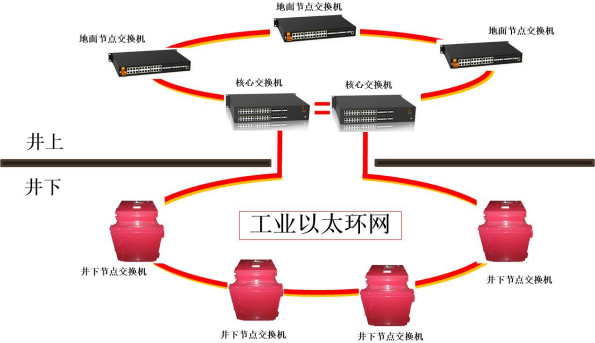
Mine Explosion-proof and Intrinsically Safe Industrial Ethernet Ring Network (10 Gigabit/Gigabit)
Chongqing Mas Sci&Tech Co., Ltd.
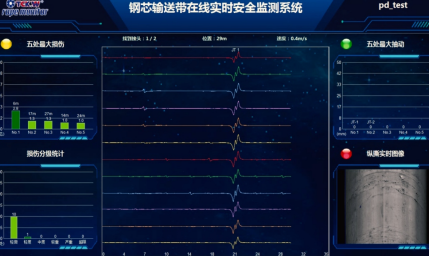
Conveyor Belt Intelligent Monitoring System
LUO YANG WIRE ROPE INSPECTION TECHNOLOGY CO., LTD.