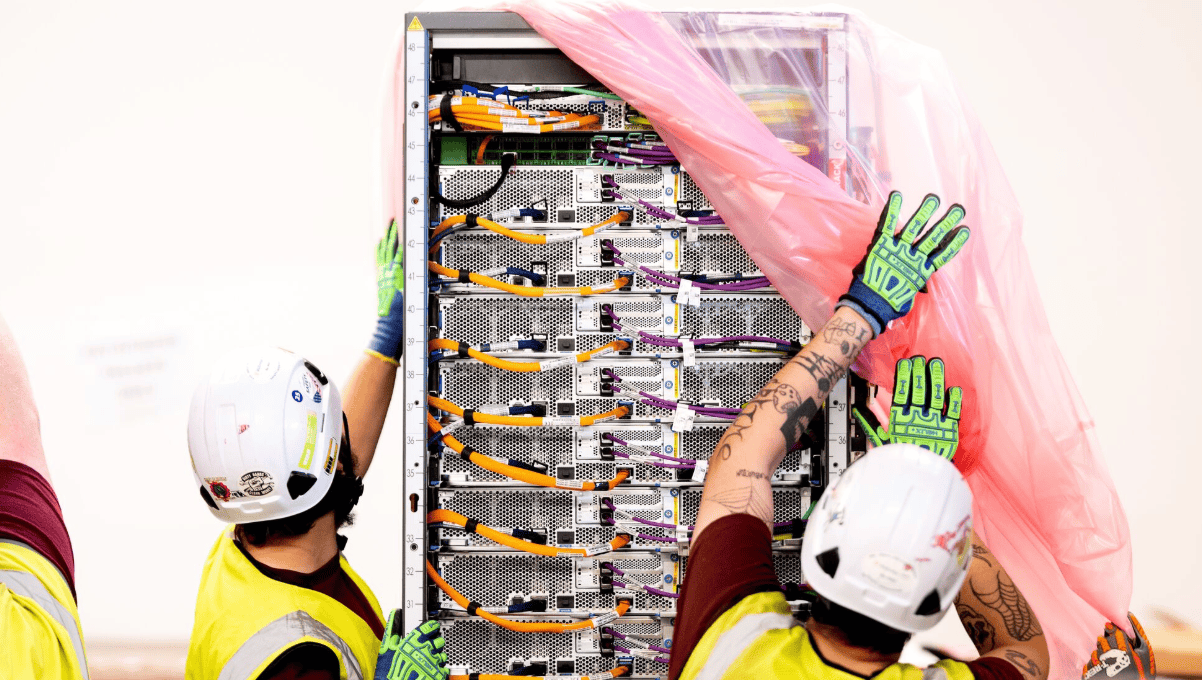
NVIDIA Agent Toolkit Integrates Omniverse Library to Power AI Simulation
en.Wedoany.com Reported - NVIDIA announced that its NVIDIA Agent Toolkit now includes the NVIDIA Omniverse library, a set of software components that provide tools and skills for AI agents, enabling them to add physical AI capabilities to existing applications and prepare 3D content for simulation.
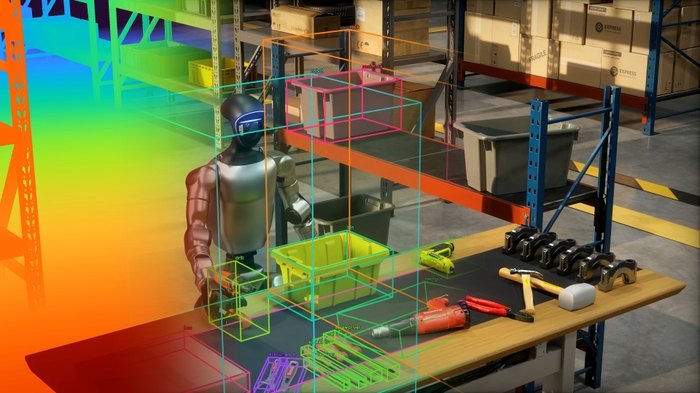
Robots, factories, and autonomous systems need to be designed, tested, and trained in simulated environments before being deployed in the real world. Preparing 3D content for simulation requires not only realistic visuals, but assets must also have the correct structure, materials, scale, labels, sensors, and physical properties. With the NVIDIA Omniverse library in the NVIDIA Agent Toolkit, AI agents gain the tools and skills to build workflows, inspect scenes, flag issues, and prepare assets, helping developers convert 3D content into simulation-ready environments faster.
Jensen Huang, founder and CEO of NVIDIA, stated that the era of physical AI will first be built in simulation. The NVIDIA Agent Toolkit, equipped with the Omniverse library, brings AI agents into the 3D tools developers already use, helping them build simulation-ready worlds where robots, factories, and autonomous systems can be trained and tested before entering the real world.
Software makers including SideFX and PTC are integrating the Omniverse library for agent-ready sensor simulation, physics, and asset validation, bringing agentic AI into the 3D content preparation applications and workflows already used by developers and technical artists.
The Omniverse library brings physical AI skills to the NVIDIA Agent Toolkit. The NVIDIA Agent Toolkit helps software makers build AI agents that connect tools, skills, and data sources, while the Omniverse library extends these agents into 3D and physical AI workflows, providing callable tools for sensor simulation, GPU-accelerated physics, and simulation-ready asset validation within existing applications. The new Omniverse library includes ovrtx, ovphysx, and CAD-to-SimReady skills, now available on GitHub, giving AI agents the tools to build workflows for inspecting scenes, testing variations, and preparing 3D assets for simulation. A new blueprint for integrating the Omniverse library in Blender is also available on GitHub.
For NVIDIA RTX sensor simulation, ovrtx helps applications generate camera, lidar, radar, and other sensor outputs from 3D scenes, enabling developers and AI agents to test how physical AI systems perceive virtual environments. For physics behavior, ovphysx leverages GPU-accelerated physics to bring realistic behavior to 3D scenes through properties such as collision, mass, friction, and motion, allowing teams to first test how objects and systems interact in simulation. For simulation-ready 3D objects, the CAD-to-SimReady skill helps convert computer-aided design (CAD) data into OpenUSD-based SimReady assets, providing 3D content with the properties needed for physical AI simulation and virtual testing.
Software makers including SideFX and PTC, as well as startups ForgeCAD, Lightwheel, Moonlake AI, and Palatial, are among the first to adopt and build using the Omniverse library as part of the NVIDIA Agent Toolkit. SideFX is using OpenUSD workflows along with the ovrtx and ovphysx libraries to explore how agents can help integrate the Omniverse library into its Houdini procedural 3D content creation workflows, providing technical artists with a path to generate, test physics, and prepare content for simulation. Kim Davidson, president and CEO of SideFX, said that procedural 3D creation is essential for building the complex, controllable worlds needed for simulation, robotics, and industrial AI. With the NVIDIA Omniverse library and OpenUSD, SideFX is exploring how agent-ready tools can support Houdini workflows, helping technical artists review, test, and prepare procedural content for simulation while maintaining control over the creative process. The PTC Onshape CAD and product data management (PDM) platform is using OpenUSD and ovrtx to connect cloud-native design workflows with physics simulation, helping product design content stay connected with CAD, PDM, collaboration, and simulation workflows. Neil Barua, president and CEO of PTC, said that engineering teams are seeking more connected ways to design, collaborate, and simulate throughout the development process. PTC's collaboration with NVIDIA supports this broader vision, and the NVIDIA Omniverse library helps enable simulation-ready workflows, bringing validation and testing closer to where product design happens.
The "SimReady" Blender demo showcased at SIGGRAPH is an example workflow built in Blender using the NVIDIA Omniverse library and NVIDIA NemoClaw, demonstrating how software makers can add agent-ready simulation capabilities to existing 3D applications. This is now available as a blueprint for integrating the Omniverse library in Blender. The demo also previews how these workflows can run locally, from compact RTX systems powered by NVIDIA RTX Spark to systems powered by NVIDIA GB300 with NVIDIA DGX Station. RTX Spark systems will be available this fall from ASUS, Dell Technologies, HP, Lenovo, Microsoft Surface, and MSI, with models from Acer and GIGABYTE following later. DGX Station systems can be ordered from ASUS, Dell, GIGABYTE, HP, MSI, Supermicro, and Exxact.
Startups, including those in the NVIDIA Inception program, are also leveraging the Omniverse library and skills to add agent-assisted asset and scene preparation workflows. Palatial is using the Omniverse CAD-to-SimReady skill to automatically create and validate SimReady assets at scale from CAD input. Lightwheel is using OpenUSD-powered Omniverse content agents in its SimReadyGen technology to generate physically accurate SimReady assets from text prompts. ForgeCAD and Moonlake AI are exploring agent-driven 3D content workflows, using Omniverse capabilities to help generate, enhance, and prepare assets for physical AI simulation.
Related Products


Comprehensive Mining Automation Control System
Beijing Tianma Intelligent Control Technology Co., Ltd.
Mine Explosion-proof and Intrinsically Safe Industrial Ethernet Ring Network (10 Gigabit/Gigabit)
Chongqing Mas Sci&Tech Co., Ltd.
Flat Portable Satellite Terminal 0.35m Aperture Manual Portable Terminal
China Starwin Science & Technology Co., Ltd.
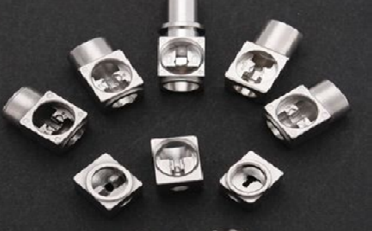


MUX Series Communication Interface Device for Security and Stability Control System
Nanjing NR Electric Co., Ltd.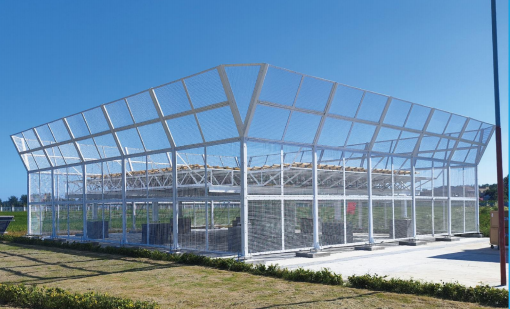
TWP16 P-Band Tropospheric Wind Profile Radar
China Huayun Meteorological Technology Group Co., Ltd.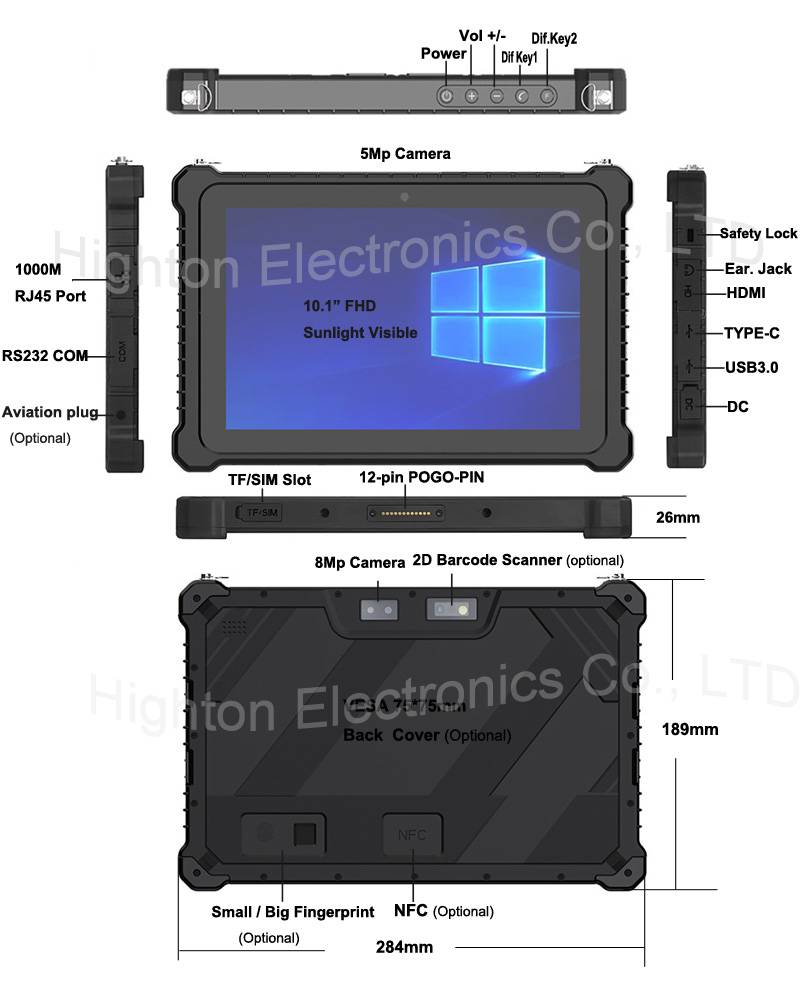
Hot Selling 10 Inch Intel N5100 I5 I7 FHD 8 +128GB 16+256GB Win10 Pro Win11 Pro 4G 5G Rugged Tablet PC Pad with NFC Barcode
Highton Electronics Co., Ltd.