en.Wedoany.com Reported - West Red Lake Gold Mines released its Q2 2026 operational update, reporting gold production of 8,576 ounces from the Madsen Mine in the Red Lake region of Ontario, a 51% increase from 5,667 ounces in Q1. Tonnes mined rose 46% to 75,524 tonnes, while ounces mined climbed 73% to 10,459 ounces, with average mining grade improving 23% from 3.5 g/t to 4.3 g/t. Mill throughput averaged 842 tonnes per day in the quarter, up from 572 tonnes per day in Q1.
President and CEO Shane Williams stated that the mine sequencing strategy implemented in the first half of the year is translating into operational results, with the company unlocking multiple stope faces. Mining rates in the latter part of the quarter consistently exceeded the mill's current permitted capacity of 800 tonnes per day, allowing the company to build a surface stockpile of approximately 10,768 tonnes—equivalent to about half a month of mill feed—containing roughly 1,500 ounces of gold.
Financially, after reaching breakeven in Q1, the company began accumulating cash on its balance sheet in Q2 and started repaying debt incurred during the mine restart. Williams noted that the company is now processing six to seven stopes per cycle, involving underground drilling, sealing, and ground support before mining, and has just reached this stage.
Most of the ore in Q2 came from the Austin and South Austin zones, including remnant sections from historical mining and new untouched material. The current average mining grade is approximately 4 g/t, and as mining progresses deeper into non-remnant areas—which the mine's previous operator did not extract—the grade is expected to rise to 6 to 8 g/t for the remainder of the year. Williams said the company had anticipated difficulties mining near historical stopes but found that inaccurate surveys by the previous operator meant new stopes were often farther from old workings than initially modeled, reducing dilution and enabling larger, more efficient longhole open stoping methods, replacing the higher-cost cut-and-fill method historically used at Madsen.
The company plans to release a more detailed operational update in late July, including validation data comparing the resource model with results from over 200,000 meters of underground drilling over the past two years. Williams noted that the validation results are strong, giving management confidence to plan mining sequences and development work further ahead of current production. Looking to Q3, the priority is to demonstrate the progressive, sustained growth achieved from Q1 to Q2.
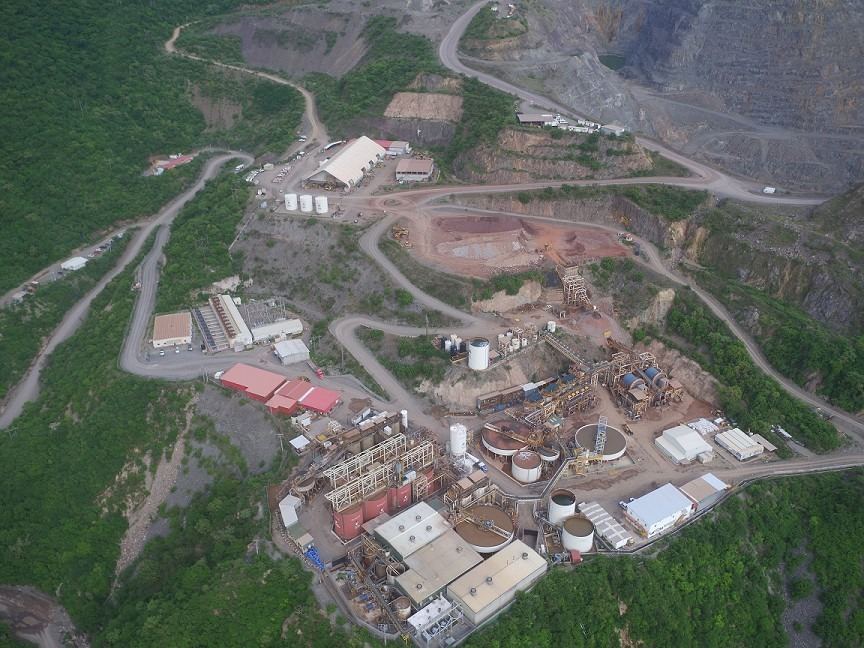
The primary short-term risk remains execution during the remaining ramp-up phase, with Williams estimating that Madsen still needs about one more quarter to reach steady state. Mining dilution, equipment availability (currently 75-80%), and stope sequencing speed are variables actively managed by the team. With gold prices well above levels at which many traditional operations were designed, the market is increasingly focused on execution and margins. Madsen Mine benefits from over $350 million in prior infrastructure investment, and West Red Lake Gold's consistent quarterly deliveries are re-rating market perception from "restart risk" to "reliable producer."
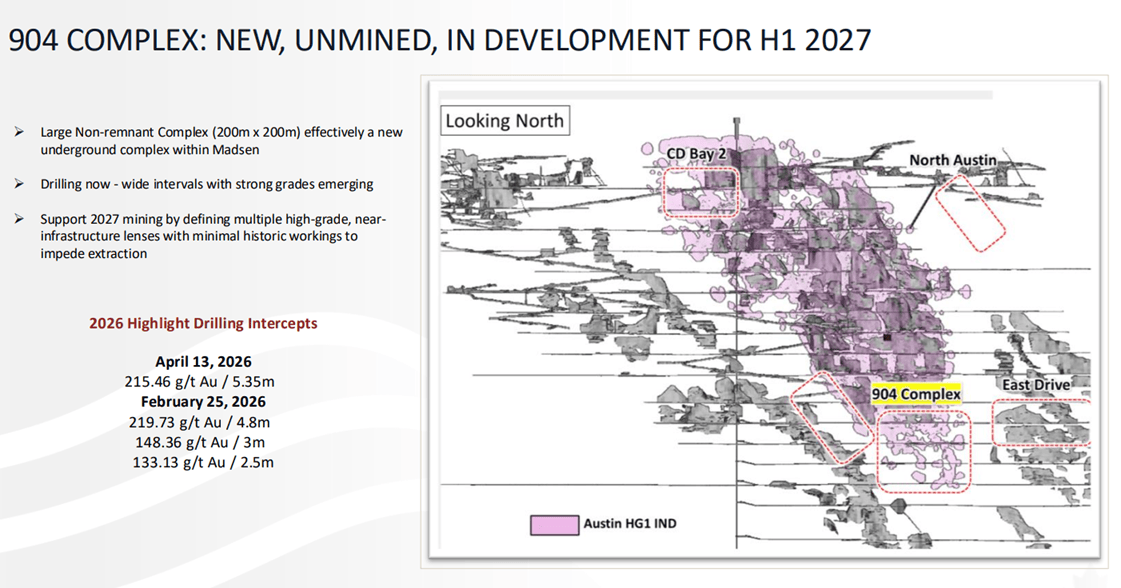
The full-year 2026 production guidance of 35,000 to 45,000 ounces remains unchanged, with management targeting approximately 25,000 to 30,000 ounces in the second half. Long-term catalysts include the development of the Austin 904 Complex and the Fork satellite deposit—both planned for inclusion in the 2027 mine plan—and the combined Madsen-Rowan pre-feasibility study expected in the second half of 2026.