Wedoany.com Report-Jun 1, India added 5.93 gigawatts of utility-scale solar capacity from January to March 2025, a 12.2% increase from the previous quarter, according to the “India RE Quarterly Update” by JMK Research. Additionally, 1.34 gigawatts of rooftop solar capacity were installed during the same period, contributing to the country’s renewable energy growth.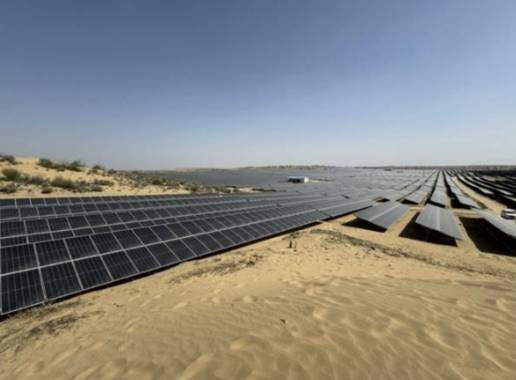
For the fiscal year ending March 31, 2025, India installed 16.9 gigawatts of utility-scale solar capacity, reflecting a 47% rise compared to the previous year. Rooftop solar capacity grew by 5.1 gigawatts, a 72% increase year-over-year, highlighting the country’s accelerating shift toward sustainable energy sources.
As of March 31, 2025, Adani led solar developers with a cumulative installed and pipeline capacity of 36.2 gigawatts across utility-scale solar, wind, and hybrid projects. ReNew followed with 22.3 gigawatts, trailed by NTPC at 16.2 gigawatts, Greenko at 15.14 gigawatts, and Avaada at 15.13 gigawatts, showcasing strong industry leadership.
JMK Research forecasts that India will add 30.2 gigawatts of solar capacity in fiscal year 2026, comprising 21.1 gigawatts from utility-scale projects, 7 gigawatts from rooftop systems, and 2.05 gigawatts from off-grid installations. This projection underscores India’s commitment to expanding its renewable energy infrastructure.
In the inverter market, Sungrow led with 9.8 gigawatts shipped in India during January–March 2025, followed by Sineng with 2.8 gigawatts and FIMER with 1.9 gigawatts. These shipments reflect robust demand for reliable solar equipment in the growing market.
During the same quarter, 12.5 gigawatts of solar modules were shipped by 24 major companies in India. Waaree led the market, contributing approximately 17.3% of the total quarterly volume. Both Adani and Waaree significantly increased module exports, more than doubling their figures compared to the October–December 2024 period.
The price of mono-PERC 500 Wp modules was INR 15.39 ($0.18) per watt-peak in January–March 2025, marking a 22.14% decrease from the previous year. “This price reduction enhances the affordability of solar technology, driving wider adoption,” said a JMK Research spokesperson.
India’s solar sector continues to thrive, supported by strong market performance, competitive pricing, and ambitious capacity targets, positioning the country as a key player in global renewable energy development.