Singapore's Private Car Population Drops to 516,200 in Q2, Rental Cars Hit Record High
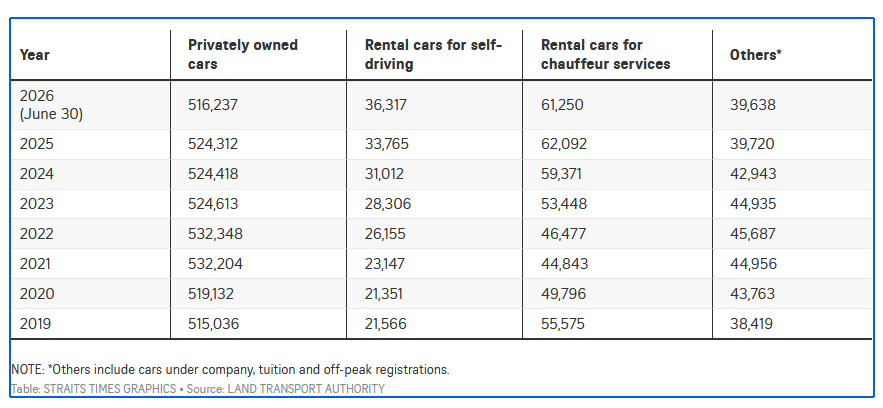
en.Wedoany.com Reported - According to quarterly statistics released by the Land Transport Authority (LTA) on July 24, Singapore's private car population fell to 516,237 vehicles as of end-June, the lowest level since 2019, while the number of rental cars reached a record high of 97,567. The overall car population stood at 653,442, of which 79% were privately owned, compared with 82.5% in 2021, when the total number of cars was 645,150. Rental cars as a share of the total car population rose from 10.5% (67,990 vehicles) in 2021 to 14.9%. High car prices have led some residents who only drive occasionally to turn to car rental or ride-hailing services.
By usage, between end-2025 and June 2026, the number of rental cars used for ride-hailing or chauffeur services fell from 62,092 to 61,250. Over the same period, self-drive rental cars that cannot be used for paid passenger transport increased from 33,765 to 36,317, with such vehicles mainly deployed for short-term car-sharing services or long-term leases.
Does the data suggest that drivers are moving away from private car ownership? In response to The Straits Times, an LTA spokesperson said that tracking more indicators over a period of time—such as public transport ridership, point-to-point trips, and car-sharing and bicycle usage—would be necessary to determine whether commuter preferences are shifting.
Walter Theseira, a transport economist at the Singapore University of Social Sciences, said that the high cost of car ownership makes it economically rational for those who only need to drive occasionally to opt for on-demand rentals instead.
The Vehicle Rental Association, which has 44 member companies and over 23,000 vehicles, has seen growing rental demand, but its chairman Adrian Lee said companies remain cautious about expansion. A key concern stems from uncertainty over the future trajectory of Certificate of Entitlement (COE) prices: COEs are required to register a car on the road, with prices ranging from S$102,009 to S$130,889 in 2026, compared with S$65,010 to S$116,002 in 2024. Companies worry that if COE prices fall sharply, their fleets could face depreciation risks. Adrian Lee, who is also a co-founder of the online car-sharing platform Tribecar, noted that one way the industry mitigates business risk is by converting existing private cars into self-drive rental vehicles, and that the concept of short-term car rental has been embraced by younger people as an alternative mode of transport.
Auto Selection, the rental arm of Malaysian automotive group Sime Darby, has grown its fleet by 10% over the past 12 months to about 600 cars. Managing Director Christopher Chin said that beyond rising rental acceptance, some customers are choosing to rent while waiting for COE prices to decline.
The number of rental vehicles for ride-hailing has contracted slightly. Adrian Lee attributed this partly to the lock-in period for such vehicles. A policy introduced in February 2025 stipulates that company-owned ride-hailing vehicles cannot be sold to individuals or converted to private cars within three years. The LTA said the measure aims to ensure a more stable supply of vehicles for ride-hailing services.
Some consumers have already responded to this shift with concrete choices. Gordon Tiang, a 51-year-old product engineer, did not replace his car when his COE expired in 2025 and switched to ride-hailing instead, using part of the S$1,500 saved monthly for family holidays. Still, he misses the convenience of driving to social gatherings and his habit of driving to Johor Bahru—a trip he used to make roughly every three months.
Joyce Lee, a 45-year-old civil servant, gave up her family car in mid-2025, when she and her husband felt that their two sons, aged 8 and 9, had grown up and the household no longer needed a car. Initially, they used car-sharing services to send the children to school, before switching entirely to public buses and the MRT, saving S$1,500 to S$1,800 a month. She said the family has grown accustomed to life without a car, adding, "It means we have to get up earlier to leave in the morning, but so far public transport has really worked well for us."
Related Products
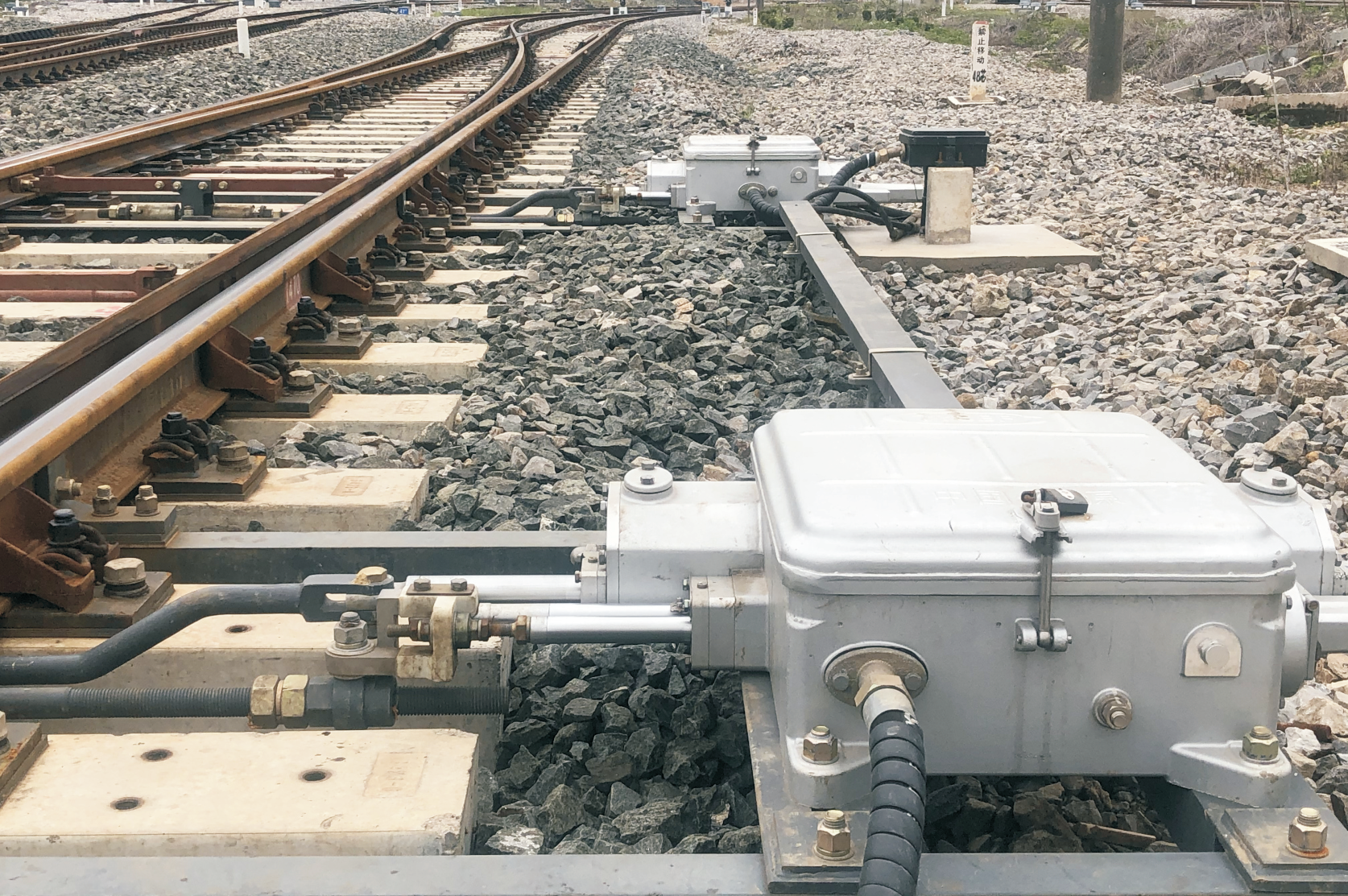

ZY(J)7(M) Sealed Type Electro-Hydraulic Turnout Machine
TAIYUAN CR JINGFENG EQUIPMENT TECHNOLOGY CO., LTD.

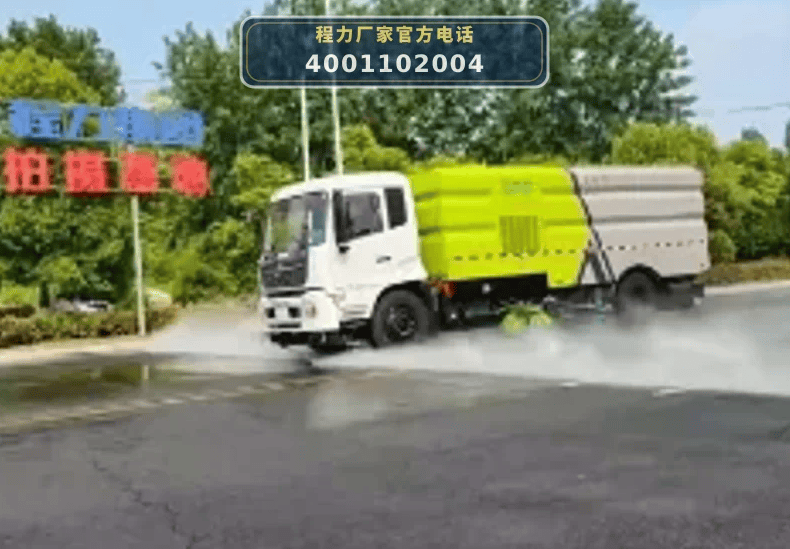
CLW5180TXSD6 Dongfeng Tianjin Washing and Sweeping Truck
ChengLi Special Automobile Co., Ltd.![IVECO Cash-in-Transit [DMT5048XYCL3-AM] - Chongqing Dima Industry Co., Ltd](https://img.wedoany.com/2026/0911/20260911030157582.png)
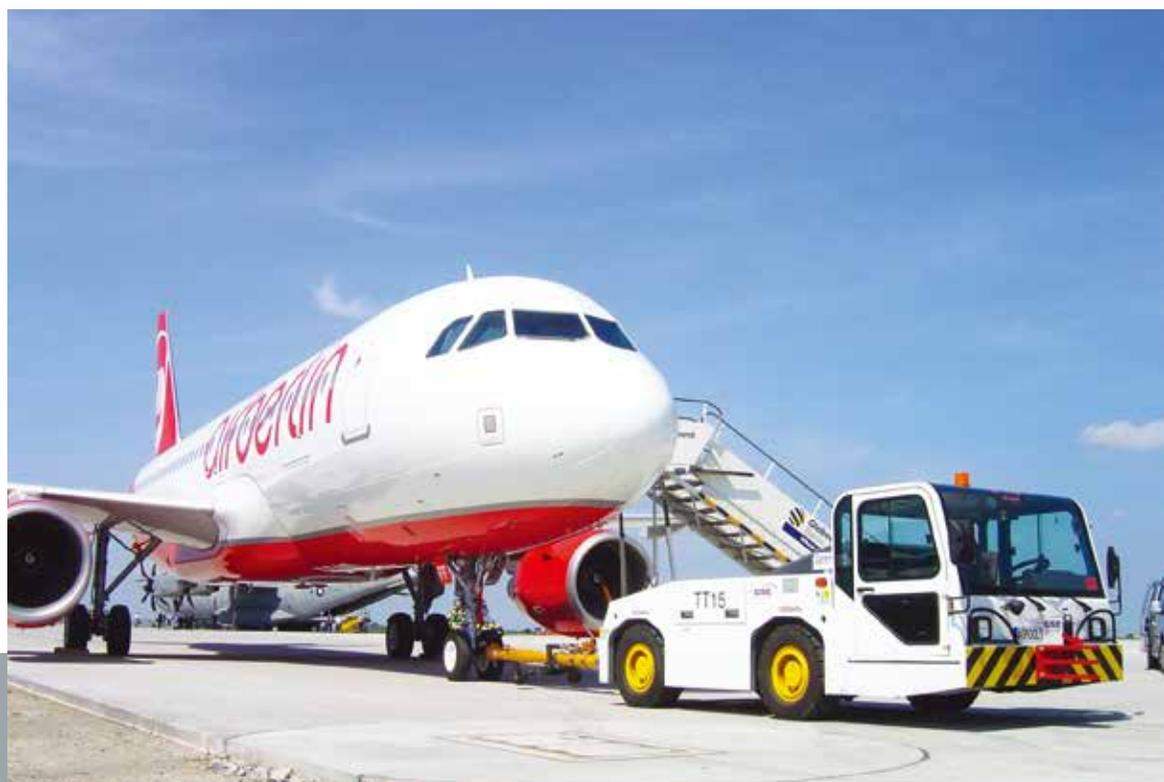
WGQY Series Aircraft Tow Tractor-WGQY15, WGQY27
Weihai Guangtai Airport Equipment Co., Ltd.

ERW Welded Pipe (Black Pipe and Hot-dip Galvanized Steel Pipe)
Handan Zhengda Steel Pipe Co., Ltd.