en.Wedoany.com Reported - The $682 million loan that Brazil's National Bank for Economic and Social Development (BNDES) lent to Cuba in 2009 for the construction of the Port of Mariel in Havana remains difficult to recover to this day. The repayment guarantee for this loan stipulated that if Cuba failed to repay, it would compensate with cigar production. The guarantee plan was accepted during the tenure of then-President Luiz Inácio Lula da Silva and then-BNDES President Luciano Coutinho. The loan funds came from the Worker Support Fund (FGTS), and without interest or monetary correction, their current value has reached R$3.43 billion. Seventeen years have passed since the funds were transferred, and Brazil has not recovered any amount, nor has Cuba delivered a single cigar.
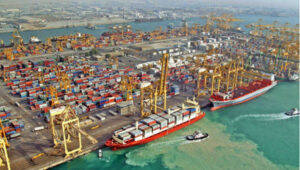
PSA International, after operating the container terminal at the Port of Mariel for 15 years, has returned management to Cuba and removed Cuba from its website. The company won the bid for terminal management in 2010 and officially took over in 2011, with the management agreement covering only operations and not including investment.
The U.S. Department of the Treasury's Office of Foreign Assets Control (OFAC) early this week added Terminal de Contenedores de Mariel S.A. to its sanctions list, citing that the terminal "is owned or controlled by, or has acted or purported to act for or on behalf of, GAESA," which is already on the sanctions list. GAESA is a Cuban military conglomerate. OFAC also added Coral Marítima S.A., a subsidiary of Cuba's state-owned maritime port enterprise group GEMAR, to the sanctions list. OFAC stated that GAESA transferred the Port of Mariel to Coral Marítima S.A. in a mid-June transaction through its subsidiary Terminal de Contenedores de Mariel S.A. to evade sanctions. The container terminal at the Port of Mariel is the main facility of its kind in Cuba's infrastructure.
The Port of Mariel was inaugurated on January 27, 2014, located within the Mariel Special Development Zone (ZEDM) operated by the Cuban government. It was positioned as a major port operations hub but has never reached its designed capacity.
In recent years, the terminal has been mainly used to handle import cargo destined for Havana, including food, agricultural products, vehicles, and other goods. According to official data, 56 foreign enterprises currently operate in the adjacent free trade zone, with companies from Spain, Mexico, Brazil, Vietnam, the Netherlands, and other countries.
PSA International generated $8.6 billion in revenue in 2025 and is one of the world's leading port operators and supply chain companies, operating more than 70 deep-water ports, rail, and inland terminals, with business spanning 180 locations across 45 countries, including the Port of Antwerp in Belgium, from which many goods destined for Cuba depart. The company operates one terminal in the United States and also runs port operations in Argentina, Panama, Colombia, and Canada in the Americas.
Since 2019, the United States has filed lawsuits against shipping companies using the Port of Mariel under Title III of the Helms-Burton Act, with most cases settled out of court. On the Brazilian side, BNDES and Lula have taken no further recovery action on this 17-year-old unpaid loan. Under the original guarantee agreement, Cuba has neither returned the $682 million loan nor provided any cigars for compensation.