en.Wedoany.com Reported - In April this year, U.S. senators introduced a bipartisan bill, the Next Generation Geothermal Research and Development Act, aimed at accelerating the development and commercialization of next-generation geothermal energy technologies. The bill comes as the geothermal industry is growing rapidly: advances in horizontal drilling and hydraulic fracturing have opened new space for geothermal development, particularly benefiting oil and gas majors seeking transition or diversification. Current technology improvements include Enhanced Geothermal Systems (EGS) and Advanced Geothermal Systems (AGS); the former uses artificial fracturing to create permeability, no longer relying on tectonically active zones, while the latter extracts heat in a closed-loop manner without withdrawing subsurface fluids.
Market demand is robust and growing. Tech companies are particularly focused on geothermal energy to meet the electricity needs of new data centers. Project Red, developed by Google in partnership with Fervo Energy, is the world's first commercial EGS facility, commissioned in 2023; the pilot plant delivers 3.5 megawatts of power to the local grid, powering Google's data center in Nevada.
Geothermal currently accounts for less than 1% of global energy demand. The International Energy Agency (IEA) projects that by 2050, geothermal power could meet up to 15% of electricity demand growth, with data center electricity expansion potentially pushing that share higher. In the U.S. market alone, geothermal energy is expected to expand at a compound annual growth rate of 3.3% between 2026 and 2034, with a 2025 valuation of $2.34 billion; federal support, tax incentives, and clean energy commitments from corporations and utilities are cited as key drivers.
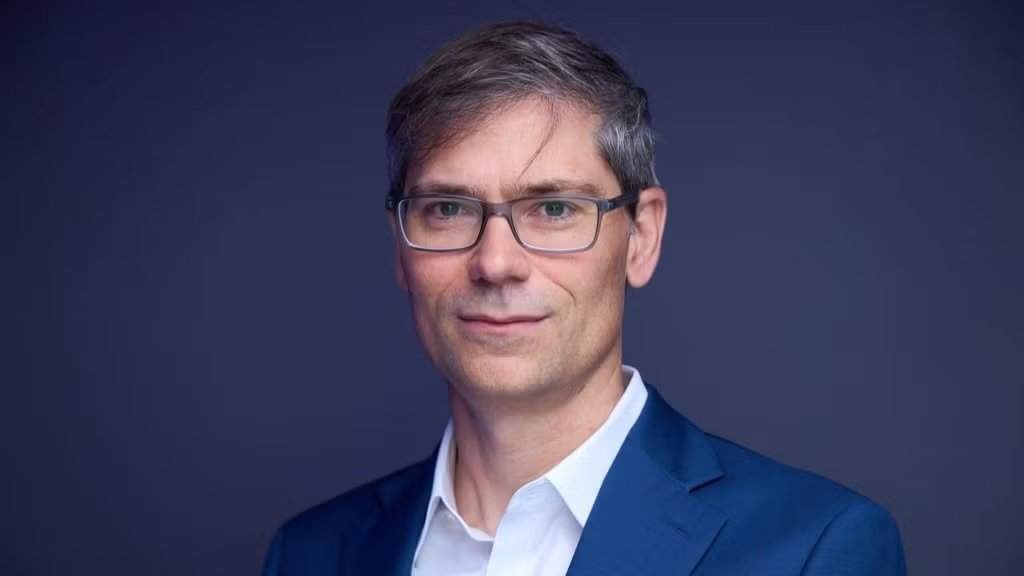
Florent Rousset, Vice President of Geothermal at Baker Hughes, believes the time is right for oil and gas operators to pivot to geothermal: demand, technical capability, and government incentives are converging. In an interview with Offshore Technology, he said that technology will evolve with demand, and geothermal is poised to transform from a niche power source into part of the mainstream energy mix.
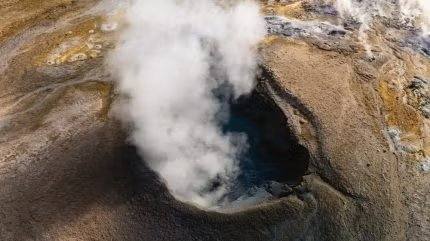
In a conversation with Eve Thomas, Rousset further elaborated on the sources of demand. He noted that demand varies by region: in North America, much of the demand comes from data centers, overall electrification, and manufacturing reshoring; in Europe and parts of North America, it is tied to district heating decarbonization, energy security, and lithium extraction, which improves project economics through a multi-product portfolio; in Kenya, Indonesia, the Philippines, Japan, Taiwan (China), and elsewhere, a combination of factors is at play.
On the involvement of oil and gas companies, Rousset explained that historically, economically viable geothermal resources required three conditions simultaneously: high temperature, natural permeability, and hot brine flow, with resources concentrated in Indonesia, Iceland, New Zealand, Kenya, and California in the U.S. EGS replaces natural fractures with artificial ones, making development possible in areas with only the heat condition; AGS transfers heat to a working fluid through wellbores, bypassing the same limitation. Growing demand, technology expansion, and data centers' willingness to pay higher electricity prices are driving new companies to invest in technology R&D and project development, while utilities are also incorporating geothermal into diversified portfolios. Oil and gas companies already possess much of the technology needed for geothermal, making the pivot a natural extension, though the return structure differs from oil and gas and still needs to establish its place in their portfolios.
On the investment front, early-stage geothermal developers and emerging technologies are largely supported by venture capital and seed funding, with project financing or non-recourse financing provided by banks once projects mature; the funding gap between the two stages, known as the "missing middle," is attracting private equity and dedicated geothermal funds. Governments are also participating through tax incentives and grants, with countries such as the U.S. and Japan having identified technology promotion directions and allocated resources. Public market financing is also heating up, with several companies recently announcing listing and fundraising plans. Technology, resources, and capital are converging on this sector.
Regarding the IEA's 15% target, Rousset views it as a long-term vision for 2050, contingent on continued cost declines and ongoing technology modernization; whether the final outcome lands at the high or low end of the forecast range, it implies the formation of an entirely new industry. Industry activity is currently at unprecedented levels: companies in the sector have raised more capital over the past five years than the total investment in geothermal over the previous decade, small developers are moving quickly with flexible mechanisms, and multiple new wells are being drilled. The largest historical geothermal developer has about 1 gigawatt of installed capacity, and new entrants plan to reach that level within a few years. Traditional geothermal projects typically have only a dozen or so wells with 30 to 50 megawatts of installed capacity; EGS enables drilling into more widely distributed hot rock formations, and the industry is adopting standardized well pads and standardized development modules for repeatable replication, reducing drilling and facility costs, increasing speed, and facilitating financing to support the development of 100-megawatt, 500-megawatt, and even 1-gigawatt-scale projects.
In Rousset's view, the U.S. holds advantages in resources, capital accessibility, entrepreneurial spirit, permitting, and ease of doing business, with a complete ecosystem of service and equipment providers making it a clear leader in the geothermal sector; several countries are following suit with regulations and incentives and setting geothermal development targets, sending accelerating signals to the market. He recalled that about a decade ago, geothermal was still "high-risk, low-return"—roughly 30% to 40% of upstream wells ultimately proved uneconomic, with returns at best in the low double digits; today, higher electricity prices, improved technology, and more competitive returns have changed that picture. The biggest near-term obstacles remain financing accessibility and the pace of project advancement. Rousset noted that geothermal development has a history of more than 100 years, and as a sustainable, renewable, low-carbon power source that can operate reliably around the clock with competitive costs, the industry has the conditions to scale up and deliver power using existing technology in the near term—now is the time for geothermal to enter the mainstream energy market.