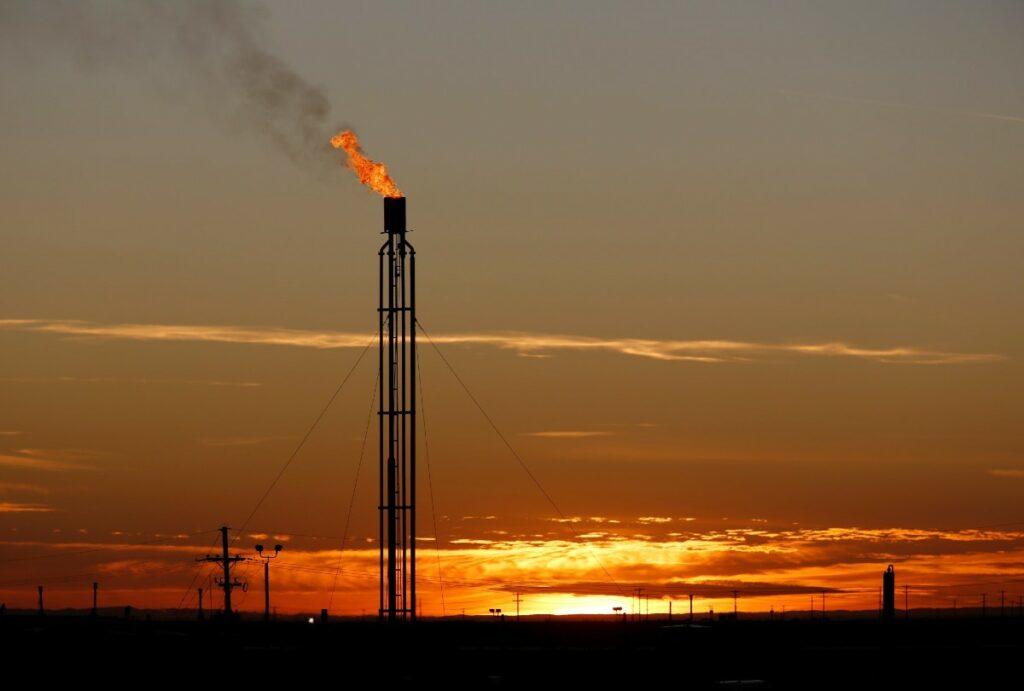
IEA Cuts Global Oil Supply Forecast, Middle East Storage and Transport Adjustments Ripple into China's Equipment Market
en.Wedoany.com Reported - The International Energy Agency (IEA) released its August 2026 Oil Market Report on August 12, revising down this year's global oil supply forecast to approximately 102 million barrels per day, a year-on-year decrease of 4.3 million barrels per day. Compared with the 3.7 million barrels per day decline projected in the July report, the latest forecast widens the reduction by a further 0.6 million barrels per day.
According to Reuters calculations based on the IEA's latest supply and demand data, global oil supply in 2026 is expected to fall short of demand by approximately 1.27 million barrels per day, higher than the 0.86 million barrels per day gap implied in the July forecast. Although demand is constrained by high oil prices and insufficient product supply, the pace of decline remains insufficient to offset supply contractions in the Middle East and Russia. Pressure on the global oil market is shifting from prices to shipping, ports, refining, and storage and transport infrastructure.
Global Oil Supply Recovery Encounters Fresh Setbacks
IEA data show that global oil supply rose by 2.4 million barrels per day month-on-month in July to 101.5 million barrels per day, but remained 6.3 million barrels per day below the same period last year. Gulf region output increased by 2.5 million barrels per day that month to 23.9 million barrels per day, still 8.3 million barrels per day below pre-conflict levels.
This recovery has not been sustained. Middle East oil loadings rebounded to around 20 million barrels per day in early July before falling to approximately 12 million barrels per day; Gulf exports in July declined by 2.1 million barrels per day month-on-month to 15 million barrels per day. As a result, the IEA lowered its third-quarter global supply forecast by 1.7 million barrels per day from the previous month, projecting a quarterly supply deficit of 1.8 million barrels per day—more than double the roughly 0.8 million barrels per day gap estimated in the July report—and potentially the most severe quarterly supply shortage since the fourth quarter of 2021.
Demand is also weakening. The IEA expects global oil demand in 2026 to decline by 1.6 million barrels per day year-on-year, with the reduction widening by 0.51 million barrels per day from the July forecast. Second-quarter demand fell by 4.9 million barrels per day year-on-year, third-quarter demand is expected to decline by 2.8 million barrels per day, and the fourth quarter may see a year-on-year increase of 0.58 million barrels per day.
But what is truly intensifying market tightness is not demand shifts, but simultaneous constraints on crude production, maritime transport, and refining. Global refinery crude throughput in July stood at approximately 80.9 million barrels per day—up 1.8 million barrels per day month-on-month, yet still nearly 5 million barrels per day below the same period last year. The IEA expects global refinery throughput to decline by an average of 2.5 million barrels per day in 2026.
Russian refinery throughput fell to approximately 3.9 million barrels per day in July, near a two-decade low; oil production over the same period declined by 0.1 million barrels per day month-on-month to 8.76 million barrels per day. Middle East refined product exports have not fully recovered, and refining capacity in other regions has failed to close the gap in time, pushing up crack spreads and refining margins for diesel, jet fuel, and gasoline.
Inventories are losing their buffering effect. Global observable oil stocks fell by 69 million barrels in July, bringing cumulative declines since the start of the conflict to 410 million barrels, with total volumes dropping to just below 7.9 billion barrels—the first time below this level since April 2025. Shipping delays and equipment outages that could previously be absorbed by inventories are now more readily transmitted to oil prices, freight rates, and refined product prices.
Strait of Hormuz Gridlock Drives Rerouting of International Oil Shipping
The key variable behind the IEA's downward supply revision remains the Strait of Hormuz. Data from the U.S. Energy Information Administration (EIA) show that from 2024 through the first quarter of 2025, oil transported through the strait accounted for roughly one-quarter of global seaborne oil trade, equivalent to about one-fifth of global oil and refined product consumption.
In the fourth quarter of 2025, oil and other liquid fuel flows through the Strait of Hormuz averaged approximately 21.6 million barrels per day; by the second quarter of 2026, daily flows had fallen to around 4.9 million barrels. Even if Gulf producers restore partial output, without reliable tanker access, incremental production will struggle to reach international markets.
Saudi Arabia can move crude from the Persian Gulf side to the Red Sea port of Yanbu via the East-West Pipeline; the UAE can utilize its pipeline to Fujairah to load cargoes on the Gulf of Oman side. But existing bypass pipelines and export terminals have limited spare capacity and cannot fully replace the original throughput of the Strait of Hormuz.
Risks are also spreading to alternative routes. Once crude is diverted to the Red Sea, it must still pass through the Bab el-Mandeb Strait or the Suez Canal, forcing shipowners to reassess waterway security, convoy arrangements, war risk insurance, and schedules. The UN Conference on Trade and Development (UNCTAD) notes that disruption to Strait of Hormuz transit has already pushed up tanker freight rates, war risk insurance premiums, and bunker fuel costs.
This is reshaping global crude flows. Asian refiners are being forced to increase purchases from Russia, Brazil, Guyana, West Africa, and other Atlantic Basin producers. With longer transport distances, equivalent import volumes require more tankers, making port arrival times, demurrage costs, and refinery feedstock planning increasingly difficult to manage.
International oil trade is thus following two parallel adjustment paths: Asian buyers are seeking more non-Middle East crude, while Middle East producers need to expand the throughput and loading capacity of bypass pipelines, Red Sea, and Gulf of Oman export terminals. The latter will determine whether market pressure can translate further into engineering demand for pipelines, pump stations, storage tanks, and terminal facilities.
Opportunities for Chinese Suppliers Will Begin with Retrofitting Existing Facilities
EIA data show that in the first half of 2025, China accounted for approximately 48% of crude and condensate imports received via the Strait of Hormuz. With strait transit constrained, Chinese refining companies must rebalance procurement costs, shipping lead times, and feedstock sources.
As more Russian, Brazilian, and West African crude enters Chinese refineries, feedstock density, sulfur content, acid value, metal content, and distillation profiles shift accordingly. Some refineries will need to readjust blending schemes and unit loads, carrying out adaptive modifications to atmospheric and vacuum distillation, hydrotreating, hydrocracking, desulfurization, and corrosion control systems. Heat exchangers, reactors, industrial furnaces, compressors, corrosion-resistant piping, valves, seals, and online analysis equipment may generate corresponding replacement demand.
Overseas opportunities, meanwhile, will first land in existing Middle East storage and transport facilities. Greater Saudi crude flows toward Red Sea exports will raise operating intensity at pump stations along the East-West Pipeline, the Yanbu export terminal, storage tanks, and loading facilities; increased utilization of the UAE's Fujairah corridor will also add maintenance pressure on pipelines, storage, metering, and offshore loading systems. Ports in the Gulf of Oman and major Asian import terminals will likewise need to cope with more tankers, a more diverse crude slate, and more frequent tank farm scheduling.
This type of demand will not immediately manifest as large-scale greenfield projects. Closer to order conversion are typically tank inspections and repairs, floating roof seal replacements, crude pump and valve upgrades, metering system modernization, terminal loading/unloading equipment maintenance, and tank farm fire protection retrofits. As equipment operating loads rise, maintenance and spare parts procurement originally scheduled on an annual basis may be brought forward.
Only if the Strait of Hormuz remains unable to resume normal transit over the long term might opportunities extend further to bypass pipeline expansion, Red Sea and Gulf of Oman export terminal capacity additions, commercial storage bases, and large-scale import terminal construction. These projects require planning, technical assessment, approval, financing, and tendering—suppliers cannot treat them as confirmed procurement based on market forecasts alone.
Maritime security is another direction more likely to generate orders. Following tanker attacks and rising waterway risks, port operators, shipping companies, and oil firms need to strengthen vessel identification, satellite communications, radar surveillance, oil spill response, and port command systems. Chinese companies have already built a relatively complete product chain in BeiDou positioning, electro-optical surveillance, UAV and unmanned surface vessel inspection, marine environmental monitoring, and oil spill disposal equipment, providing a product foundation for participating in port security upgrades.
What ultimately determines whether Chinese equipment enters these projects is not just price. Middle East oil and gas engineering procurement is typically controlled by national oil companies, pipeline operators, port authorities, and major EPC contractors. Suppliers must gain entry to owner or contractor approved vendor lists and meet API, IECEx, explosion-proof, materials, and continuous operation reliability requirements. On-site service, spare parts supply, and local partnership capabilities will also directly influence project owners' choices.
The IEA projects that if regional tensions ease in the coming months and Strait of Hormuz transit gradually recovers, global oil supply in 2027 will increase by 8.3 million barrels per day to 110.3 million barrels per day, with demand expected to rise by 2.4 million barrels per day, leaving supply potentially 4.61 million barrels per day above demand. This means the related commercial opportunities remain clearly bounded by time and stage: short-term focus on equipment maintenance and security upgrades, medium-term on refining and terminal retrofits, and long-term on whether bypass pipelines and export terminals enter formal investment and tendering procedures.
For Chinese suppliers, the next step should not be tracking daily oil price fluctuations, but watching whether technical assessments, EPC tenders, supplier registrations, and equipment procurement announcements emerge along Saudi Arabia's Red Sea coast, the UAE's Fujairah, the Gulf of Oman, and Asian import terminals. Only when these project milestones appear will global oil supply pressure truly translate into engineering orders in which Chinese companies can participate.
Related Products


Electromagnetic Fluid Seawater Floating Oil Separation and Recover Equipment
Huate Magnet Group Co., Ltd.
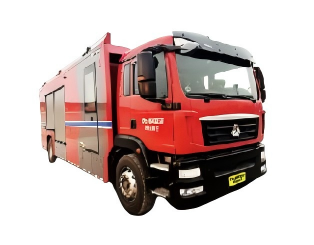
Modular Multifunctional Water Supply and Drainage Vehicle (18T)
Changsha Dewater Machinery Technology Co., Ltd.
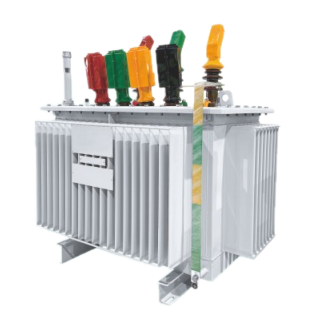
IS(B)□-M·RL Series Oil-immersed 3D Transformer (Planar / 3D Wound Core)
Guangdong Kehua Electric Power Technology Co., Ltd.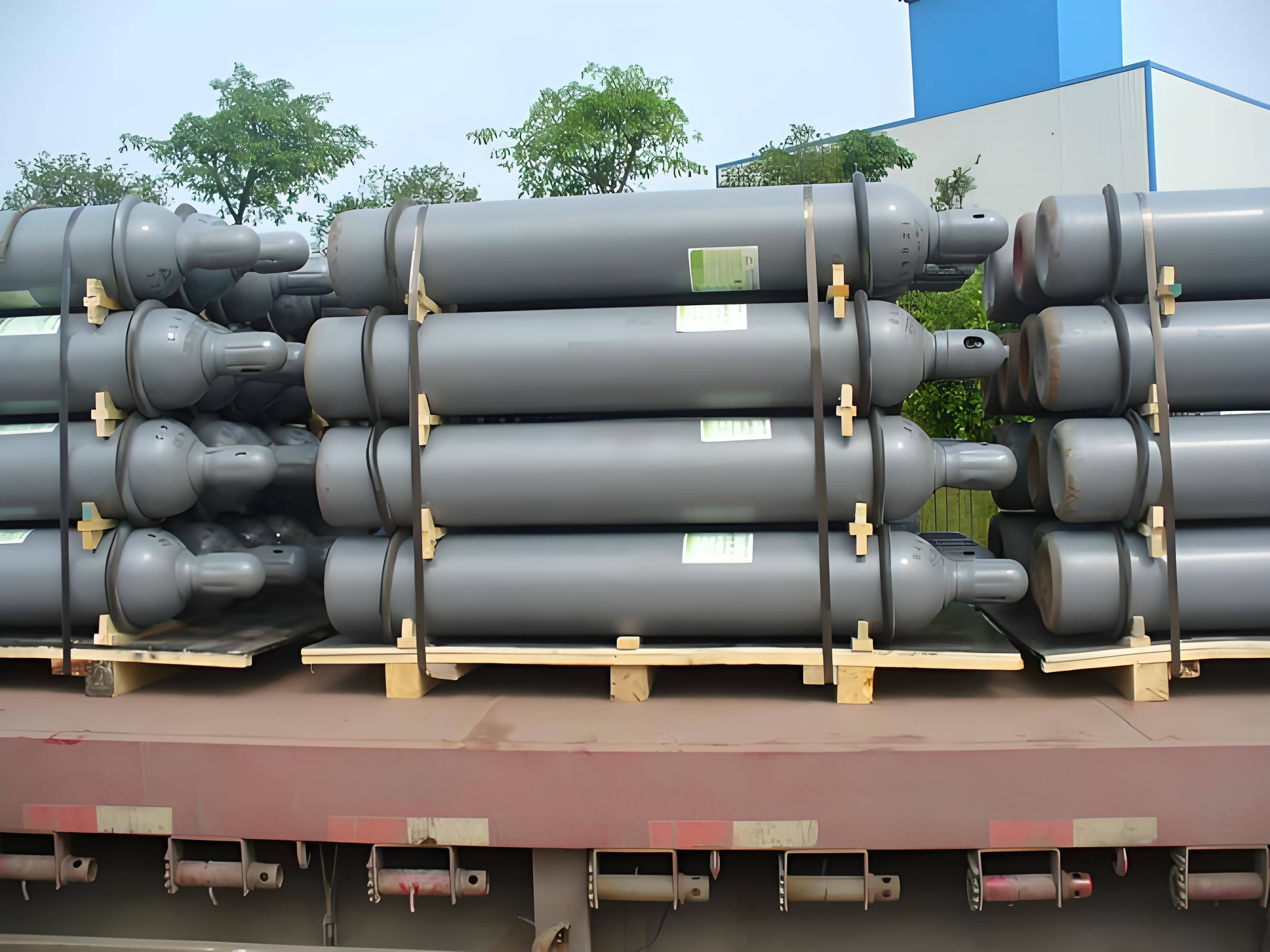
Global Sulfur Hexafluoride Gas Supply and Cylinder Export
Foshan Yuexin Industrial Gas Co., Ltd.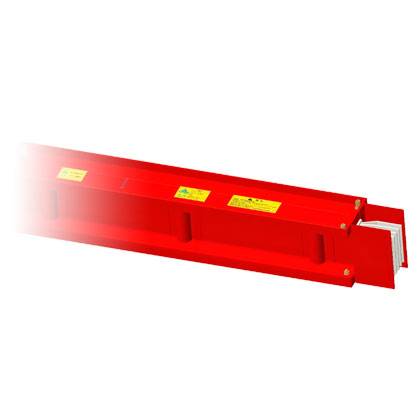
Mineral-insulated Compact Busway (Fire-resistant Busduct)
Zhuhai Guangle Electric Busway Co., Ltd.

PCS-901 Series Ultra (Extra) High-voltage Transmission Line Complete Protection Device
Nanjing NR Electric Co., Ltd.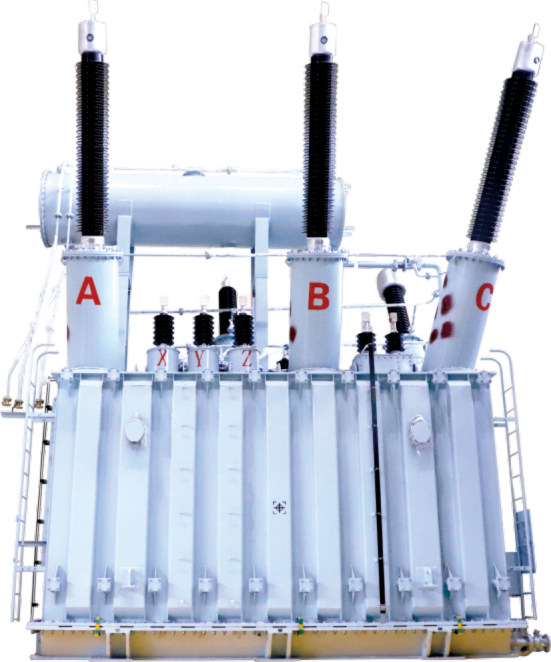
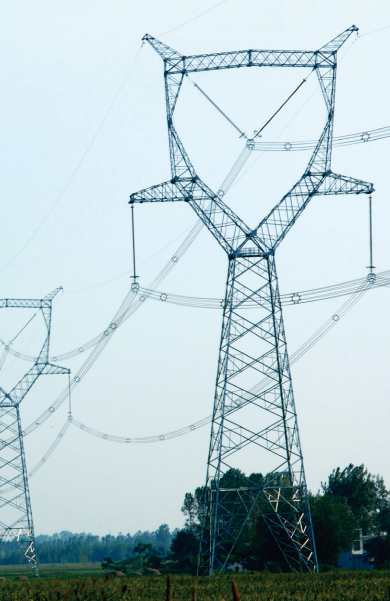
1000kV Jin Southeast-Nanyang-Jingmen UHV AC Transmission and Transformation Pilot Demonstration Project
Anhui Hongyuan Steel Tower Co., Ltd.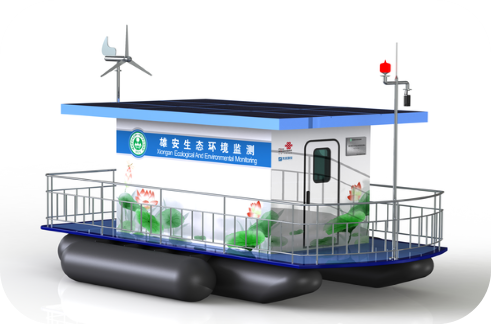
Floating Boat Water Quality Automatic Monitoring System
Hebei Sailhero Environmental Protection High-tech Co., Ltd.