FAA Seeks Comments on Proposed Cockpit Controls Guidance by September 24
en.Wedoany.com Reported - The Federal Aviation Administration (FAA) is seeking public comments on proposed guidance for cockpit controls, with a deadline of September 24. Draft Advisory Circular 20-175A would replace the guidance issued in 2011 and applies to aircraft certified under Parts 23, 25, 27, and 29.
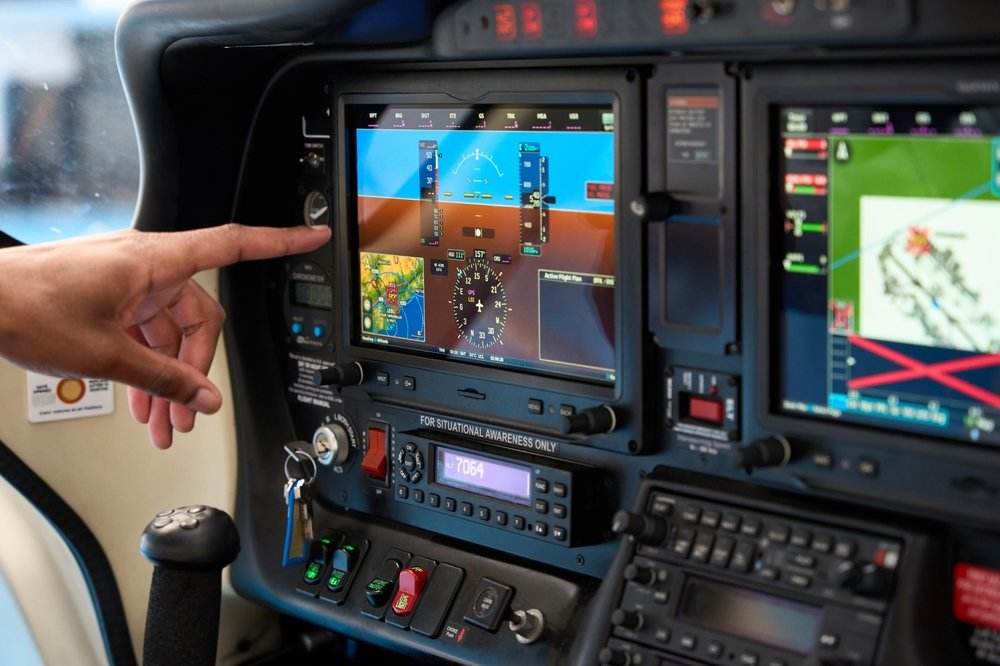
The overall approach of this draft remains consistent with the 2011 guidance, which already addressed touchscreen usability, hand-stabilized operation, and access to frequently used functions. The proposed revisions primarily add more detailed guidance on multi-touch gestures, voice recognition, multimodal controls, and new aircraft configurations such as powered-lift designs.
Guidance on voice recognition has been significantly expanded. Voice controls allow pilots to operate avionics through spoken commands, reducing head-down time when hands and eyes are occupied, but factors such as accents, voice characteristics, stress, fatigue, physical exertion, and cockpit noise can affect recognition performance. The FAA distinguishes between recognizing spoken words and successfully executing commands. The agency cites an example where a system may correctly recognize 93% of spoken words yet successfully execute only 65% of commands, making command execution success rate a more useful metric for cockpit usability. The draft does not set a minimum command execution success rate but notes that systems with low success rates should be limited to non-critical functions.
The draft requires that pilots have a means of manual control when voice recognition is used, that manual controls take precedence over voice commands, and that voice not be the sole means of control. New content also includes guidance on multimodal interfaces combining touchscreens, cursor devices, and voice recognition, as well as sections on cockpit controls for emerging aircraft such as powered-lift and eVTOL designs.
For touchscreen systems, the FAA requires manufacturers to demonstrate acceptable workload, error rates, and task completion times. The guidance calls for hand-stabilization support during pilot selections, recommends designing touchscreen gestures with turbulence and vibration in mind, and suggests limiting gestures to one or two fingers where possible, avoiding gestures that require wrist rotation or more than two fingers.
The draft also addresses the effects of daily cockpit use on touchscreens. Systems should continue to function properly after exposure to skin oils, sweat, sunlight, cleaning agents, and liquids such as coffee or tea. The FAA also requires consideration of scratches, fogging, and calibration drift. Frequently used and emergency functions should remain readily accessible without pilots having to navigate through multiple menu layers.
The revised guidance would provide the FAA with more specific criteria for evaluating new cockpit interfaces during the certification process, covering touchscreen usability in turbulent environments, access to critical functions, and manual override of voice commands, potentially directly affecting how future avionics are designed, tested, and approved. The guidance does not require changes to already approved or installed avionics.
Related Products


3m intelligent buoy combining navigation safety and real-time marine monitoring integrated navigation and marine monitoring system for real-time maritime data
Chengdu Dixin Technology Co., Ltd.

"Shunyi 1600" Deep-submerging Bottom-sitting Multi-functional Wind Power Engineering Vessel
Zhengli Offshore Engineering Co., Ltd.


ZY(J)7(M) Sealed Type Electro-Hydraulic Turnout Machine
TAIYUAN CR JINGFENG EQUIPMENT TECHNOLOGY CO., LTD.
Pantograph-Catenary Comprehensive Detection Device (1C)
CHENGDU TANGYUAN ELECTRIC CO., LTD.