Russian Additive Technology Center Installs Ceramic 3D Printer, Product Wall Thickness up to 15 mm
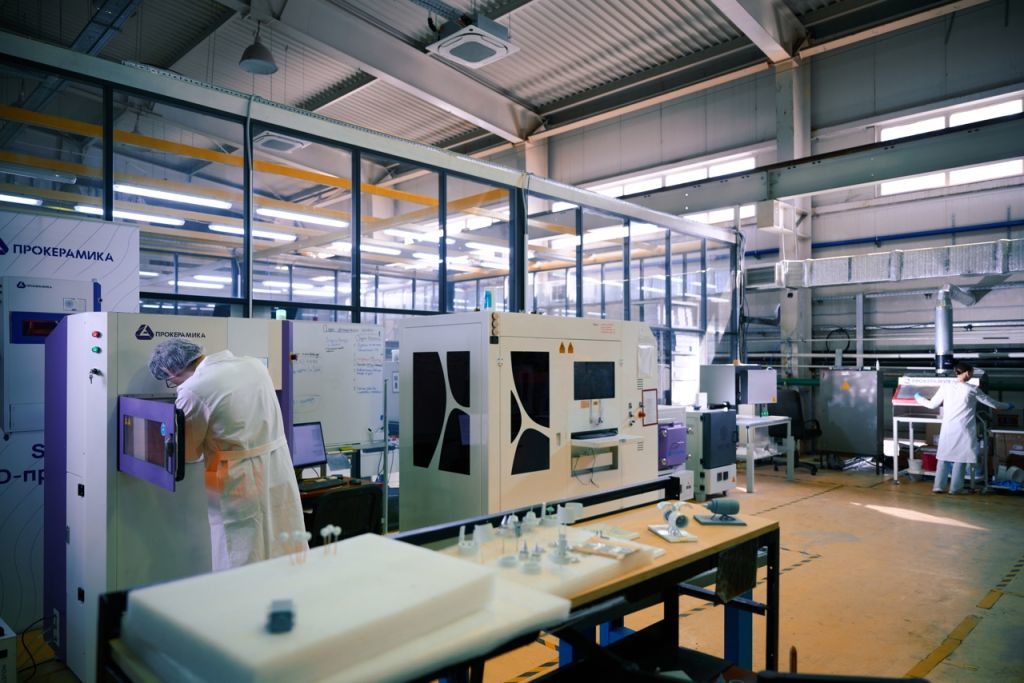
en.Wedoany.com Reported - The Additive Technology Center (CAT), part of the United Engine Corporation (UEC), has installed an industrial ceramic 3D printer manufactured by "Retech" at its site. This equipment can produce ceramic products with wall thicknesses of up to 15 mm, whereas the previous technology had a wall thickness limit of 6 to 8 mm, beyond which the risk of cracking increased significantly.
Advanced aircraft engines have increasingly stringent requirements for efficiency and environmental friendliness with each generation. Improving thermodynamic cycle parameters requires raising the gas temperature at the combustion chamber outlet. Structural solutions that only enhance the cooling efficiency of combustion chamber walls and turbine blades are insufficient to achieve significant temperature increases, necessitating the introduction of parts made from heat-resistant nickel-based alloys, titanium-based alloys, powder nickel-based alloys, and ceramic materials, along with protective coatings that enhance heat resistance to ensure service life targets.
Additive technologies are already used in industry for rapid prototyping, shortening product development times and enabling the manufacture of parts with complex geometries that are difficult or impossible to achieve through machining, casting, or forging. Through topological optimization, variable wall thickness, internal cavities, and multi-layer structural designs, parts can be reduced in weight by tens of percent while maintaining strength and service life. This technology also improves material utilization, reduces waste, and decreases dependence on tooling and cutting tools, with equipment capable of rapid reconfiguration.
The Additive Technology Center specializes in the development of 3D printing technologies, with the mission of introducing additive technologies into aircraft engine manufacturing, the aerospace industry, and the broader Russian industrial system. Since this summer, the center has been qualified as a design documentation developer, allowing its design bureau to independently prepare documentation in accordance with national standards, while also conducting research activities, experimental design work, and producing test and batch samples of aircraft engine parts.
Engineering ceramics are used in applications where other materials cannot withstand high temperatures, friction, or chemical exposure, but manufacturing ceramic parts with complex shapes was previously considered a serious technical challenge. The ceramic 3D printing technology employed by the center is based on stereolithography, using a thick paste composed of liquid photopolymer and ceramic powder as the printing material. A wide range of ceramic materials is available, enabling products to be endowed with desired properties such as high mechanical strength, hardness, high-temperature resistance, and thermal conductivity.
During the printing process, a layer of ceramic paste is applied to the platform and leveled, after which an ultraviolet laser selectively scans the paste layer according to the program corresponding to the product's geometry. The platform then descends by the set layer thickness, and the supply of the next layer of material continues. Once the part is built, unpolymerized paste particles are removed from the surface. In subsequent processing, the photopolymer acting as a binder is burned out, and finally the ceramic is sintered at temperatures of 1400 to 1700 degrees Celsius. The newly adopted material composition and heat treatment process ensure the quality of the parts.
Currently, specialists have been practicing the manufacture of tooling, parts, and products using ceramic 3D printing on this equipment, including cores for casting gas turbine engine blades, thermocouple sheaths, filter elements, and crucibles for melting heat-resistant alloys. Alexey Mazalov, General Director of the Additive Technology Center, stated that ceramic 3D printing technology is an important direction for import substitution, and mastering this technology will contribute to the development of the engine manufacturing industry. Ceramic products obtained through this method can replace imported tooling in foundries and heat treatment shops across various industrial sectors. The use of ceramics enables the introduction of new solutions in engine manufacturing, including the production of cores for casting engine blades, and improves the resistance of parts to high temperatures.
Experts believe that ceramic 3D printing will find widespread application in the manufacture of small gas turbine engines, for example, in producing nozzle assemblies and turbine rotor wheel parts from ceramics. Ceramic parts can withstand temperatures of up to 1500 degrees Celsius while maintaining geometric stability and demonstrating resistance to high-temperature corrosion and oxidation.
Related Products

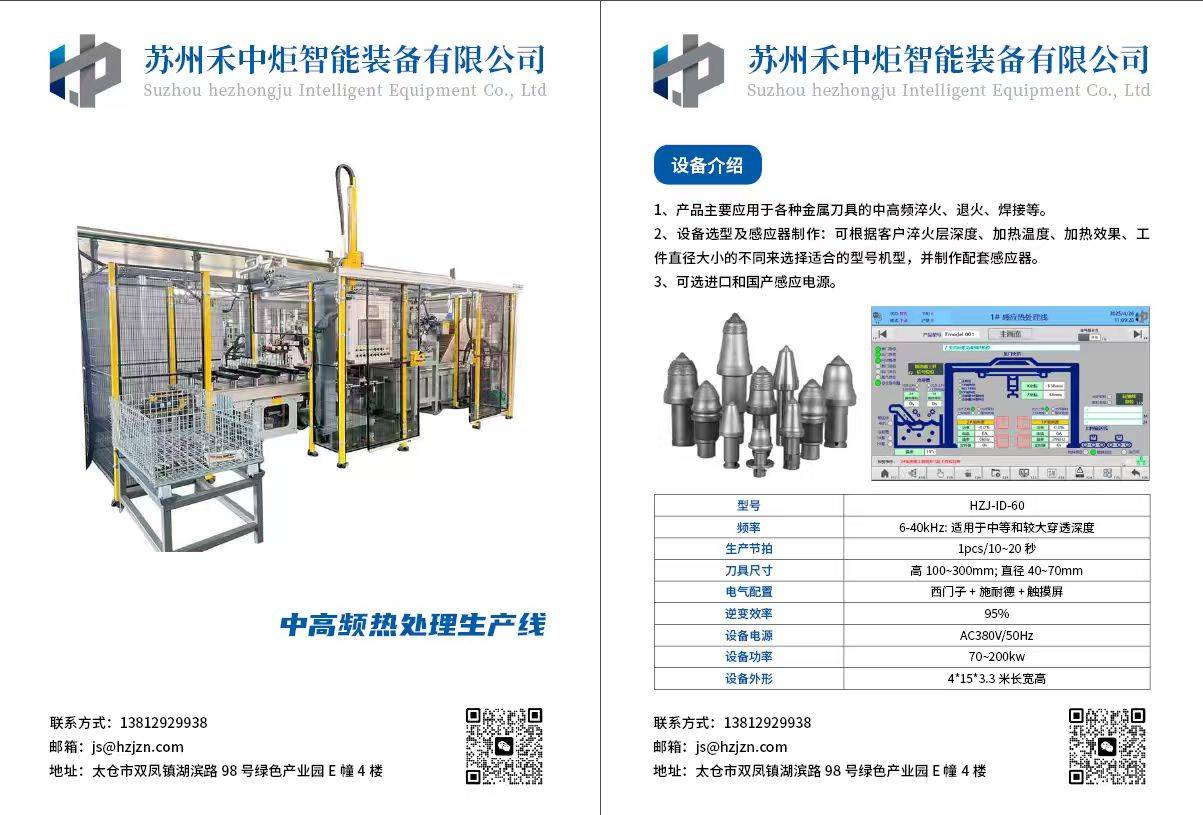
Excavator Bucket Teeth Heat Treatment Production Line
Suzhou Hezhongju Intelligent Equipment Co., Ltd.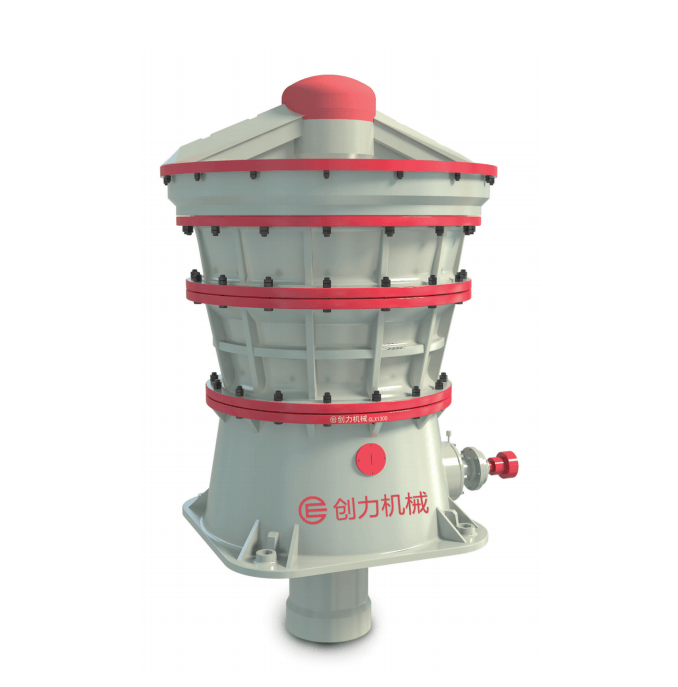
CLX Series Intelligent Hydraulic Gyratory Crusher
Guangdong CHUANGLI intelligent machinery Equipment Co., LTD
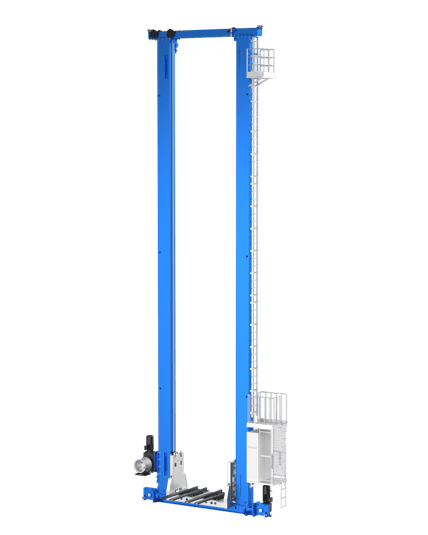
Pallet Solutions Product Line: HD3000 Double-Column Stacker Crane
Zhongding Intelligent (Wuxi) Technology Co., Ltd.
Strip Coating and Plating Production Line Equipment
MCC-SFRE HEAVY INDUSTRY EQUIPMENT CO., LTD.

Industrial and Commercial Point-Type Gas Detector
Jinan Benan Technology Development Co., Ltd.