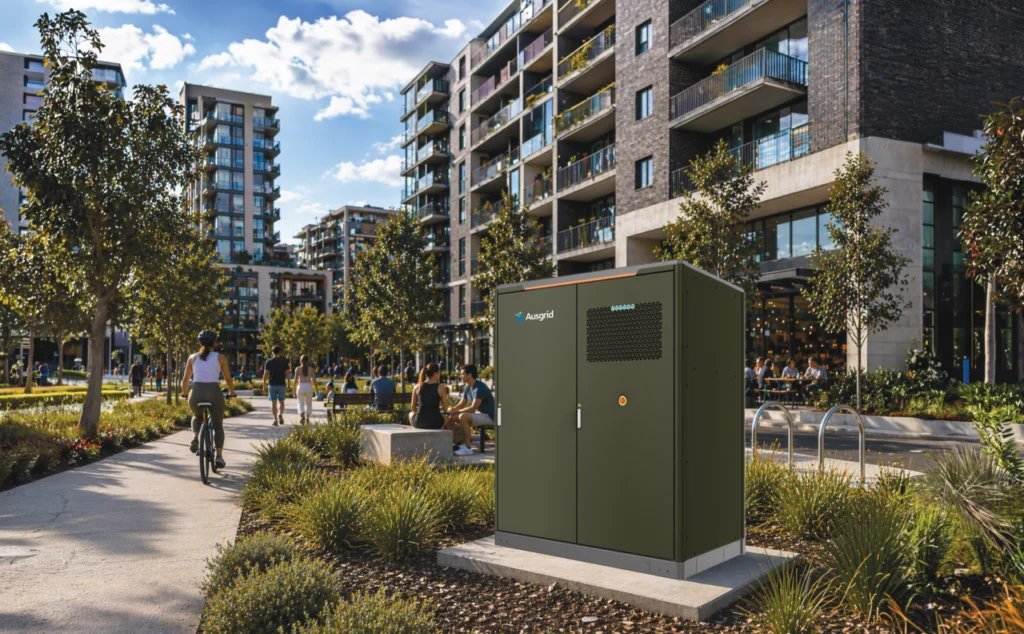
Wood Mackenzie Raises Latin America 2035 Energy Storage Forecast to 34 GW
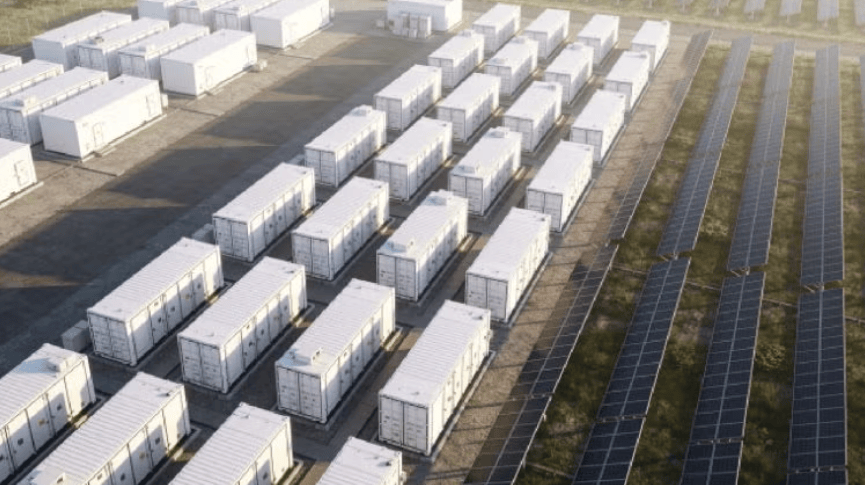
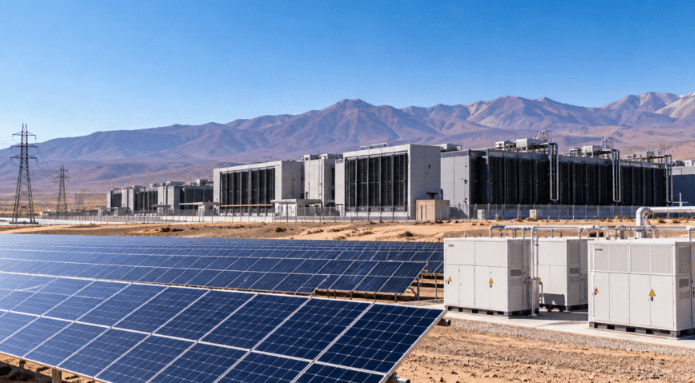
en.Wedoany.com Reported - Wood Mackenzie, in its report Latin America energy storage outlook 2026, projects that energy storage installed capacity in Latin America will grow from 2.5 GW in 2025 to 34 GW by 2035, a 13.6-fold increase over the decade.
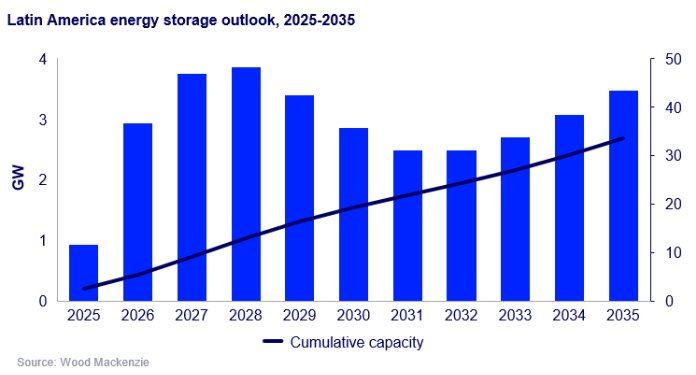
This new estimate represents a significant revision from the previous edition of the report. In September 2025, the firm had projected that the Latin American market would reach 23 GW of installed storage capacity by 2034, with a compound annual growth rate of 8%, citing grid constraints, rising renewable curtailment, and tender mechanisms as key drivers of storage growth.
Wood Mackenzie analyst Pamela Morales stated that Latin America is no longer a fringe market for storage but an active one; the project pipeline is growing rapidly, but without a comprehensive regulatory framework that includes clear remuneration mechanisms, deployment will stall.
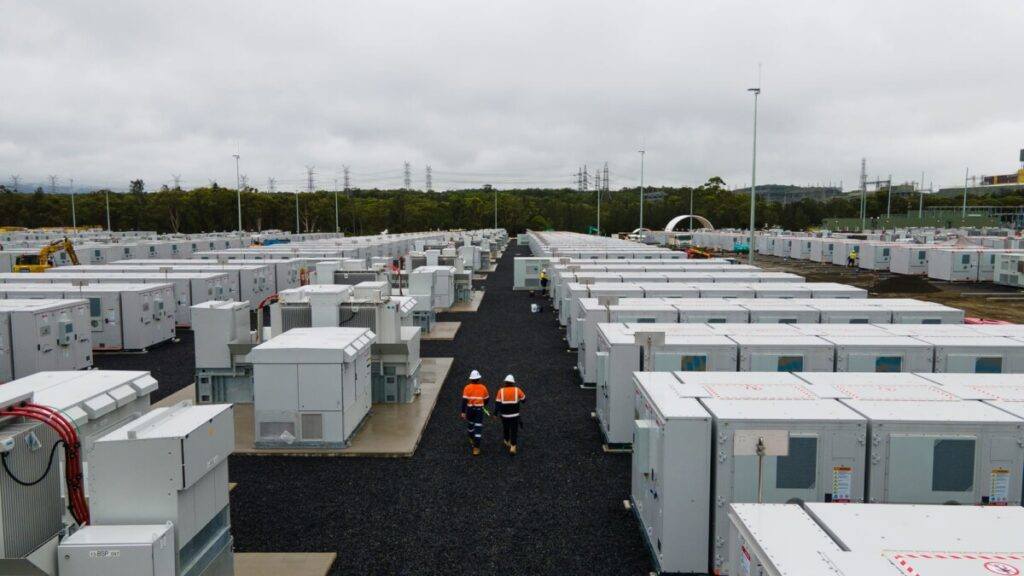
Chile remains the largest storage market in the region, hosting the largest battery energy storage system (BESS) projects currently in operation in Latin America. High levels of renewable curtailment continue to support long-duration storage investment. The firm also flagged a new risk: as battery installations increase, price cannibalization is emerging in northern Chile, which could reduce energy arbitrage revenues.
Mexico's storage outlook depends largely on the direction of energy policy. The firm estimates that new mechanisms for strategic projects and storage-inclusive plans developed jointly with Mexico's Federal Electricity Commission (Comisión Federal de Electricidad, CFE) could drive the award of more than 3 GW of capacity by 2030. The strategic project tender launched in July set a reference size of 935 MW for standalone storage systems, all with a three-hour duration, distributed across Baja California, Baja California Sur, and the northern, northwestern, eastern, western, and peninsular regions; this figure is indicative only and does not constitute a limit on project submissions. Additionally, according to Wood Mackenzie's analysis, the Electric Sector Development Plan (Plan de Desarrollo del Sector Eléctrico) requires storage equivalent to 30% of installed capacity for new renewable energy projects.
Brazil is set to see a shift in installed capacity. The country plans to hold its first two capacity reserve auctions dedicated exclusively to large-scale battery systems on December 2 and 4, 2026, with the first targeting projects that meet domestic manufacturing requirements and the second open to other systems. Contracts will have a 15-year term, with supply starting on August 1, 2028, and projects must have at least 30 MW of capacity and a four-hour duration.
Wood Mackenzie believes these auctions will accelerate Brazil's installed capacity growth from 2028 onward, but cautions that financing will remain constrained as long as sufficiently clear and predictable remuneration mechanisms are lacking.
Argentina has established a tender-based standalone storage market in just over a year. Capacity figures in the report differ from official numbers: the consultancy tallies approximately 1.3 GW of recently awarded projects, while official data totals 1,413.5 MW, with 713 MW awarded under AlmaGBA and 700.5 MW under AlmaSADI. These projects are primarily intended to alleviate constraints at critical nodes and provide capacity and reserve services during transmission network expansion.
The Dominican Republic is cited in the report as one of the markets with the most developed regulatory frameworks in the Caribbean. Its regulations require new renewable energy projects of at least 20 MWac to be paired with storage equivalent to no less than 50% of installed capacity, with a minimum duration of four hours. The firm also sets the Dominican Republic's 2030 storage target at 500 MW.
Despite clear growth expectations, the firm notes that the lack of bankable revenue models remains a major regional obstacle. Several markets lack clear remuneration mechanisms for ancillary services, energy arbitrage, or capacity, alongside financing constraints, permitting delays, and a limited number of buyers capable of supporting long-term contracts.
Morales stated that Latin America needs to strike a balance between mandates and incentives to develop the storage market; countries that establish bankable remuneration mechanisms will be better positioned to convert announced project pipelines into actual construction over the next decade.
Related Products
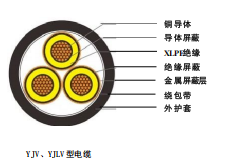

Rated Voltage 6-35kV Cross-linked Polyethylene Insulated Power Cable
TONGDING INTERCONNECTION INFORMATION CO., LTD.
Hydrogen Production Technology: Hydrogen Purification by Pressure Swing Adsorption
Chengdu Yizhi Technology Co., Ltd.
Perfluorinated Ionic Membrane-CM-10N Series Membrane
Guizhou Juneng Century Technology Co., Ltd

Pneumatic high-pressure wear-resistant ball valve
Zhejiang Deca Control Valve Meter Co., Ltd.
YE3 Series Low Voltage High Power Three-Phase Asynchronous Motor
Shandong Lijiu Electrical Machinery Co., Ltd.
6kV-35kV Medium and High Voltage Direct-Connected Energy Storage System
Hainan Jinpan Smart Technology Co., Ltd.