Intertek CEA: US Section 232 Tariffs Expected to Put Module Prices at 30 Cents per Watt
en.Wedoany.com Reported - Clean energy consulting firm Intertek CEA has analyzed that the Trump administration's latest trade action under Section 232 of the Trade Expansion Act of 1962 on imported silicon products will reshape the U.S. solar procurement landscape. The firm believes this measure will make domestic U.S. module assembly using imported cells the industry's dominant model, with vertically integrated companies emerging as the biggest beneficiaries.
Christian Roselund, Policy Research Manager at Intertek CEA, and Joseph C. Johnson, Associate Director of Market Intelligence, provided a detailed interpretation of the regulatory framework and market impact of the trade action during a webinar. The action was announced on August 6 and is scheduled to take effect on December 4, 2026. Its core mechanism involves two elements: imported products must meet a minimum import price (MIP) at the time of their first arm's-length transaction from the effective date, while also being subject to a 15% ad valorem tariff on import value.
Under the new rules, the minimum import price for solar modules is set at 38 cents per watt, and for cells at 22 cents per watt. Intertek CEA analysts also converted the weight-based benchmarks for upstream materials into per-watt costs, with polysilicon at 3.7 cents and ingots and wafers at 12 cents. Due to the stacking effect of the minimum import price, the 15% ad valorem tariff, and the previously implemented Section 301 tariffs of 10% to 12.5%, spot prices for both imported and domestically produced modules have now risen to around 46 cents per watt.
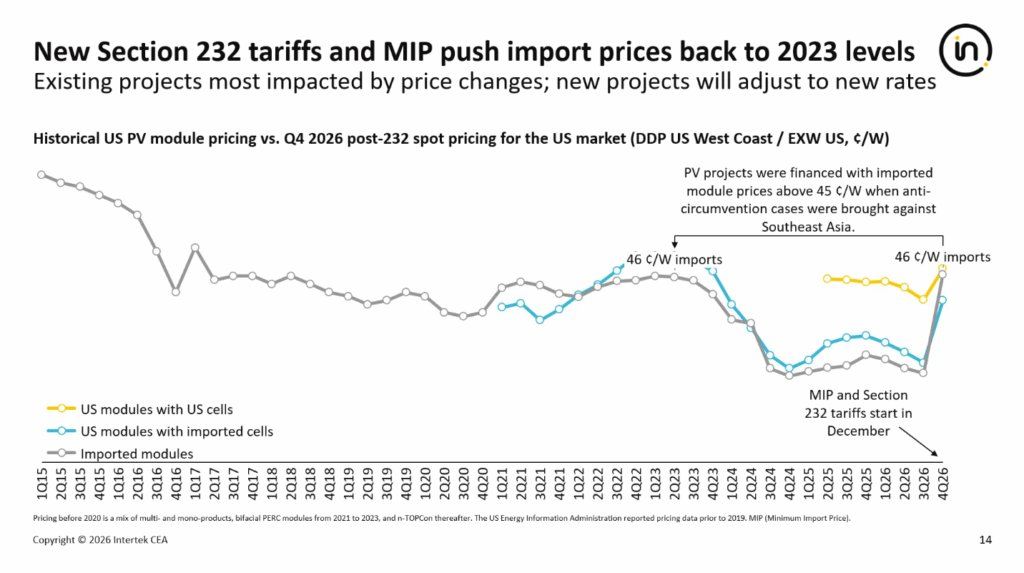
Johnson noted that market prices at similar levels were last seen during the anti-circumvention investigations targeting Southeast Asian solar products in 2022 and 2023. He predicted that as the market gradually adapts to the new rules, prices for modules assembled domestically in the U.S. using imported cells could eventually stabilize at around 30 cents per watt.
Intertek CEA analysts believe the direct consequence of the Section 232 tariffs is that the import channel for solar modules will be largely blocked, and buyers will shift toward domestically assembled products. Roselund expects domestic module assembly to begin dominating the market in 2027. He believes companies that already possess vertical integration capabilities will find it easiest to enter this new landscape, as such firms can shift profits internally by using imported cell prices that exceed costs, thereby gaining a cost advantage in the module segment. He explained that the higher the degree of vertical integration, the greater the overall profit potential.
By contrast, companies engaged solely in module assembly will face higher cell quotes from both domestic and foreign suppliers. While domestic cell manufacturers can enjoy short-term gains from price increases, their profit margins will ultimately remain squeezed due to the high cost of imported wafers.
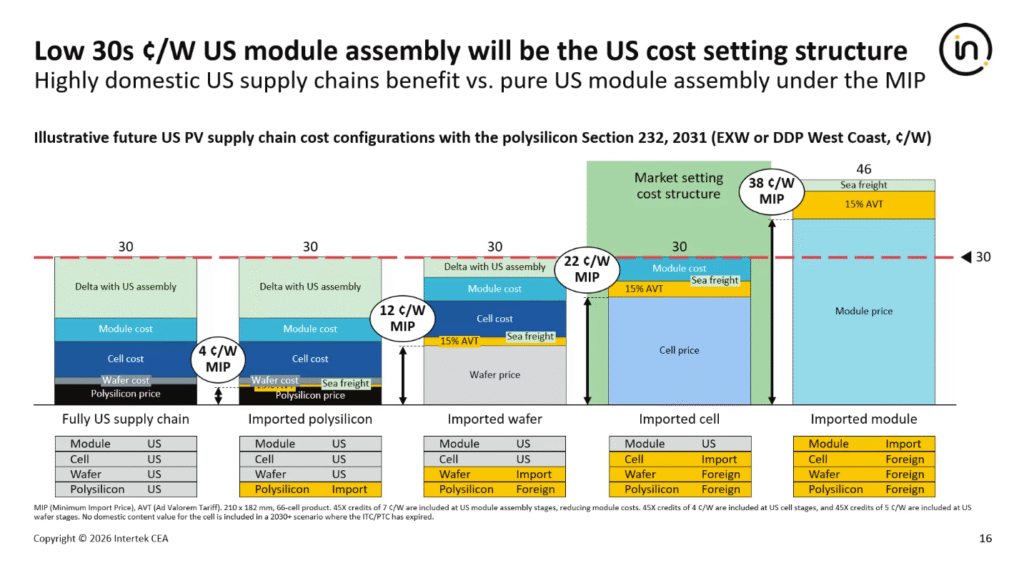
However, the potential benefits for vertically integrated companies may not translate into new investment in domestic polysilicon processing, ingot, wafer, and cell manufacturing. Johnson pointed out that amid an uncertain trade policy environment, manufacturers are hard-pressed to commit hundreds of millions of dollars and several years to build a plant that may face ongoing policy volatility. He believes the clearly visible trend at present is that a large volume of module assembly capacity will be released for developers to use, but upstream expansion along the supply chain will be restrained.
Johnson also described a profitable module assembly model that does not rely on vertical integration. In this framework, foreign cell manufacturers sell cells to U.S. assemblers at prices above the minimum import price, while paying assembly fees to secure assembly services, allowing assemblers to claim the Section 45X tax credit. The cell supplier then repurchases the finished modules from the assembler at a pre-agreed price, granting the assembler a thin but stable processing margin, before selling them into the U.S. market at a modest markup.
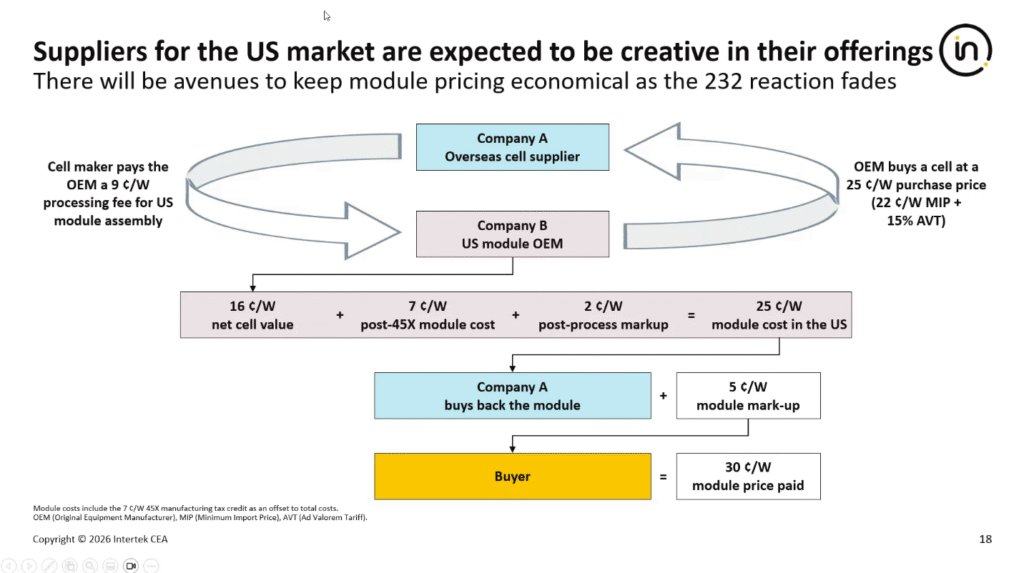
Under this arrangement, the cell supplier profits from both cell sales and module resale; the assembler earns processing income and tax credits; and end buyers can acquire domestically assembled modules at levels below the minimum import price for imported modules. By the end of 2027, U.S. module assembly capacity is expected to reach twice the annual solar installation demand for that year. Johnson stated that module manufacturers will need to rely on such innovative arrangements to remain competitive. He noted that a moderate surplus of capacity helps address seasonal demand fluctuations and rush orders, but when capacity reaches several times demand, competitive pressure in the market will rise significantly.
However, these market forces will take time to materialize. Analysts expect the U.S. Department of Commerce to issue supplementary regulations in the coming months, while customs enforcement authority in related areas will expand significantly, potentially causing delays in import clearance. Roselund drew a comparison to the enforcement of the Uyghur Forced Labor Prevention Act (UFLPA), noting that even products that pass review take considerable time to clear customs, making import delays almost an unavoidable outcome.
Related Products



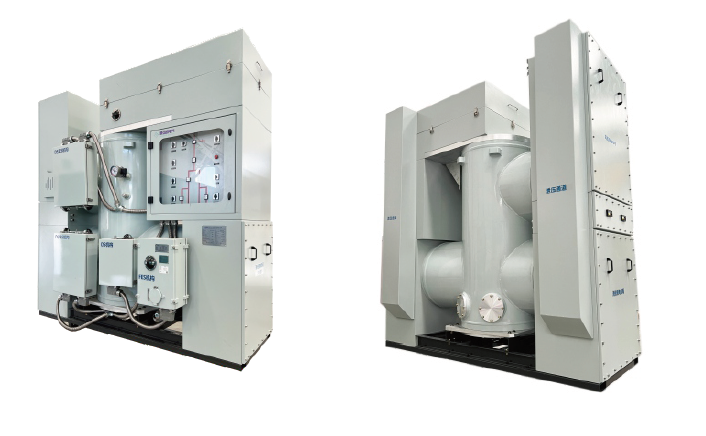
72.5kV 1250A 31.5kA SF6 free Gas-insulated Metal-enclosed Switchgear
Zhejiang Juhonkia Intelligent Electric Co., Ltd.
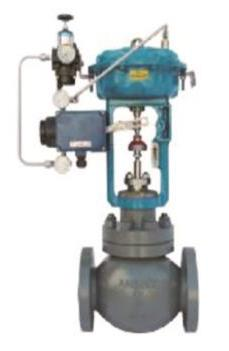
Quick-Change Single-Seat Control Valve / Quick-Change High-Pressure Single-Seat Control Valve
Beijing Consen Automation Technology Co., Ltd.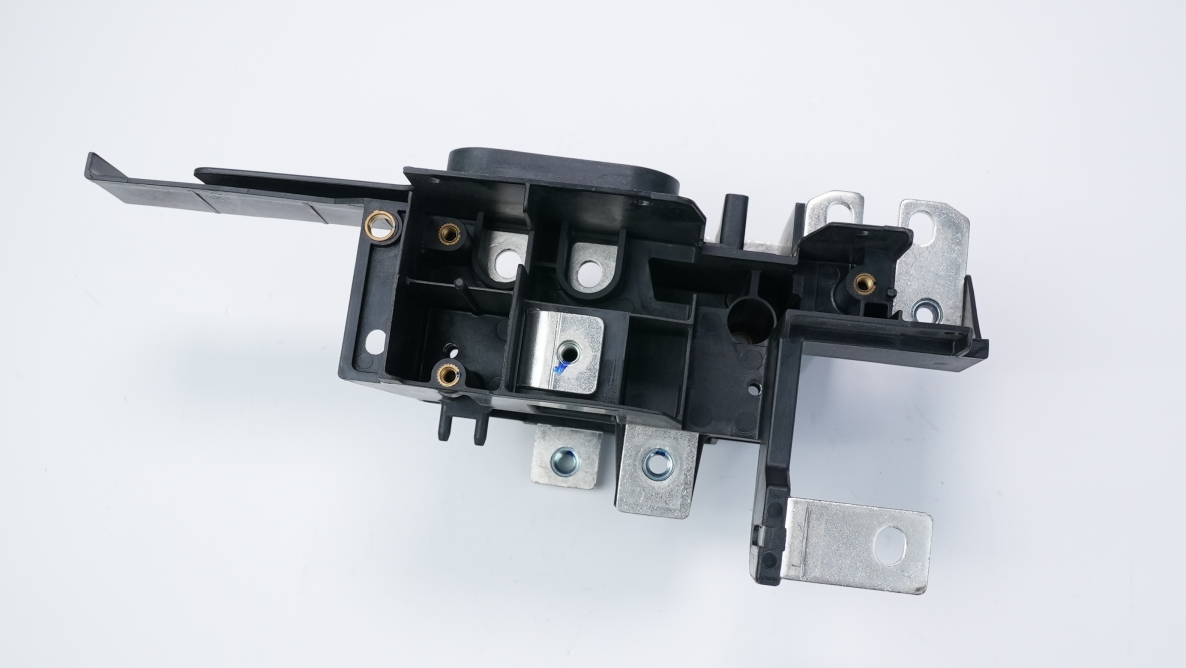
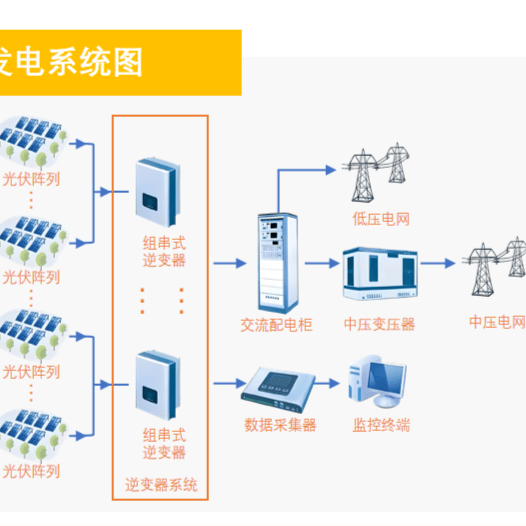
Photovoltaic and Wind Power Generation Technology
Beijing Boqi Electric Power SCI-TECH Co., Ltd.