Global Marine Fuel Oil May Face a 218,000 b/d Shortage in Q3
en.Wedoany.com Reported - Energy Aspects expects the global fuel oil market supply gap to reach 218,000 b/d in the third quarter of 2026, higher than the gap of about 6,000 b/d in the same period of 2025. Disrupted refinery production in Russia and the Middle East, restricted maritime transport, and refineries diverting more fuel oil into secondary processing units to produce diesel, gasoline, and jet fuel are all compressing the volume of supply that can directly enter the marine fuel market.
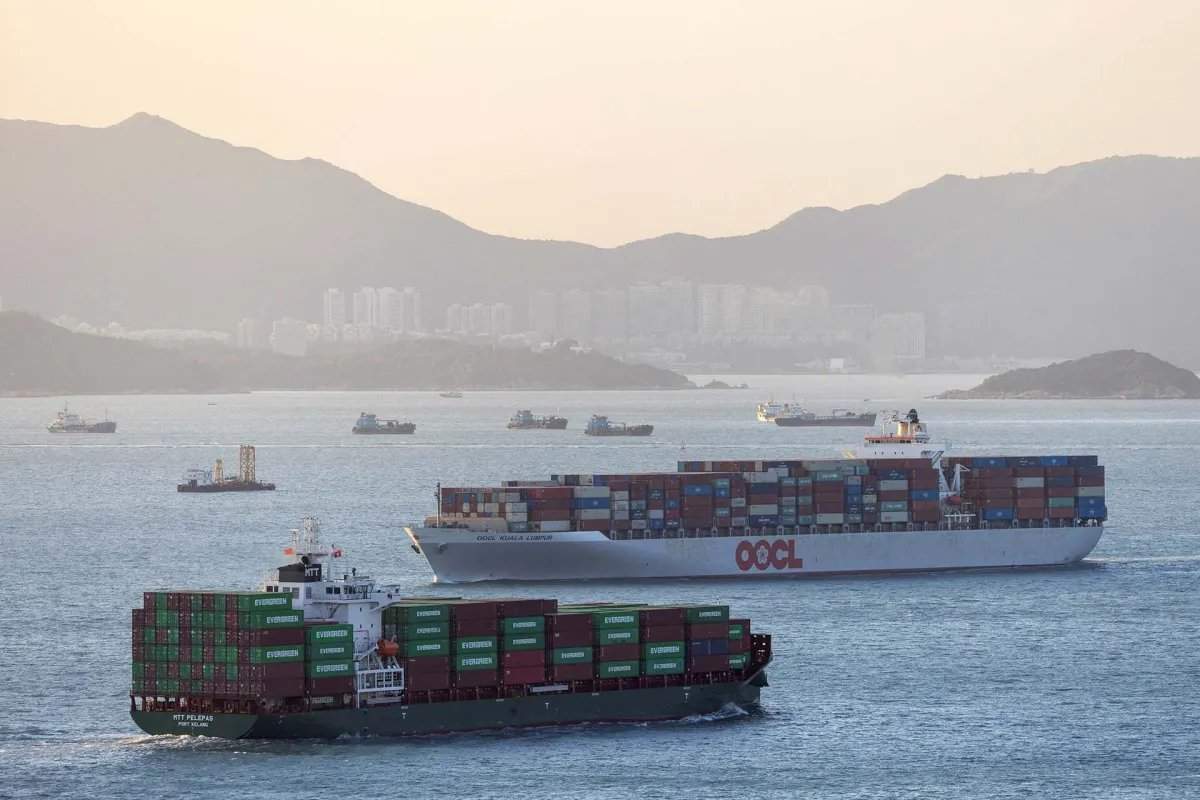
Supply pressure is more concentrated in the Asian market. Singapore, the world's largest marine fuel bunkering hub, has daily demand of nearly 1 million barrels, more than half of which relies on imports. Fuel oil inventories at the three major bunkering hubs of Singapore, Amsterdam-Rotterdam-Antwerp, and Fujairah are currently about 30% below the average level for the same period over the past three years.
As of September 1, the price of very low sulfur fuel oil (VLSFO), Singapore's main marine fuel grade, had risen to nearly $825/mt, equivalent to about $130/b, up 76% since the start of the Iran conflict; over the same period, Brent crude rose about 40%. In early September, the spot bunker delivery lead time for VLSFO in Singapore had extended to about 9-16 days, and the amount of fuel and blending components available to suppliers for immediate delivery decreased.
The supply-side contraction is mainly concentrated in Russia and the Middle East. Kpler data show that Russia's fuel oil exports fell to 591,000 b/d in August, the lowest level since relevant statistics began in 2017, down significantly from a monthly average of more than 860,000 b/d in 2025. Fuel oil exports from the Middle East fell 45% year on year from March to August, averaging 447,000 b/d.
Lower supply from Kuwait's Al-Zour refinery further tightened the market. The refinery is one of the Middle East's main fuel oil export facilities, and since March it has exported only one cargo of about 26,000 b/d, while average exports in January-February this year were about 191,000 b/d. At the same time, after Nigeria's Dangote refinery increased exports of diesel, gasoline, and jet fuel, its fuel oil exports decreased accordingly.
Ship diversions also increase fuel consumption. Some vessels have switched to longer routes due to navigation risks in the Red Sea and the Bab el-Mandeb Strait, increasing voyage distance and fuel demand per voyage. Enterprise Logistics estimates that if a July cargo of Saudi crude oil were diverted from Yanbu around the Cape of Good Hope to Taiwan, the voyage could be extended from about 19 days to 48 days, with the corresponding fuel cost rising from about $1.3 million to $2.9 million.
Related Products


Inductive Power Harvesting Self-Powered Device - Safuneng
SELF ENERGY TECHNOLOGY (SHENZHEN) CO., LTD.
High-voltage Direct Current (HVDC) Transmission System Research and Integrated Design
XI'AN XD POWER SYSTEMS CO., LTD.


Single-Phase Automatic Voltage Regulator(AVR)
Shaanxi Sefon Electrical Equipment Co.,Ltd.
220kV Composite Outdoor Cable Terminal
Shenyang Guolian Cable Accessories Manufacture Co., Ltd.
714CD Series C-Band Weather Radar
Chengdu Zhongdian Jinjiang Information Industry Co., Ltd.

Quick-Change Single-Seat Control Valve / Quick-Change High-Pressure Single-Seat Control Valve
Beijing Consen Automation Technology Co., Ltd.