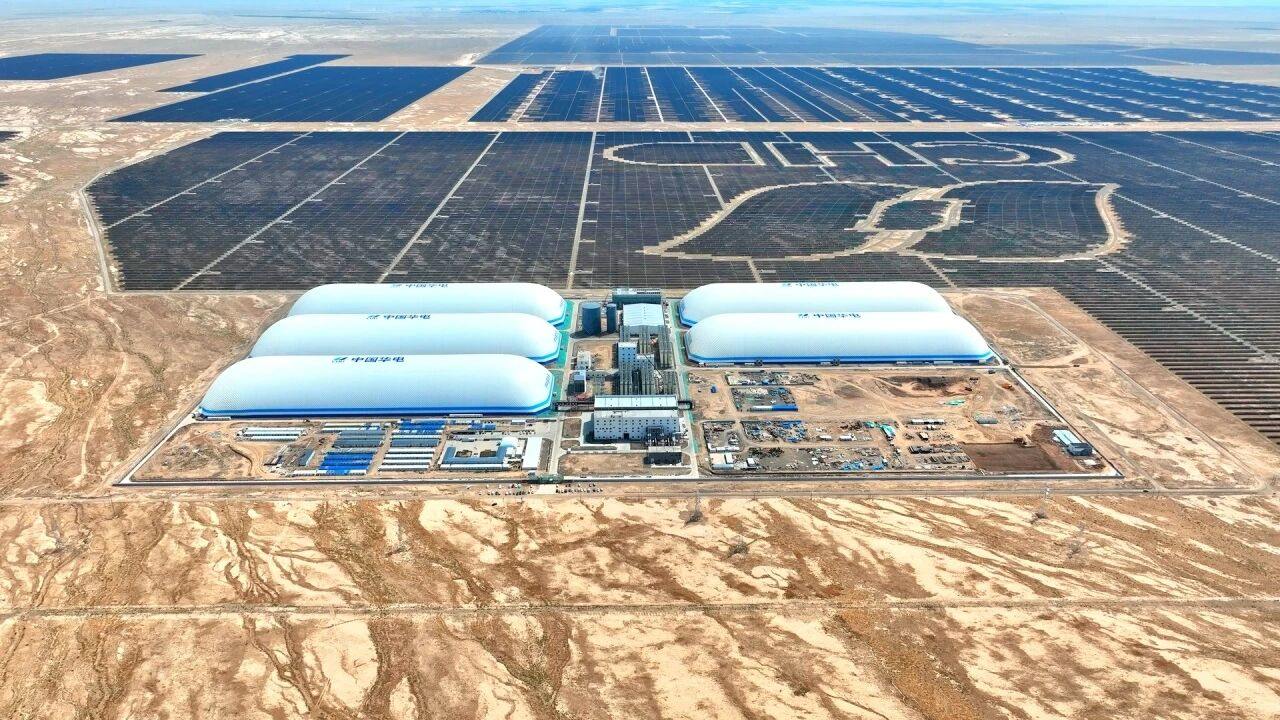
Chinese Team Optimizes Air Injection Strategy for Compressed Air Energy Storage, Raising Storage Efficiency to 87.5%
en.Wedoany.com Reported - On September 28, a research team from Hunan University of Technology conducted a study on the air injection process of an underground cavern compressed air energy storage system. By establishing a wellbore–storage cavern coupled numerical model, they simulated the changes in temperature, pressure, and heat loss under different air injection flow rates, wellbore diameters, and surrounding rock thermal conductivities. The results showed that under the same total injected air mass and 8-hour injection time, adopting a linearly increasing air injection strategy could increase the cavern energy storage efficiency from 85.5% under constant-flow injection to 87.5%. The related results were published in Case Studies in Thermal Engineering.
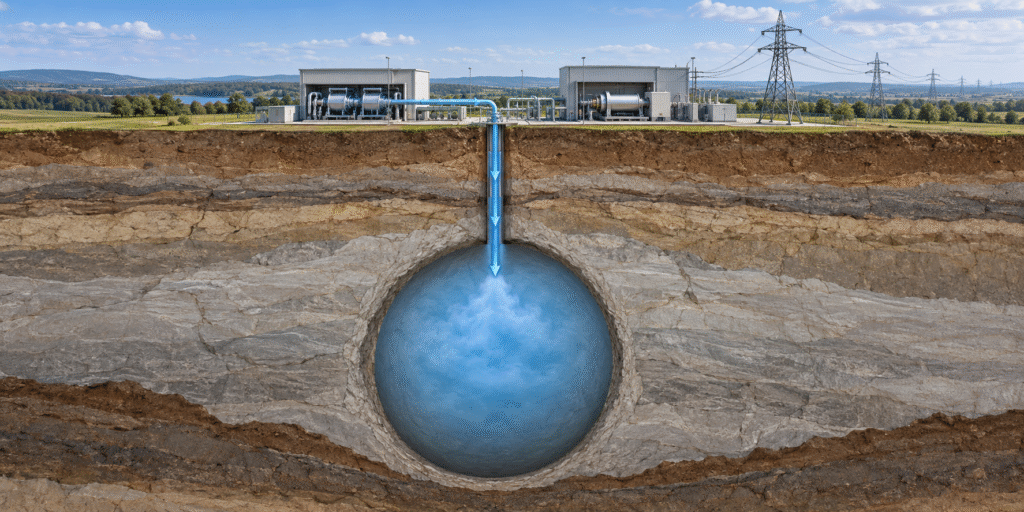
The research model simultaneously considered air transport within the wellbore, real air thermophysical properties, turbulence, gas–solid coupled heat transfer, and heat conduction in the surrounding rock, and was validated using operating data from the Huntorf compressed air energy storage power station in Germany. The model simplified the Huntorf storage cavern as a cylinder with a radius of 20 meters and a height of 112.2 meters. Compared with measured data, the simulation results showed a maximum temperature deviation of 2.66 K and a maximum pressure deviation of 0.30 MPa.
In subsequent parameter simulations, the research team set up a spherical storage cavern with a radius of 40 meters and a volume of 268,000 cubic meters, connected to a 30-meter-long wellbore. The study compared four air injection modes, including a flow rate linearly increasing from 10 kg/s to 150 kg/s, staged injection at 110 kg/s for the first 5 hours and 30 kg/s for the last 3 hours, stepwise increasing flow injection with pauses, and constant injection at 80 kg/s. The total mass of air injected within 8 hours remained consistent across the four modes.
The simulation results showed that, compared with the constant-flow mode, linearly increasing injection raised the average air temperature in the cavern by about 1 K and the average pressure by 0.13 MPa, increased the work obtained by the compressed air by about 12.7%, and simultaneously increased the heat transferred from the cavern wall to the surrounding rock by about 11%. Under the above conditions, the final energy storage efficiency increased by 2 percentage points. The study also tested four wellbore diameters: 0.5 meters, 1 meter, 1.5 meters, and 2 meters. When the wellbore diameter increased from 0.5 meters to 2 meters, the heat loss through the wellbore wall decreased from 8.5×10^8 J to 2.5×10^8 J, and the average temperature of the air entering the cavern increased by about 1 K.
The thermophysical properties of the surrounding rock were also included in the simulation scope. The team calculated using thermal conductivities of 2.17 W/(m·K) for basalt, 2.90 W/(m·K) for granite, and 5.53 W/(m·K) for quartzite. When the surrounding rock changed from basalt to quartzite, the heat conduction loss increased by about 7%. The study also found that if the cavern wall were simplified to adiabatic conditions, the average temperature and pressure at the end of air injection would be overestimated by 1.7 K and 0.05 MPa, respectively; at the end of air withdrawal, the corresponding overestimates would expand to 2.2 K and 0.06 MPa.
This study focused on the energy storage performance during the air injection stage of an underground storage cavern. The results came from numerical simulation and did not include the efficiency of surface equipment such as compressors and expanders in the above energy storage efficiency indicators of 85.5% and 87.5%. The research team focused on completing comparisons of three parameter groups: air injection mode, wellbore size, and surrounding rock thermal conductivity, and validated the model's temperature and pressure calculation results using actual operating data from Huntorf.
Related Products

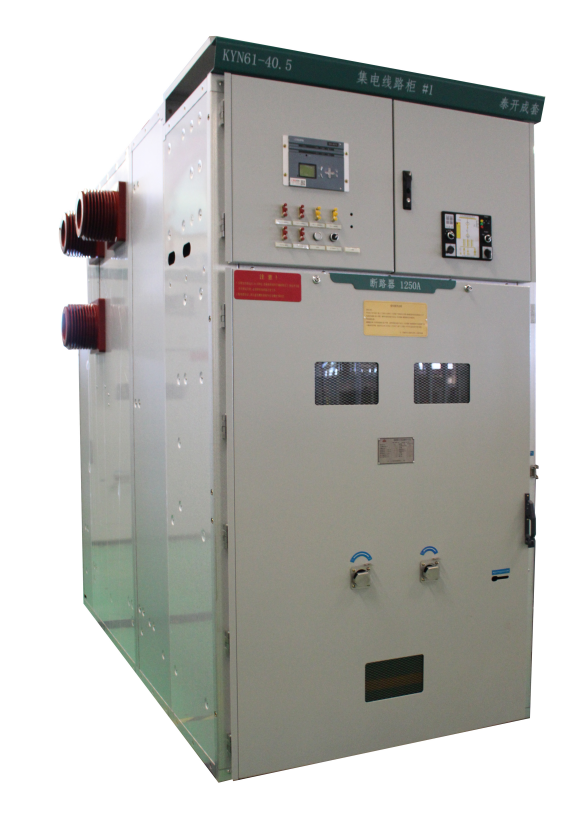
Microcomputer Protection and Substation Automation
Beijing Agent Devote Power Technology Development Co., Ltd.
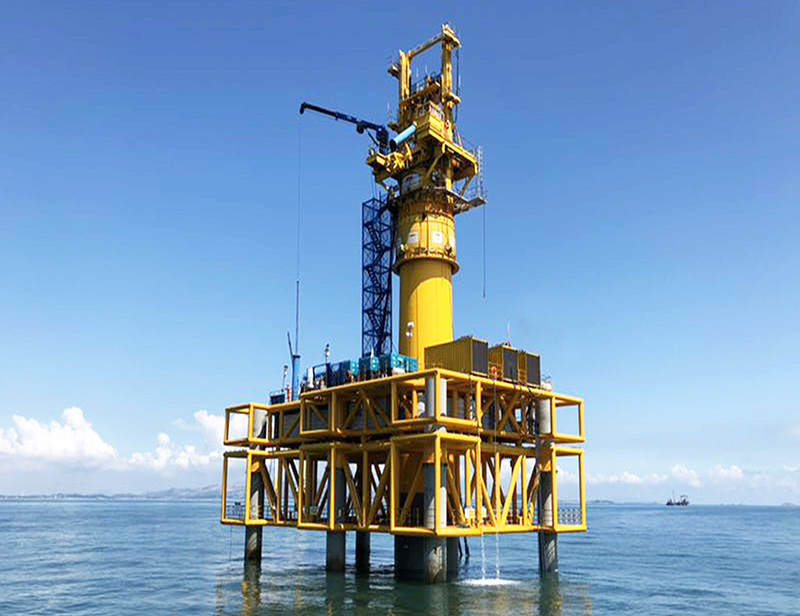
CITIC Heavy Industries Offshore Wind Power Equipment Hydraulic Pile Hammer
CITIC Heavy Industries Co., Ltd.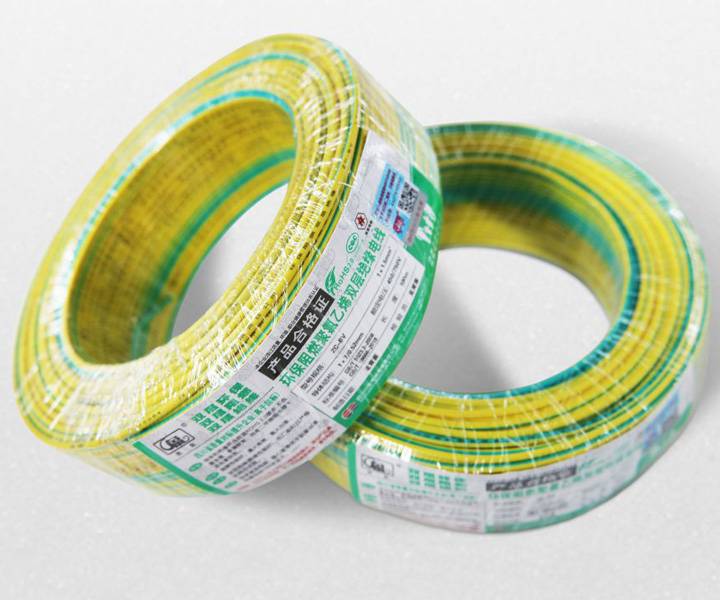
Environmentally Friendly Flame-retardant PVC Double-layer Insulated Wire
Sichuan Chndo Cable Co., Ltd.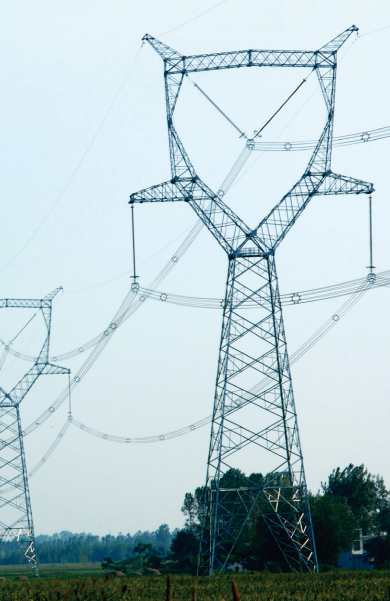
1000kV Jin Southeast-Nanyang-Jingmen UHV AC Transmission and Transformation Pilot Demonstration Project
Anhui Hongyuan Steel Tower Co., Ltd.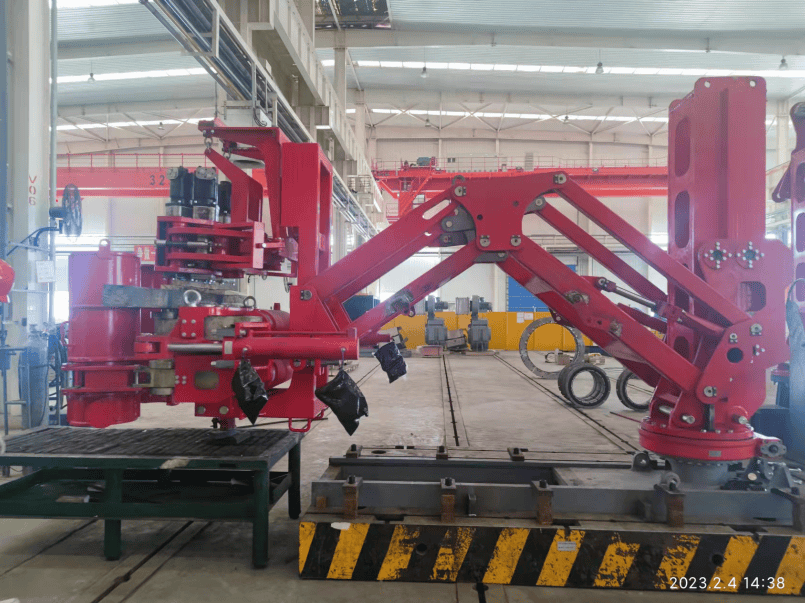
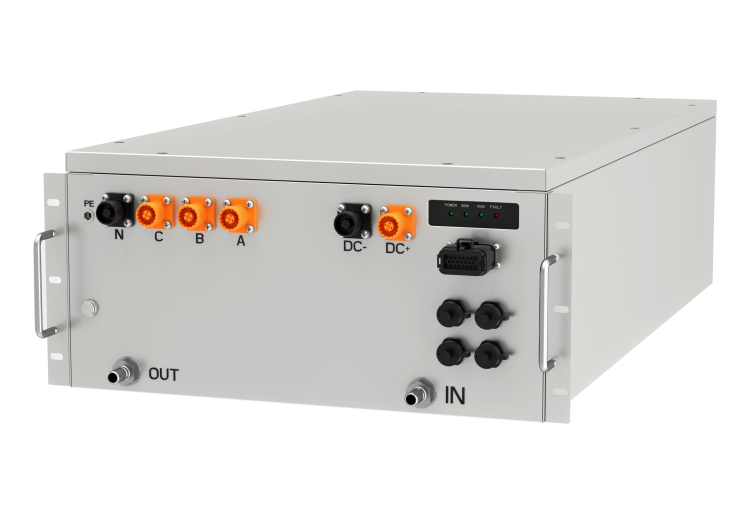
Mars (Liquid Cooling) Series Industrial and Commercial Energy Storage Converter High Protection Module
Shenzhen Winline Technology Co., Ltd.
IGBT Hydrogen Production Power Supply - High Power Air Cooling
Beijing Zhengzhuo Engineering Technology Co., Ltd.