Wedoany.com Report-Sept. 25, Rabobank has observed that China’s pig industry has entered a new development phase, moving from rapid expansion to a stronger emphasis on efficiency. This conclusion was highlighted in a recent report on the world’s largest pig-producing country, authored by Chenjun Pan, Senior Analyst for Animal Protein at Rabobank.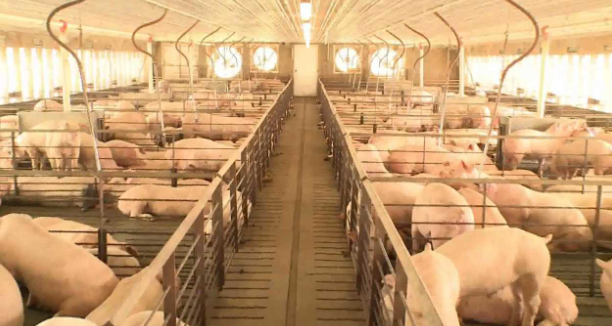
The report identifies three key phases in the evolution of China’s pig sector. In 2010, the first phase began with the introduction of large-scale and industrialised pork production, though at the time it accounted for only a small share of overall output. The second phase, between 2019 and 2022, was marked by the impact of African Swine Fever (ASF), which caused market disruption and industry consolidation. Many small producers exited the market, while larger companies expanded their role. The third phase, where the industry now stands, is centered on efficiency and technological adoption.
Chenjun Pan noted: “This change has been driven by external factors such as slowing demand and intensified production, as well as by proactive initiatives from leading players embracing new technologies.” She explained that major enterprises are increasingly investing in innovations to address rising costs and structural challenges.
Rabobank forecasts that ownership patterns in the industry will continue to shift after 2025. Before ASF, enterprises with over 10,000 sows accounted for around 10% of production, while smallholders with fewer than 50 sows represented up to 40%. Looking ahead, the bank expects large-scale operations to account for about 40% of production, while smallholders’ share will decline to about 10%.
The report also points out that China’s production costs remain higher compared to other major pork-producing countries. Factors behind this include the high cost of grains, relatively low feed conversion efficiency, variable genetic quality, and challenges in biosecurity. These structural cost pressures have resulted in China becoming a net importer of pork.
To address these issues, the industry is turning to automation and smart farming practices, which could help reduce expenses and improve overall efficiency. Investments in feed management, genetic consistency, and advanced biosecurity measures are also expected to support long-term improvements.
Rabobank emphasized that this shift from expansion to efficiency will have wider consequences for the global agricultural market. In particular, the report highlighted a probable slowdown in China’s demand for soybeans and other feedstuffs. Consumption of hog feed is expected to plateau in the near term and eventually decline, reducing the pace of import growth in feed materials.
In conclusion, China’s pig industry is entering a mature stage, where consolidation, efficiency, and cost control are becoming central priorities. While the industry continues to play a dominant role globally, its changing trajectory will influence both domestic supply dynamics and international trade patterns in pork and feed commodities.