Researchers Advance Sodium-Ion Technology for Renewable Energy
Wedoany.com Report-Nov 15, In a recent study published in Batteries & Supercaps, researchers presented a pioneering project to develop a new solid-state battery formulation to examine how it fails. By focusing on understanding the failure mechanisms of solid electrolytes, the team seeks to enhance the performance and longevity of batteries, facilitating the broader adoption of renewable energy technologies.
Background
Traditional batteries typically rely on liquid electrolytes to facilitate the movement of ions between electrodes during the charge and discharge cycles. However, using liquid electrolytes presents several limitations, including safety concerns, lower energy density, and reduced stability over time. In contrast, solid-state batteries utilize solid electrolytes, which offer improved safety and potentially higher energy densities.
The ORNL researchers are particularly interested in sodium-ion batteries, which utilize sodium ions as charge carriers. This choice is motivated by sodium's abundance and low cost compared to lithium, making sodium-ion batteries a promising alternative for large-scale energy storage applications.
Despite the advantages of solid electrolytes, significant challenges remain in their development. One of the primary issues is understanding how these materials fail under high-demand conditions, such as elevated current or voltage. The ORNL team aims to investigate these failure mechanisms to optimize the design of solid-state batteries for long-term energy storage applications.
The Current StudyThe ORNL researchers employed advanced experimental techniques to explore the failure mechanisms of their newly developed solid-state battery. They designed a battery that incorporated a solid electrolyte with enhanced conductivity, allowing sodium ions to travel more efficiently. The team conducted experiments under controlled conditions, utilizing a powerful X-ray beam at the Advanced Photon Source located at Argonne National Laboratory. This setup enabled the researchers to observe the battery's behavior in real time as it operated under high current and voltage conditions.
The study focused specifically on the phenomenon of pore-filling within the solid electrolyte. As the battery operated, sodium ions deposited in the electrolyte material's pores. This deposition process led to the formation of structures that ultimately caused short circuits, a critical failure mode for solid-state batteries. By employing operando synchrotron X-ray tomography, the researchers could visualize these processes and gain insights into the underlying failure mechanisms.
Results and Discussion
The findings from the ORNL study revealed significant insights into the behavior of solid electrolytes under operational stress. The researchers discovered that the pore-filling phenomenon was a key factor contributing to the failure of the solid electrolyte. As sodium ions accumulated in the pores, they formed obstructive structures that impeded the flow of ions, leading to short circuits and reduced battery performance. This understanding is crucial, highlighting the need to further optimize solid electrolyte materials to mitigate such failure modes.
These results have implications that extend beyond the study's immediate findings. By identifying the specific mechanisms that lead to failure, the ORNL team can inform the design of future solid-state batteries.
This knowledge can guide the development of materials with improved structural integrity and conductivity, ultimately enhancing the reliability and efficiency of energy storage systems. The research underscores the importance of a comprehensive understanding of material behavior under operational conditions, essential for advancing solid-state battery technology.
Conclusion
The research conducted by the ORNL team represents a significant step forward in the development of solid-state batteries for renewable energy storage. By focusing on the failure mechanisms of solid electrolytes, the researchers have provided valuable insights that can inform the design of more efficient and reliable energy storage systems.
The findings highlight the potential of sodium-ion batteries as a viable alternative to traditional lithium-ion batteries, particularly in large-scale energy storage applications.
Source:
Mengya Li et al. (2024) Pore-Filling Induced Solid Electrolyte Failure of Ti-Doped Na3Zr2Si2PO12 Characterized by Operando Synchrotron X-Ray Tomography. Batteries & Supercaps. e202400429. https://doi.org/10.1002/batt.202400429
Related Products

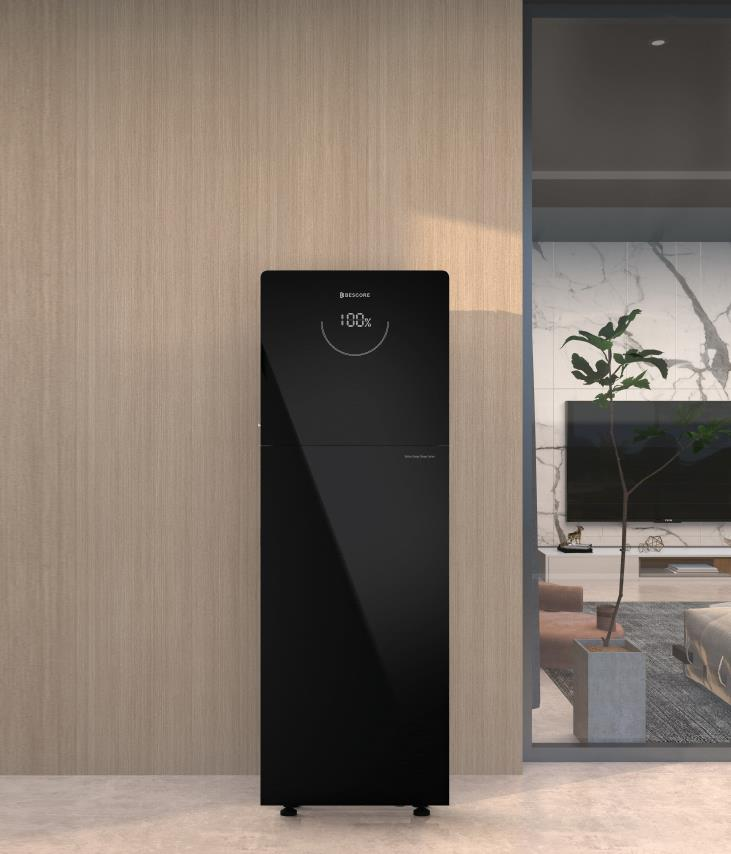
RT-10Y three-phase integrated home energy storage system
Bescore New Energy Technology (Qingdao) Co.,Ltd.
Perfluorinated Ionic Membrane-CM-10N Series Membrane
Guizhou Juneng Century Technology Co., Ltd
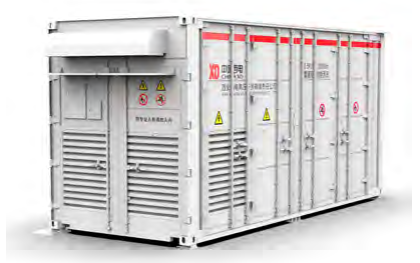
5012kWh DC Energy Storage System TD-EES-5012kWh
Suzhou Tongding Xindong Energy Storage Technology Co., Ltd.
Digital Multifunctional Electrical Measuring Instrument
Shanghai Complee Instrument Co.,Ltd.
IGBT Hydrogen Production Power Supply - High Power Air Cooling
Beijing Zhengzhuo Engineering Technology Co., Ltd.