DOE Releases Fusion Roadmap
Wedoany.com Report-Oct. 26, The U.S. Department of Energy (DOE) has released its Fusion Science and Technology (FS&T) Roadmap, a comprehensive national plan aimed at accelerating the development and commercialization of fusion energy “on the most rapid, responsible timeline in history.” The initiative seeks to coordinate public investment and private innovation to achieve commercial fusion power on the grid by the mid-2030s.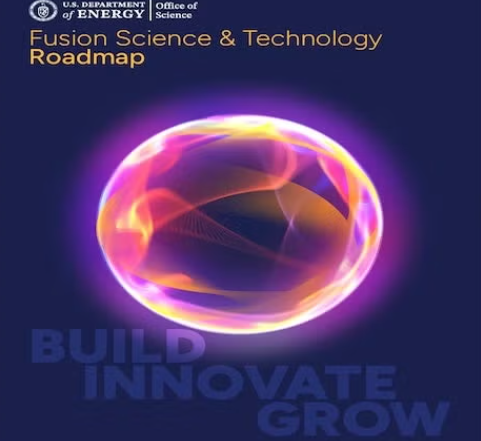
According to the DOE, the Roadmap follows the Build–Innovate–Grow framework, designed to align research institutions, government agencies, and private enterprises toward a unified goal of delivering fusion-based clean energy. The strategy outlines how collaborative efforts will advance key technologies, reduce scientific barriers, and build the infrastructure necessary to support large-scale deployment.
“For the first time, DOE, industry, and our National Labs will be aligned with a shared purpose – to accelerate the path to commercial fusion power and strengthen America’s leadership in energy innovation,” said Dr. Darío Gil, Under Secretary for Science at the Energy Department.
The Roadmap was developed with contributions from more than 600 scientists, engineers, and industry representatives. It identifies essential research priorities, materials development needs, and technology gaps that must be addressed to realize a Fusion Pilot Plant (FPP). The plan also emphasizes the importance of enhancing U.S. participation in the growing global fusion sector through coordinated national initiatives.
The strategy is structured around three key principles: building critical infrastructure to address materials and technology challenges; driving innovation through advanced research, high-performance computing, and artificial intelligence; and growing the domestic fusion ecosystem by fostering public-private partnerships, regional manufacturing hubs, and workforce development programs.
More than $9 billion in private investment has already been directed toward fusion research, including projects focused on burning plasma demonstrations and prototype reactor designs. The DOE’s coordinated approach seeks to close remaining technical gaps across materials science, plasma confinement systems, fuel cycle management, and reactor engineering to bring fusion energy closer to commercial reality.
The 52-page FS&T Roadmap specifies six core focus areas for investment: structural materials, plasma-facing components, confinement systems, fuel cycle, blanket technologies, and plant engineering and integration. These areas represent the foundation for achieving sustained fusion energy production and safe, efficient reactor operation.
DOE officials stated that the success of the Roadmap will depend on future public-private partnerships and consistent funding support. The document clarifies that it does not commit DOE to specific funding levels, as future allocations will be subject to Congressional appropriations.
By outlining a unified national vision for fusion energy, the DOE aims to accelerate the timeline for deployment while maintaining scientific rigor and safety. The Roadmap serves as a strategic framework to guide collaboration between government, research institutions, and private industry in developing a sustainable, commercially viable fusion energy sector by the mid-2030s.