Stellantis Ties up With Nvidia, Uber to Advance Robotaxi Development
Wedoany.com Report-Oct. 29, Stellantis announced on Tuesday a strategic partnership with Nvidia, Uber, and Foxconn to jointly develop autonomous vehicles, targeting the growing global demand for self-driving technology. The collaboration combines Nvidia’s AI computing and autonomous driving software, Uber’s ride-hailing operations, Foxconn’s electronics expertise, and Stellantis’ vehicle manufacturing capabilities to build robotaxis with Level 4 autonomy.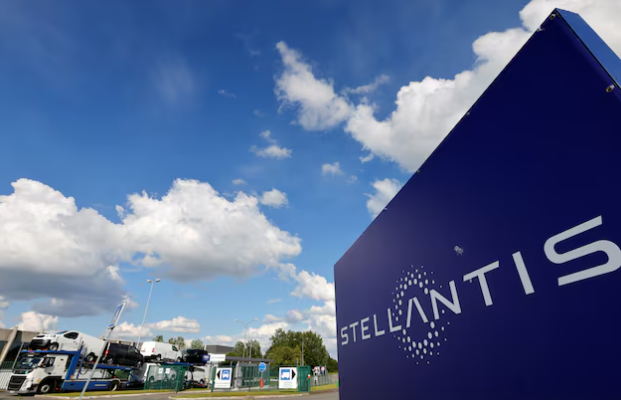
A view shows the logo of Stellantis at the entrance of the company's factory in Hordain, France, July 7, 2021.
The companies plan to begin production in 2028, with Uber initially deploying 5,000 of Stellantis’ autonomous vehicles in selected U.S. cities, followed by expansion to other locations worldwide. This initiative is part of Stellantis’ strategy to enter the autonomous mobility market and provide advanced mobility solutions for urban environments.
Earlier on Tuesday, Nvidia introduced a new self-driving car technology platform called Hyperion. During the announcement, Nvidia CEO Jensen Huang highlighted the partnership with Uber, noting the goal of creating a network of robotaxis powered by Nvidia’s AI and computing platforms. The Hyperion system is designed to support autonomous driving at scale, integrating advanced sensors, software, and high-performance computing to enable safe and efficient operation.
Stellantis said the collaboration will leverage each partner’s strengths: Nvidia provides the AI and perception systems, Uber offers operational and mobility expertise, Foxconn contributes electronics integration, and Stellantis handles vehicle production and engineering. By combining these capabilities, the companies aim to accelerate the deployment of autonomous vehicles and establish a competitive position in the rapidly expanding robotaxi market.
The partnership reflects broader industry trends as automakers and technology companies work together to commercialize self-driving vehicles. Level 4 autonomy allows vehicles to operate without human intervention in most urban and highway conditions, although human oversight may still be required in certain scenarios. Stellantis’ entry into this space signals its commitment to developing next-generation mobility solutions and adapting to shifts in transportation demand driven by AI and automation.
The initiative also aligns with Uber’s strategy to integrate autonomous vehicles into its ride-hailing network, potentially reducing operational costs and expanding service availability. Foxconn’s involvement underscores the growing importance of advanced electronics and AI computing in vehicle development, particularly for autonomous driving systems.
By combining advanced AI technology, large-scale vehicle production, and operational expertise, Stellantis and its partners aim to set new benchmarks in autonomous mobility. The joint venture is expected to contribute to the global rollout of robotaxis, enhance urban transportation options, and support the development of safe, reliable, and efficient self-driving vehicles over the next decade.
Related Products

Oil-immersed Amorphous Alloy Core Distribution Transformer
Pinggao Group Smart Electric Co., Ltd.
Microcomputer Protection and Substation Automation
Beijing Agent Devote Power Technology Development Co., Ltd.


220kV Composite Outdoor Cable Terminal
Shenyang Guolian Cable Accessories Manufacture Co., Ltd.