Wedoany.com Report-Nov. 13, The Agrarian Affairs and Spatial Planning Ministry/National Land Agency (ATR/BPN) has allocated over 920,000 hectares of land to the Agriculture Ministry to support Indonesia’s ethanol development program, Minister Nusron Wahid said on Tuesday. The allocation falls slightly short of the government’s 1 million-hectare target.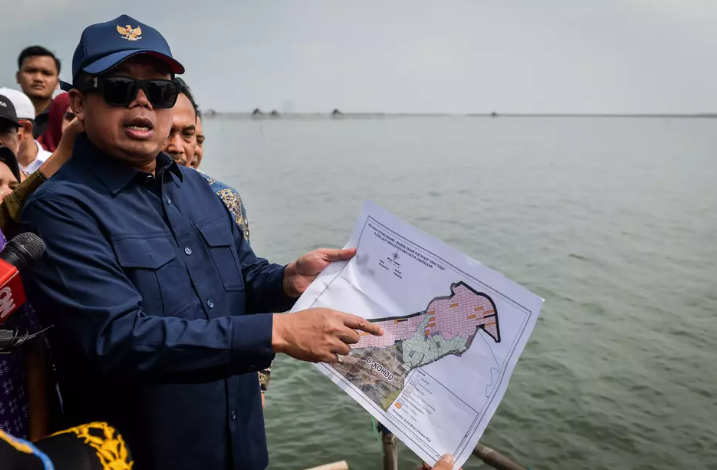
Agrarian and Spatial Planning Minister Nusron Wahid compares the water area in front of him with the land map in his hand during a visit to Kohod Village in Tangerang Regency, Banten, Friday, Jan. 24, 2025.
“We’ve submitted 680,000 hectares from expired plantation concessions and another 240,000 hectares from abandoned lands. We’re still looking for the remaining 100,000 hectares,” Nusron told reporters in Jakarta. The designated lands are spread across 18 to 19 provinces, including Sulawesi, Kalimantan, Sumatra, and Java. “It’s not just in Papua. We have lands in Sumatra, Kalimantan, Sulawesi, West Java, and East Java,” he added.
The next step involves verification by the Agriculture Ministry to ensure the areas are suitable for cultivating ethanol-producing crops. Nusron said: “We’ve handed the data over to the Agriculture Ministry for planting ethanol feedstocks. Now it’s up to them to verify whether the land is appropriate.”
This allocation is part of Indonesia’s broader plan to implement a 10 percent ethanol blend in vehicle fuels starting in 2027 under the E10 program. The policy requires all gasoline sold domestically to contain 10 percent ethanol, complementing the country’s existing B40 biodiesel mandate, which mandates a 40 percent palm oil blend in subsidized diesel.
Through these measures, the government aims to reduce fossil fuel imports, lower carbon emissions, and increase demand for domestically produced bioenergy crops. By ensuring sufficient land for ethanol feedstock cultivation, authorities are laying the groundwork to support sustainable biofuel production and meet future energy policy targets.
The initiative also reflects Indonesia’s broader strategy to diversify its energy mix and strengthen domestic bioenergy capacity. By leveraging underutilized and expired plantation lands, the government seeks to enhance productivity while promoting environmentally sustainable alternatives to fossil fuels.
Minister Nusron emphasized the importance of coordinated efforts between the land and agriculture ministries. Proper verification and management of the allocated lands are crucial to ensure they meet cultivation requirements and contribute effectively to the ethanol program.
Once fully implemented, the E10 program is expected to create additional opportunities for local farmers and bioenergy producers while supporting the government’s objectives of energy security and climate mitigation. The combined approach of ethanol blending in gasoline and palm oil blending in diesel under the B40 mandate represents a significant step in Indonesia’s renewable energy transition.
The government’s focus on ethanol production also aims to stimulate regional economies by promoting crop cultivation in multiple provinces, helping to balance development across the archipelago and provide sustainable economic benefits for local communities.
Overall, the allocation of 920,000 hectares signals Indonesia’s commitment to expanding domestic biofuel capacity and achieving its long-term renewable energy goals while supporting both environmental and economic objectives.