Irish Poultry Sector Faces Major Challenges
Wedoany.com Report-Dec.9, Ireland's poultry sector continues to face multiple pressures, according to the Department for Agriculture, Food and the Marine (DAFM) Annual Review and Outlook.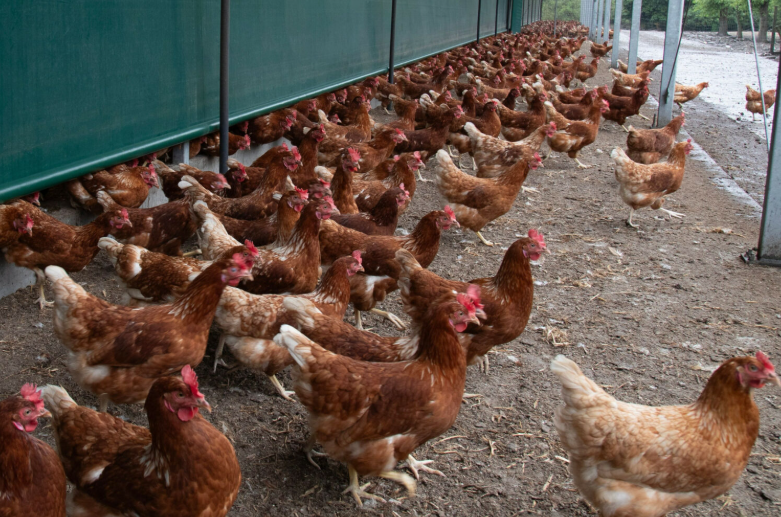
In Ireland, retailers' preference for sourcing eggs from systems other than enriched cages is intensifying.
Key challenges include the ongoing risk of avian influenza across the island, growing retailer preference for eggs produced in non-enriched cage systems, and sustained advocacy from animal-welfare organisations. These factors are driving substantial capital investment requirements as producers transition to alternative housing systems. Rising construction and equipment costs over the past five years, combined with limited availability of long-term retailer contracts, are making it harder for producers to secure adequate returns on new facilities.
On a more positive note, poultry remains the only meat category expected to increase per-capita consumption in Ireland, rising by 1.6 kg. The department highlights poultry's healthier image and relatively competitive pricing as supportive factors, though annual growth is projected to moderate compared with the past decade. Poultry meat exports are also forecast to regain momentum despite persistent price differentials with international markets.
Sector performance in 2024 showed gross output value reaching €237.4 million, up 9% from 2023, driven primarily by a 9.5% volume increase that offset a slight 0.6% price decline. Slaughter throughput rose 2% year-on-year to over 114 million birds, of which 89.8% were chickens. Export value grew moderately to €294.8 million, with the United Kingdom remaining by far the largest destination.
Table-egg production has trended upward in recent years, though avian influenza outbreaks forced flock depopulation at affected sites and temporarily reduced output. In 2024, domestic production reached an estimated 59,100 tonnes (938 million eggs). The number of registered table-egg production units increased marginally to 272, while total bird places exceeded 3.95 million. Notably, barn-system capacity expanded significantly, rising from 9% to 20% of national bird places as producers adapt to evolving market and regulatory expectations for higher-welfare egg production.
Related Products


MH220E Two-Row Hybrid Packaged Cotton Picker
CHINA RAILWAY CONSTRUCTION HEAVY NDUSTRY XINJIANG CO., LTD.
714CD Series C-Band Weather Radar
Chengdu Zhongdian Jinjiang Information Industry Co., Ltd.

Industrial and Commercial Point-Type Gas Detector
Jinan Benan Technology Development Co., Ltd.

4HS-8 High-efficiency Peanut Inverted-laying Harvester
Hebei Yongfa Hongtian Agricultural Machinery Manufacturing Co., Ltd.