Businesses Must Comply With Portugal Packaging Labels From 2025 On
Wedoany.com Report-Dec.10, Starting in 2025, all companies introducing packaging into the Portuguese market must adhere to updated labelling requirements established under the country's extended producer responsibility (EPR) framework.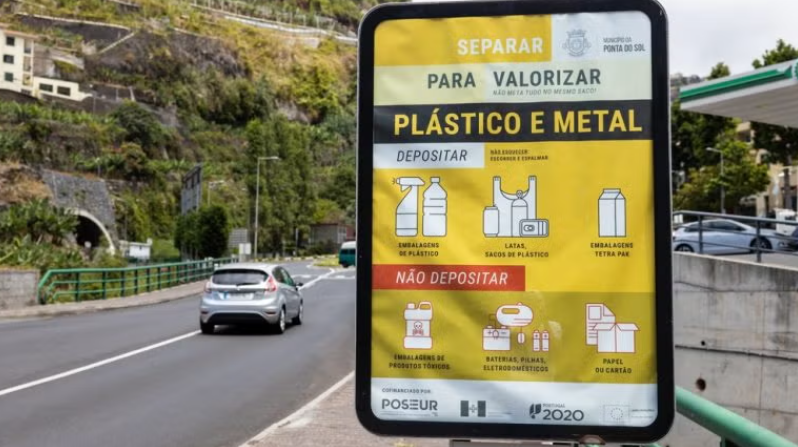
The rules apply to all packaging types and guide consumers on correct disposal and recycling.
The new rules, detailed in Article 28 of Decree-Law No. 152-D/2017, apply to every type of packaging material, including plastics, glass, metals, paper, wood, and composites. Labels must clearly identify the material composition and, where relevant, include disposal instructions to help consumers sort waste correctly.
The requirements cover primary packaging (in direct contact with the product), secondary packaging, and single-use items. While no mandatory symbols are prescribed, producers may use recognised icons, those provided by the national EPR organisation, or alternative formats such as product manuals or point-of-sale information. For companies selling remotely into Portugal, clear disposal guidance must be made available online when physical labelling is impractical.
Portugal's system aligns with European Union recycling standards and maintains compatibility with labelling approaches in other member states, such as Italy. Voluntary marks like the Green Dot may continue to be displayed, provided the core obligation of material identification and proper disposal guidance is fulfilled.
Compliance is monitored by the Portuguese Environmental Agency (APA). Non-compliance may lead to administrative penalties or limitations on market access.
The regulations support Portugal's national objectives to raise recycling rates and strengthen producer accountability through the established EPR scheme managed by Sociedade Ponto Verde.
Businesses across the consumer goods, packaging, and retail sectors are encouraged to evaluate current packaging designs and labelling processes well ahead of the 2025 implementation date. Early adaptation will help ensure smooth supply-chain continuity and avoid disruptions when placing products on the Portuguese market.
This development reflects a broader European trend toward standardised, consumer-friendly packaging information that facilitates effective recycling and contributes to more sustainable waste management practices. Companies operating in multiple EU countries can increasingly adopt unified labelling solutions to meet similar requirements across different markets. The Portuguese rules reinforce the principle that producers play a central role in enabling circular economy outcomes while providing households with straightforward guidance on correct waste separation.