XPENG Secures L3 Road Test License in Guangzhou, Accelerates Push Toward Higher Autonomy
Wedoany.com Report-Dec.18, On December 16, XPENG announced that it has received an L3 autonomous driving road test license in Guangzhou and initiated regular on-road testing of Level 3 capabilities.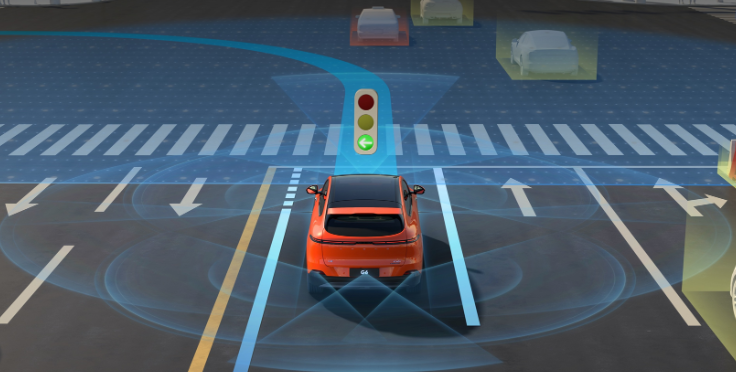
This authorization permits conditional automated driving tests on specific highways and expressways within Guangzhou's designated intelligent connected vehicle network.
The announcement follows closely after China's Ministry of Industry and Information Technology issued the initial set of market access approvals for L3 vehicles, viewed as an important step toward broader application of advanced driving technologies.
XPENG's founder and CEO, He Xiaopeng, has outlined the company's ambitions to advance beyond L3, targeting L4 autonomous driving. The firm plans to introduce mass-produced models with hardware and software supporting L4 functionality in 2026.
As autonomous systems progress toward practical use, advancements in this area among manufacturers are anticipated to grow.
The license allows XPENG to conduct tests of conditional autonomous driving on approved routes in Guangzhou. In contrast to L2 systems that demand ongoing driver oversight, L3 enables the vehicle to manage operations fully in suitable conditions. Drivers are not required to maintain constant readiness with hands or feet on controls, but they need to remain available to respond if the system identifies limitations.
According to the official automation levels, L3 serves as a key stage linking assisted driving to higher autonomy, utilizing sophisticated onboard processing for decision-making.
Before XPENG, Changan Automobile and BYD obtained comparable testing permissions, positioning XPENG as the third domestic manufacturer to achieve this approval.
XPENG has detailed a progressive schedule for its autonomous technology development.
Earlier this year, in February, He Xiaopeng indicated that an updated V6 advanced driving system, characterized as approaching L3 performance, is planned for release in mid-2025. By the close of 2025, the company intends to deploy enhanced L3 software, necessitating greater computing resources, increased storage, and improved hardware safeguards.
While commencing L3 testing, XPENG continues to prioritize L4 development. During its 2025 Technology Day event, the second-generation VLA software with L4 features was presented, expected to reach mass production and vehicle integration in the first quarter of 2026.
This second-generation VLA adopts a direct end-to-end approach, generating driving responses straight from visual data without an intermediate language step. The design aims to enhance handling in challenging settings, including narrow pathways and structured environments. It introduces a navigation-independent assisted driving mode, enabling activation worldwide without predefined routes.
On the hardware front, from the third quarter of 2025, XPENG's Ultra series models will incorporate three internally developed Turing AI chips, providing combined computing performance of up to 2,250 TOPS.
Looking ahead, XPENG intends to release three Robotaxi variants in 2026 and start trial operations. The company will concentrate on vehicle and technology provision rather than managing fleets directly. Mapping service Amap has been designated as the initial global ecosystem collaborator, supporting a platform-based strategy for autonomous services.
These milestones demonstrate XPENG's ongoing investments in intelligent driving innovations, aimed at delivering advanced mobility solutions in line with evolving regulatory frameworks and technological capabilities.
Related Products

Modular Multifunctional Water Supply and Drainage Vehicle (18T)
Changsha Dewater Machinery Technology Co., Ltd.
Perfluorinated Ionic Membrane-CM-10N Series Membrane
Guizhou Juneng Century Technology Co., Ltd
5012kWh DC Energy Storage System TD-EES-5012kWh
Suzhou Tongding Xindong Energy Storage Technology Co., Ltd.
Global Sulfur Hexafluoride Gas Supply and Cylinder Export
Foshan Yuexin Industrial Gas Co., Ltd.