Wedoany.com Report-Dec.24, A new study led by Min Ji, a prominent wood research expert at the Chinese Academy of Forestry in Beijing, has revealed that natural defects and moisture content can substantially affect the accuracy of automated timber grading systems. These factors have important implications for the reliability of structural wood used in construction projects.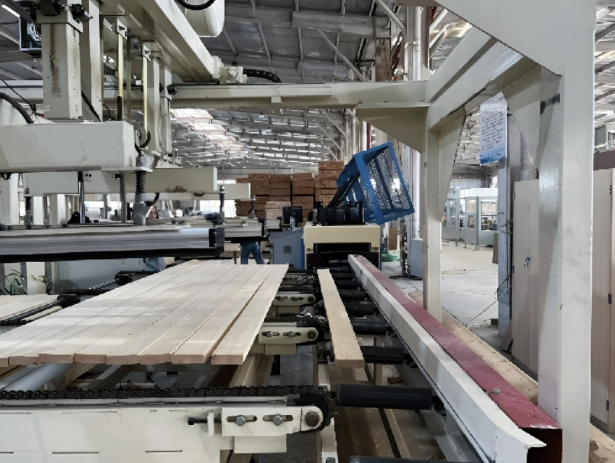
The research, titled Incorporating defects and moisture in MOE evaluation for automated timber grading, focuses on the modulus of elasticity (MOE), a primary measure of timber stiffness under load. Modern automated grading systems rely heavily on MOE to classify structural timber at industrial scale. However, knots, fibre deviations, cracks, and variations in moisture content often lead to inaccurate stiffness readings and misclassification.
The study highlights that traditional visual grading methods face growing limitations as the timber industry expands. "In today's industrial landscape, automated timber structural grading plays a pivotal role in optimising productivity and operational efficiency," the authors note. They further explain that wood's anisotropic nature makes manual inspection inconsistent and susceptible to human error, which "can result in underestimating the mechanical potential of usable timber."
To overcome these challenges, the research team developed an advanced automated grading line that integrates multiple technologies. The system combines machine vision for defect detection, real-time moisture measurement, mechanical stress testing, and multi-sensor data fusion. It also includes automated loading and unloading, remote diagnostics, and comprehensive quality assessment.
By simultaneously evaluating external defects and internal mechanical properties, the model accounts for the complex interactions between various factors that influence timber stiffness. The researchers found that neglecting these variables can cause systematic over- or under-estimation of strength. In contrast, their integrated approach delivers more consistent and reliable grading results across diverse timber conditions.
The system was successfully validated in an industrial environment, where it demonstrated clear improvements in operational efficiency and reduced labour requirements. In 2023, the grading line received certification under the Japanese Agricultural Standard (JAS), confirming its suitability for structural timber intended for export to Japan and meeting rigorous international quality standards.
The study underscores the growing importance of precise, scalable grading solutions as the use of lightweight and mass timber increases worldwide. "This study provides one of the clearest pathways yet for integrating advanced automation into timber processing, offering a more consistent and data-driven approach to structural classification," Min Ji said, adding that such advancements could enable smarter production lines and enhance the overall performance of timber in the built environment.
This research represents a significant step toward improving the quality control of structural timber, supporting safer and more efficient construction practices globally.