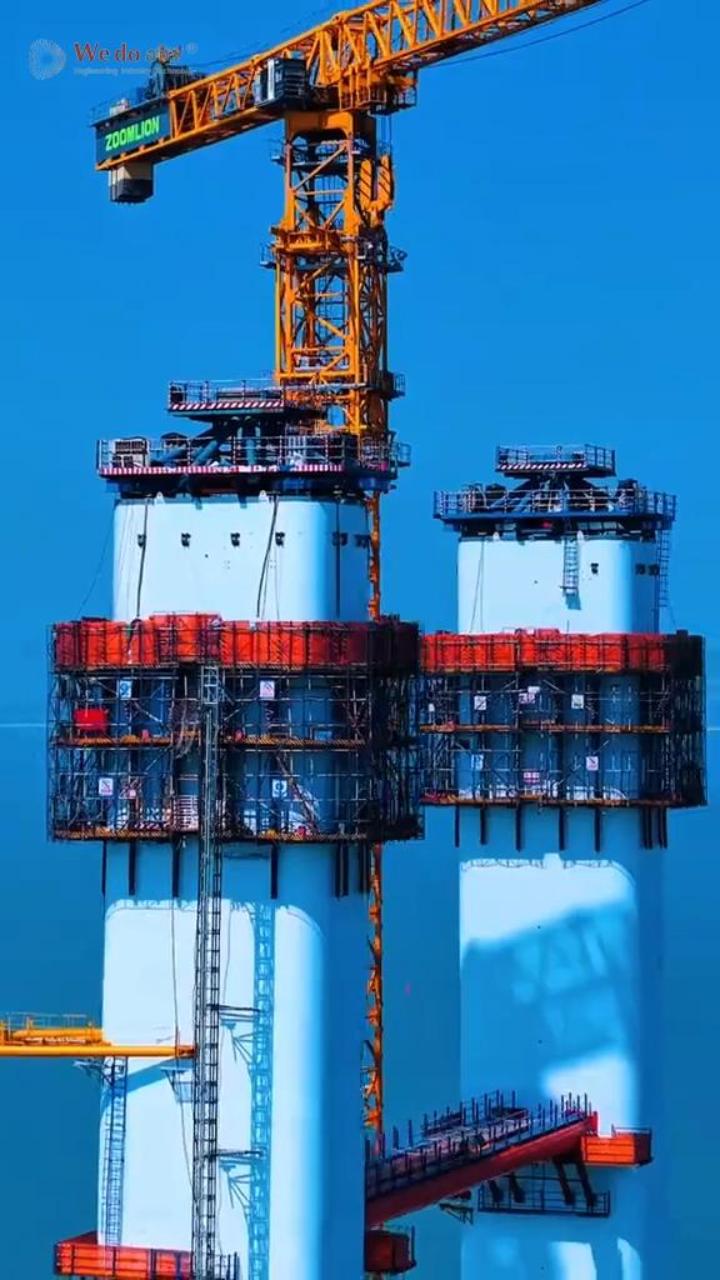
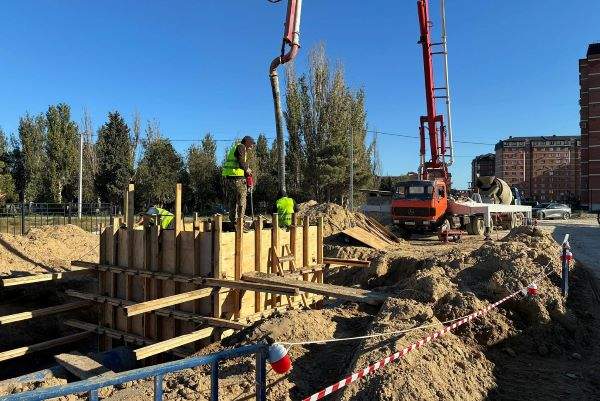
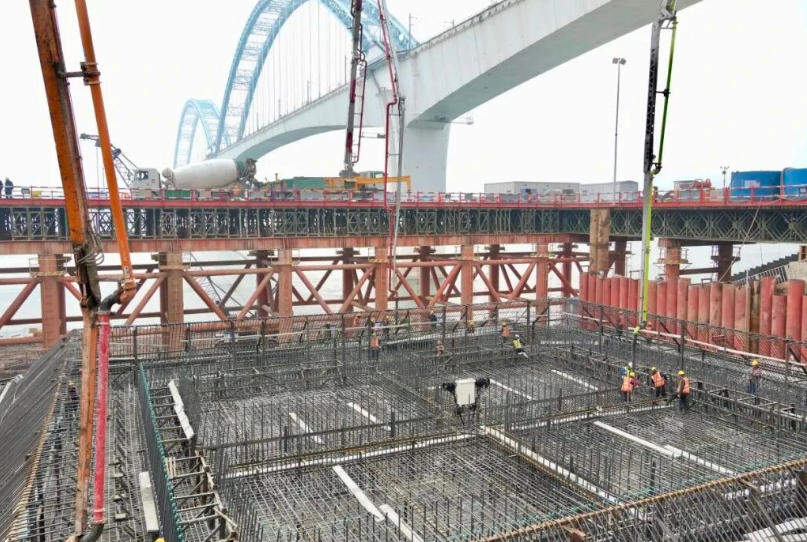
Wedoany.com Report on Feb 10th, the two main pier caps of the Yongjiang Laokou Super Major Bridge, a key control project of the Nanning-Xincheng Expressway invested and constructed by China Railway Traffic Investment Group and built by China Railway Eighth Group, successfully completed their first large-volume concrete pouring. This marks a significant progress in the deep-water foundation construction of the bridge, creating conditions for the subsequent construction of the main towers.
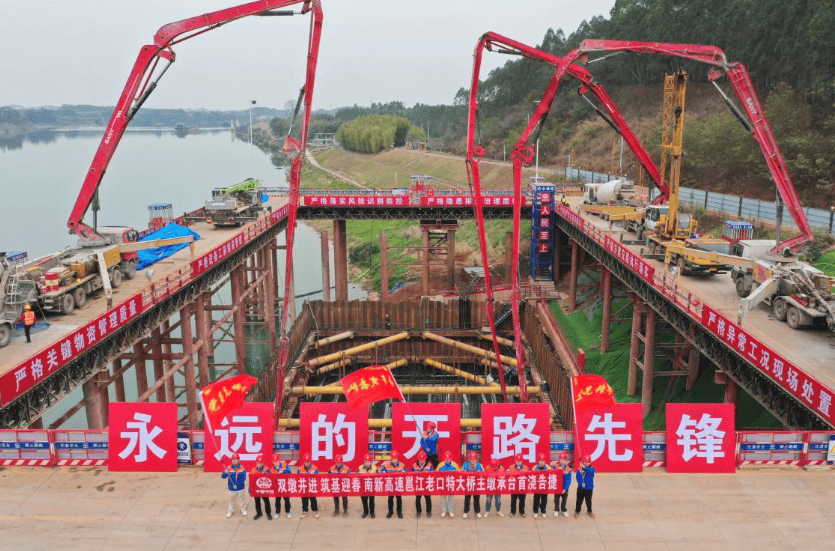
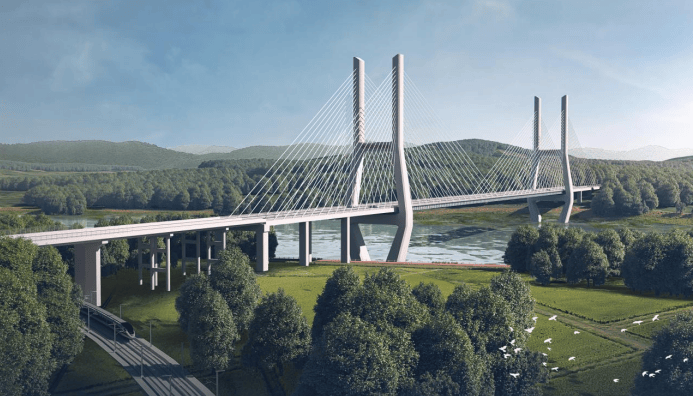
The Yongjiang Laokou Super Major Bridge, located in Xixiangtang District of Nanning City, has a total length of 693 meters. The main bridge is designed as a double-tower, double-cable-plane hybrid girder cable-stayed bridge with a main span of 390 meters. It is a crucial node ensuring the full-line connection of the Nanning-Xincheng Expressway. The first concrete pour for a single main pier cap this time involved a volume of 2175 cubic meters.
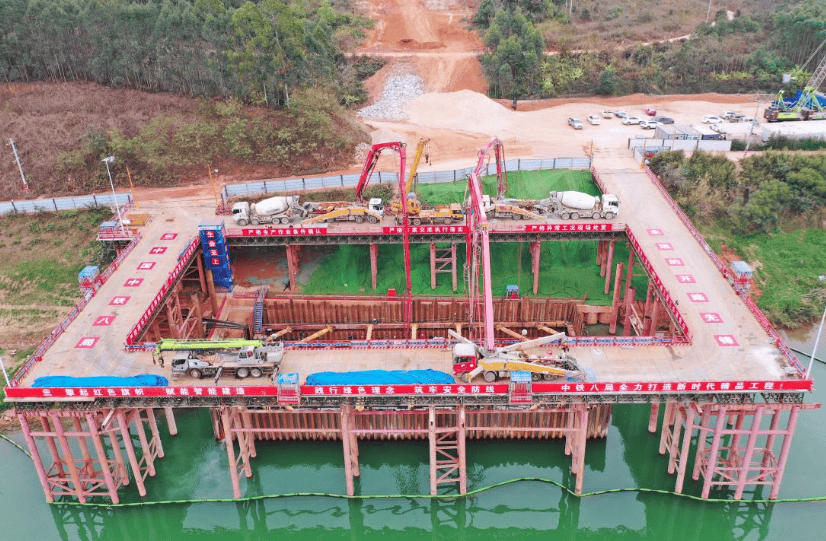
Large-volume concrete pouring faces the industry challenge of temperature cracks easily caused by hydration heat. To tackle this, the project team implemented comprehensive temperature control measures. By optimizing the concrete mix ratio, they reduced cement usage at the source to minimize heat generation. A network of cooling water pipes was pre-embedded within the concrete for active heat dissipation. Furthermore, simulation modeling and a temperature monitoring system were utilized to regulate the cooling process in real-time. Monitoring data showed the maximum internal temperature of the pier cap concrete reached 58.8 degrees Celsius, while the surface temperature was 35.6 degrees Celsius. The temperature difference between the interior and exterior was controlled within 23.2 degrees Celsius, effectively preventing cracks and ensuring the overall quality and durability of the pier cap structure.
The Nanning-Xincheng Expressway is an important component of Guangxi's expressway network plan. The route is nearly 101 kilometers long, designed as a dual four-lane expressway with a speed of 120 km/h. The construction of this project plays a positive role in strengthening regional transportation connectivity.