China Plans to Launch "Xihe-2" to Sun-Earth L5 Lagrange Point
Wedoany.com Report on Jan 31st, It was learned from the project launch meeting and scientific seminar for the "Xihe-2" Sun-Earth L5 Solar Exploration Project on January 31 that China plans to launch "Xihe-2" to the Sun-Earth L5 point between 2028 and 2029, selecting the appropriate launch window. 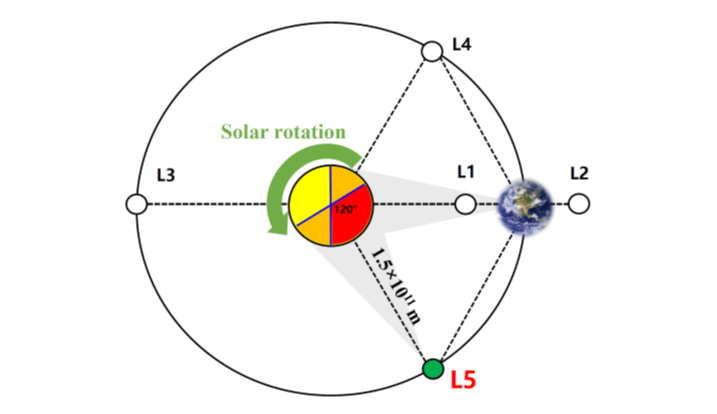
Xihe is the mother of the sun in the "Classic of Mountains and Seas," the deity who drives a chariot controlling the sun's rise and set in the "Songs of Chu," and also an official position in ancient China responsible for observing celestial phenomena and formulating calendars. In October 2021, China successfully launched its first solar exploration science and technology test satellite, "Xihe," officially entering the era of space-based solar exploration.
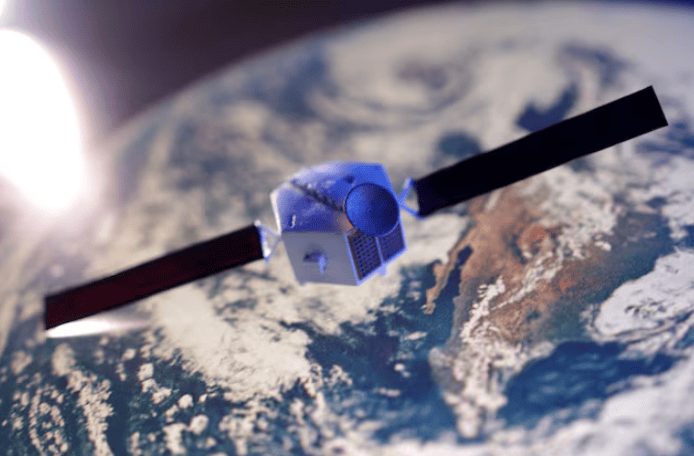
Nearly five years later, "Xihe-2" has officially commenced. Academician Fang Cheng from the School of Astronomy and Space Science at Nanjing University told reporters that "Xihe" has exceeded its designed service life and is currently operating in good condition. After the launch of "Xihe-2," it will conduct stereoscopic observations of the sun from new wavebands and perspectives.
"Xihe" orbits the Earth, while "Xihe-2" will not. Li Chuan, the chief designer of the "Xihe" science and application system and a professor at the School of Astronomy and Space Science at Nanjing University, explained that there are five Lagrange points (gravitational equilibrium points) between the sun and Earth. L1, L2, and L3 lie along the Sun-Earth line, while L4 and L5 are located on Earth's orbit around the sun, each forming an equilateral triangle with the sun and Earth with sides approximately 150 million kilometers long. If Earth's direction of revolution is considered "forward," L5 is located "behind" Earth.
"To date, humanity has launched over 70 solar probes. The vast majority are distributed along the Sun-Earth line, with a few orbiting the sun. No probe has yet been stationed at the Sun-Earth L5 point. Therefore, 'Xihe-2' will provide humanity with a brand new 'observer' perspective for studying the sun," Li Chuan said. Located at a Lagrange point, "Xihe-2" will require minimal energy to maintain a stable orbit, with a designed lifespan of up to 7 years.
It is understood that "Xihe-2" will be capable of making precise measurements of the solar magnetic field and solar activity, establishing a complete three-dimensional physical model of solar eruptions, and enhancing China's space weather forecasting and warning capabilities.
Academician Wang Jingxiu from the National Astronomical Observatories of the Chinese Academy of Sciences stated that compared to the Earth's perspective, "Xihe-2" at the Sun-Earth L5 point will be able to observe solar active regions and phenomena, especially hazardous space weather events like solar flares and coronal mass ejections, four to five days in advance, providing more preparation time for emergency responses on Earth.
Related Products


GSR6-27.5kV SF6 Free Gas-insulated Metal-enclosed Switchgear
Zhejiang Juhonkia Intelligent Electric Co., Ltd.
ZY(J)7(M) Sealed Type Electro-Hydraulic Turnout Machine
TAIYUAN CR JINGFENG EQUIPMENT TECHNOLOGY CO., LTD.

Industrial and Commercial Point-Type Gas Detector
Jinan Benan Technology Development Co., Ltd.

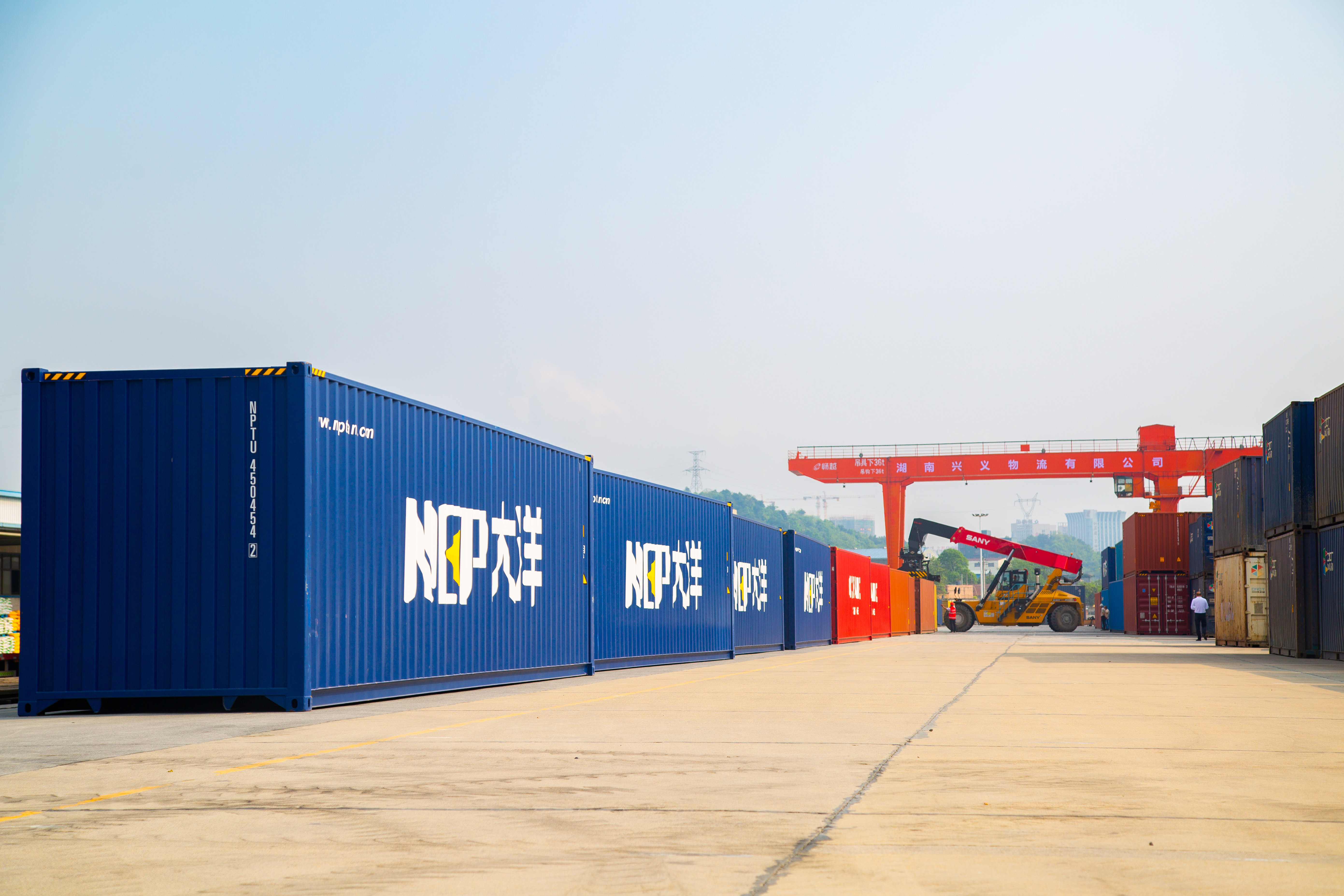
China - Alashankou/Khorgos - Europe Full Range Transportation (Mala/Hamburg/Duisburg/Budapest, etc.)
Shenzhen Neptune Logistics Co., Ltd.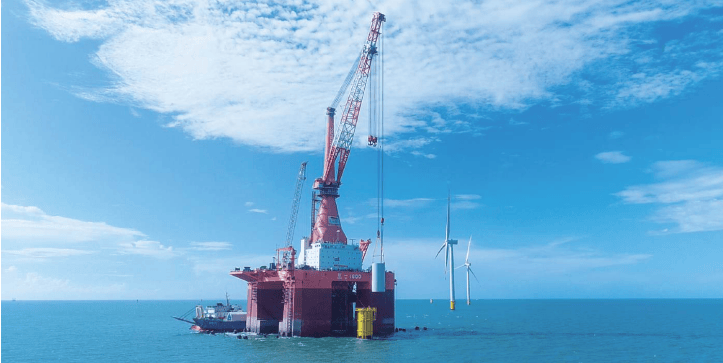
"Shunyi 1600" Deep-submerging Bottom-sitting Multi-functional Wind Power Engineering Vessel
Zhengli Offshore Engineering Co., Ltd.