World's First AI Large Model for Two-Way Air-Sea Coupling in the South China Sea Released
Wedoany.com Report on Feb 7th, that the "Flying Fish-1.0," an intelligent large model for two-way air-sea coupling in the South China Sea region, was officially launched in Guangzhou. Jointly developed by the South China Sea Institute of Oceanology, Chinese Academy of Sciences, and China University of Petroleum (East China), this model is currently the world's first AI large model specifically designed for two-way air-sea coupling in the South China Sea. Its release marks a significant breakthrough for China in the fields of intelligent marine environment forecasting and coupled modeling.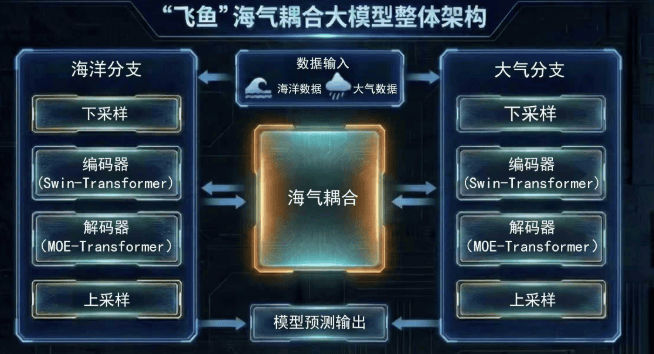
The "Flying Fish-1.0" model achieves three core technological innovations: autonomous control of core data, intelligent two-way air-sea coupling, and a "plug-and-play" low-cost learning and flexible expansion capability. The core data used for its training is entirely sourced from the high-resolution South China Sea reanalysis dataset independently developed by the South China Sea Institute of Oceanology, Chinese Academy of Sciences. This marks the first time a Chinese marine large model has broken free from long-term reliance on European and American reanalysis data, overcoming the previous situation where domestic models were highly dependent on foreign data. Based on this autonomous data, the model possesses the capability to finely depict meso- and small-scale processes such as internal waves and fronts in the ocean, providing higher-precision data support for marine environment forecasting in the South China Sea region.
Previously, most AI large models focused on modeling either the atmosphere or the ocean separately, often simplifying or neglecting the interactions between the two. "Flying Fish-1.0" innovatively integrates physical mechanisms with artificial intelligence. It adopts a "Swin Transformer architecture based on a Mixture of Experts (MoE) system" and utilizes a "fast-slow" dual-channel learning mechanism to intelligently simulate two-way interaction processes between the sea and air, such as momentum, heat, and mass exchange. This significantly improves the forecasting accuracy of key marine and meteorological elements.
The model pioneers the use of a Mixture of Experts (MoE) system for air-sea element forecasting. It can intelligently call upon the most suitable computational modules for different forecasting tasks, substantially reducing energy consumption for training and inference while maintaining accuracy. The system also supports modular functional expansion, allowing it to flexibly adapt to forecasting needs for new sea areas or tasks. In terms of performance, "Flying Fish-1.0" has demonstrated significantly higher forecasting accuracy for core marine elements like temperature and salinity compared to mainstream international reanalysis products such as Europe's GLORYS12 and the US's HYCOM. Notably, the model requires only 3 years of historical data for training, far less than the typically required 20+ years for previous AI models. It can complete a 3-day forecast in just 3 seconds on a domestic single-machine environment, showcasing its efficient and energy-saving technological advantages.
"Flying Fish-1.0" holds broad application prospects. It can not only be used for forecasting typhoon tracks and intensity, providing high-precision, multi-scale simulation and prediction tools for disciplines like oceanography and meteorology, but also generate dynamic marine knowledge graphs to help the public better understand marine processes and patterns of change. The promotion and use of this model are expected to play a significant role in areas such as marine ecological environment protection, sustainable development of marine resources, addressing climate change, and marine disaster prevention and mitigation. It will provide crucial technological support for advancing the construction of an intelligent and sustainable marine governance system.
Related Products



Automatic Aiming Laser Remote Obstacle Removal Robot
Pinggao Group Weihai High-Voltage Apparatus Co., Ltd.
20 Inch 1600*900 Full HD 60Hz TFT LED Monitor with VGA and DP Interfaces for Desktop Computers-Business Use
Guangzhou Zanying Optoelectronics Technology Co., Ltd.
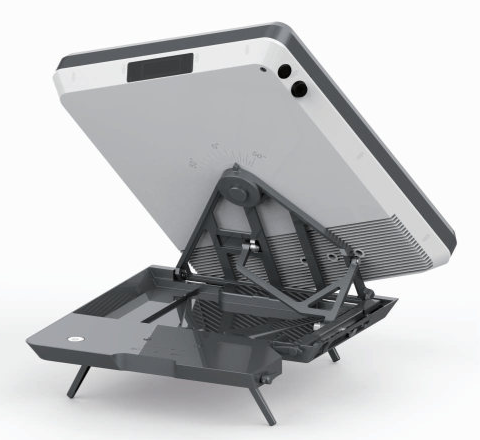
Flat Portable Satellite Terminal 0.35m Aperture Manual Portable Terminal
China Starwin Science & Technology Co., Ltd.
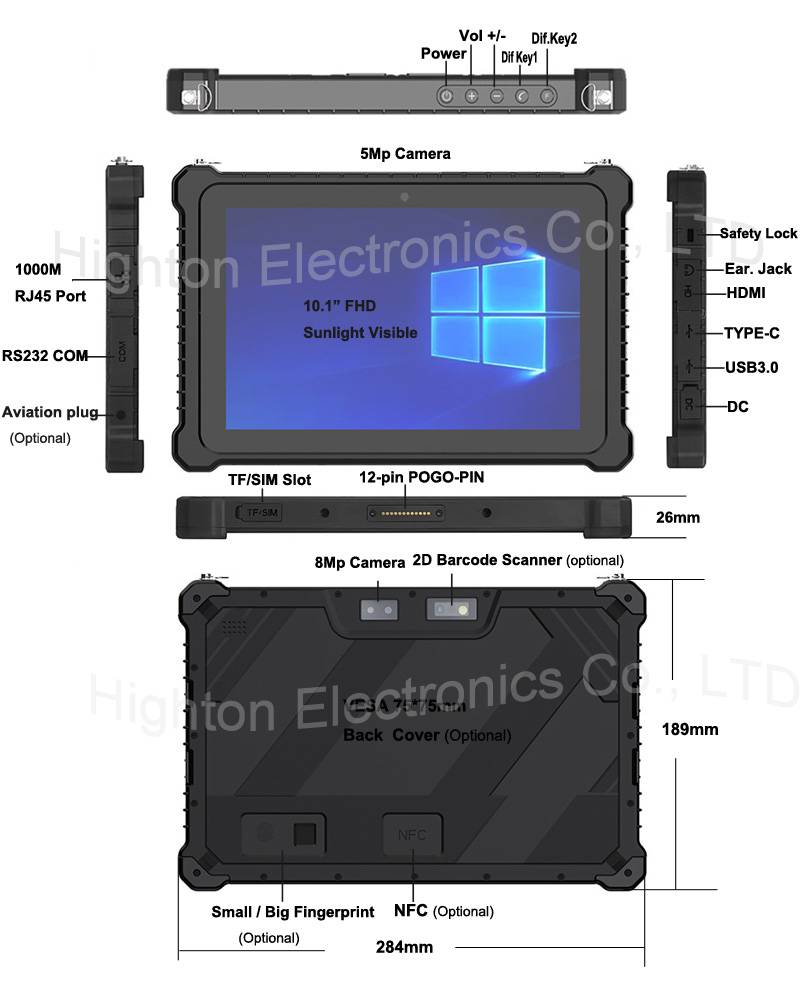
Hot Selling 10 Inch Intel N5100 I5 I7 FHD 8 +128GB 16+256GB Win10 Pro Win11 Pro 4G 5G Rugged Tablet PC Pad with NFC Barcode
Highton Electronics Co., Ltd.
Industrial and Commercial Point-Type Gas Detector
Jinan Benan Technology Development Co., Ltd.
GYTA Type Non-Self-Supporting Aerial/Duct Optical Cable
TONGDING INTERCONNECTION INFORMATION CO., LTD.
Mine Explosion-proof and Intrinsically Safe Industrial Ethernet Ring Network (10 Gigabit/Gigabit)
Chongqing Mas Sci&Tech Co., Ltd.