UK Government Unveils Market Guidance for Advanced Nuclear Reactors
Wedoany.com Report on Feb 9th, The UK government has recently unveiled guidance aimed at bringing privately-funded advanced nuclear reactors (including Small Modular Reactors) to market. This initiative is designed to incentivize private investment while also retaining policy flexibility for government subsidies if necessary.

Under this scheme, the UK government will use a selection process to identify a group of "credible projects" from numerous applicants. These projects will need to demonstrate a clear technical roadmap, mature supply chains, reliable developer capabilities, sound financial arrangements, suitable sites, and a viable operational model. Selected projects will be placed into an officially recognized "Project Pipeline". The establishment of this pipeline signifies that only these chosen projects will be considered by the government as having genuine potential for realization, thereby making it easier for them to attract investment and advance subsequent development. Projects that fail to enter this pipeline may face challenges such as diminished market confidence, financing difficulties, and even exclusion from the mainstream development path.
The UK Department for Energy Security and Net Zero (DESNZ) and its subsidiary, Great British Nuclear, will conduct rigorous assessments of the proposed projects. Evaluations will cover key areas including technical details, supply chain readiness, developer strength, investment and financing plans, site selection, and future operational and customer arrangements. Only projects that meet the government's comprehensive set of criteria are expected to gain entry into this officially supported "Project Pipeline".
It is reported that this policy reaffirms the UK government's stance of abandoning the use of its substantial existing stockpile of separated civil plutonium. The decision is to immobilize and store this plutonium material rather than utilize it for nuclear fuel recycling. This decision also effectively closes the door on the development of advanced reactors in the UK that rely on plutonium-based fuels, such as the technological routes promoted by companies like Newcleo and Oklo.
Analysts point out that the UK government's introduction of this "Project Pipeline" mechanism aims to concentrate resources, reduce risks, and prioritize support for those advanced nuclear projects most likely to succeed in deployment and achieve commercial operation. It also seeks to boost investor confidence through government endorsement, thereby guiding more private capital into this high-tech, high-investment, long-cycle sector. Although the overall scheme leans towards market-driven operation, it retains policy flexibility to provide fiscal subsidies in the future if necessary, to address potential issues such as technological bottlenecks, construction delays, or market failures.
The release of this policy is seen as a significant step for the UK in promoting nuclear technology innovation, diversifying its energy mix, and achieving its net-zero emissions targets. By selecting projects carefully, clarifying pathways, and strengthening government-industry collaboration, the UK aims to secure a globally leading position in the field of advanced nuclear reactors, while also contributing technological solutions and practical experience to the global transition towards low-carbon energy.
Related Products


Overseas IEC Gateway Energy Meter - DTSD341/DSSD331-aMeter390
Wasion Group Limited Co., Ltd.

IS(B)□-M·RL Series Oil-immersed 3D Transformer (Planar / 3D Wound Core)
Guangdong Kehua Electric Power Technology Co., Ltd.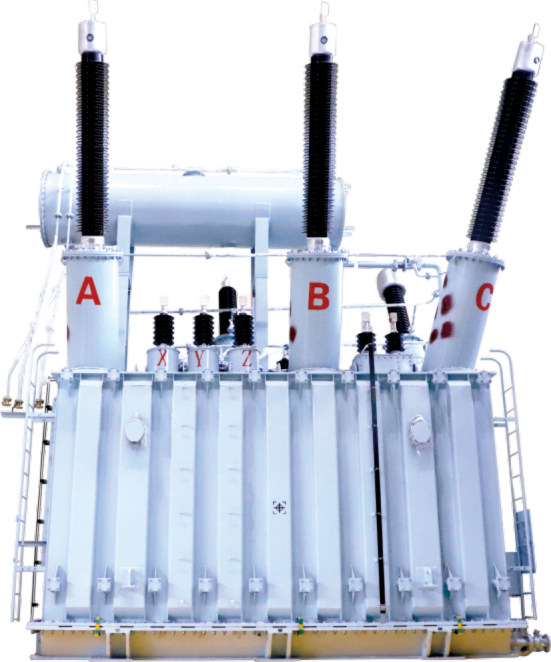

220kV and Below Voltage Level Energy-saving Oil-immersed Power Transformers
FuZhou TianYu Electric Co., Ltd.


S(B)H15 Type (Energy Efficiency Level 3) Oil-Immersed Amorphous Alloy Core Distribution Transformer
Henan Longxiang Electric Co., Ltd.
VEG-12/24/40.5 Series Vacuum Circuit Breaker
SHANGHAI PINGGAO TIANLING SWITCHGEAR CO., LTD.
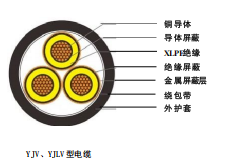
Rated Voltage 6-35kV Cross-linked Polyethylene Insulated Power Cable
TONGDING INTERCONNECTION INFORMATION CO., LTD.