Telecom Industry Updates: Cloud-Native Networks and Rural Broadband Connectivity Accelerate
Wedoany.com Report on Feb 24th, Several significant developments have recently emerged in the telecom industry, involving the application of cloud-native technologies and the enhancement of rural digital connectivity. The Andhra Pradesh state government in India has signed a Memorandum of Understanding with the central government to accelerate the deployment of the revised BharatNet project, aiming to expand rural digital connectivity. The project, supported by funding of ₹2,432 billion, plans to extend fiber broadband and network services to thousands of Gram Panchayats and over 500,000 rural households, strengthening last-mile access, improving 4G coverage, and supporting affordable digital services. Union Communications Minister Jyotiraditya Scindia stated, "This initiative plays a crucial role in advancing rural connectivity." The project framework, supported by the state government in terms of right-of-way and infrastructure coordination, speeds up the deployment process.
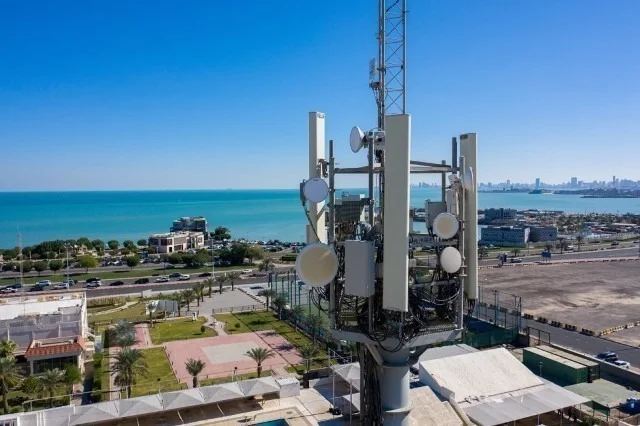
Malaysian mobile operator Tune Talk has completed its transition to a fully cloud-native mobile network, becoming the first operator in the ASEAN region to achieve this. In collaboration with telecom software provider Mavenir, Tune Talk replaced its traditional hardware-centric systems with a software-based cloud-native operations and business support platform, enabling faster service deployment, greater agility, and improved network reliability. The cloud-native network transformation allows the operator end-to-end control over network functions, supports zero-touch automation and scalability, and paves the way for AI-driven features and personalized customer experiences, including MyDigital ID integration, insurance, and in-app streaming benefits. This application of cloud-native networks marks a significant step in telecom technology innovation.
The Supreme Court of India has ruled that Sistema Shyam Teleservices Ltd. must pay spectrum usage charges from February 2, 2012, the date its 2G license was cancelled. A bench comprising Justices Sanjay Kumar and K Vinod Chandran allowed the central government's appeal against a TDSAT order that had limited the liability to February 15, 2013. The court held that as the operator continued commercial operations after its license became invalid, it was liable to pay the reserve price determined in the 2012 spectrum auction for the period of unauthorized use. This ruling underscores the importance of compliance with spectrum usage and serves as a reference point for telecom industry regulation. Overall, cloud-native networks and the acceleration of rural broadband connectivity have become key trends in current telecom development.
Related Products



Comprehensive Mining Automation Control System
Beijing Tianma Intelligent Control Technology Co., Ltd.


MUX Series Communication Interface Device for Security and Stability Control System
Nanjing NR Electric Co., Ltd.
Multi-function Marine Monitoring Low-altitude Detection Radar Sea-air Boundary Ocean Dynamic Environment Measurement
Chengdu Dixin Technology Co., Ltd.
Conveyor Belt Intelligent Monitoring System
LUO YANG WIRE ROPE INSPECTION TECHNOLOGY CO., LTD.

Mine Explosion-proof and Intrinsically Safe Industrial Ethernet Ring Network (10 Gigabit/Gigabit)
Chongqing Mas Sci&Tech Co., Ltd.