Only 1 Nanometer, Lowest Power Consumption! Peking University Team Achieves Major Breakthrough in Chip Field
Wedoany.com Report on Feb 24th, A research team from the School of Electronics at Peking University recently made a major breakthrough in the field of ferroelectric transistors. On February 23, the team announced the successful fabrication of the world's smallest and lowest-power ferroelectric transistor to date. The related findings were published online in the international academic journal Science Advances. This advancement is expected to provide key device support for enhancing the computing power and energy efficiency of artificial intelligence chips.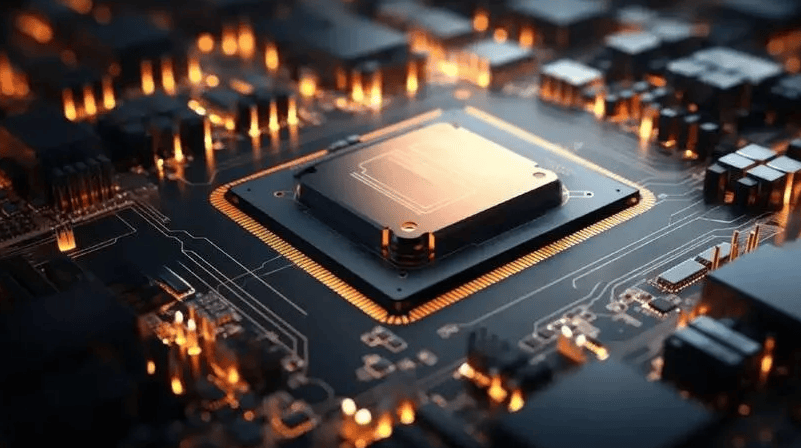
Traditional ferroelectric transistors have long been constrained in their application in large-scale integrated circuits, such as AI computing, due to technical shortcomings like excessive energy consumption and mismatched logic voltages. The team led by Researcher Qiu Chenguang and Academician Peng Lianmao from Peking University effectively addressed the core challenge of the high voltage and high energy consumption required when ferroelectric materials change their polarization state by innovatively introducing a nanoscale gate structure design.
Qiu Chenguang stated, "We have reduced the physical gate length of the ferroelectric transistor to the limit of 1 nanometer." He pointed out that this technological breakthrough breaks the physical size limitations of traditional ferroelectric transistors, reducing the device's energy consumption by an order of magnitude compared to the best international level.
It is reported that this nanoscale-gate ferroelectric transistor features ultra-low operating voltage and extremely low energy consumption. It not only provides a core device solution for building high-efficiency data centers but also lays a key technological foundation for developing next-generation high-performance AI chips. As AI models continue to scale up, the energy consumption pressure from surging computing demands is becoming increasingly prominent. The breakthrough in this research provides new hardware support for green AI computing pathways.
The team from the School of Electronics at Peking University has long been dedicated to research on novel information devices in the post-Moore era. This achievement marks another significant advancement in the field of ferroelectric logic devices, following progress in areas such as carbon-based electronics and low-dimensional material devices.
Related Products



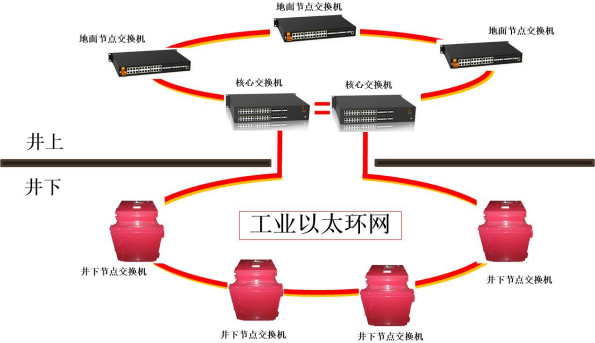
Mine Explosion-proof and Intrinsically Safe Industrial Ethernet Ring Network (10 Gigabit/Gigabit)
Chongqing Mas Sci&Tech Co., Ltd.
GYTA Type Non-Self-Supporting Aerial/Duct Optical Cable
TONGDING INTERCONNECTION INFORMATION CO., LTD.

Industrial and Commercial Point-Type Gas Detector
Jinan Benan Technology Development Co., Ltd.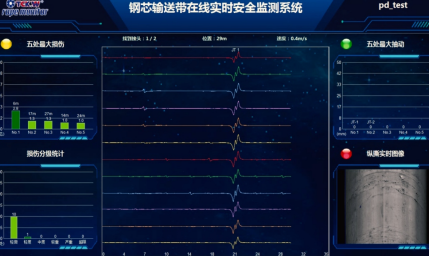
Conveyor Belt Intelligent Monitoring System
LUO YANG WIRE ROPE INSPECTION TECHNOLOGY CO., LTD.
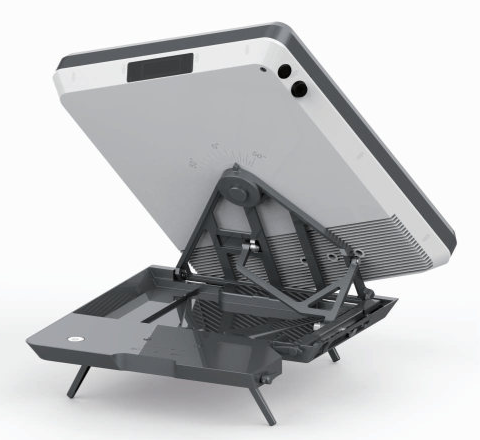
Flat Portable Satellite Terminal 0.35m Aperture Manual Portable Terminal
China Starwin Science & Technology Co., Ltd.
20 Inch 1600*900 Full HD 60Hz TFT LED Monitor with VGA and DP Interfaces for Desktop Computers-Business Use
Guangzhou Zanying Optoelectronics Technology Co., Ltd.
KJD127(A) Mining Explosion-Proof and Intrinsically Safe Computer
Taiyuan Xiangming Intelligent Control Technology Co., Ltd.